What Water, Electricity, Internet, and Bills Should You Set Up After Moving into a Condo in Thailand?
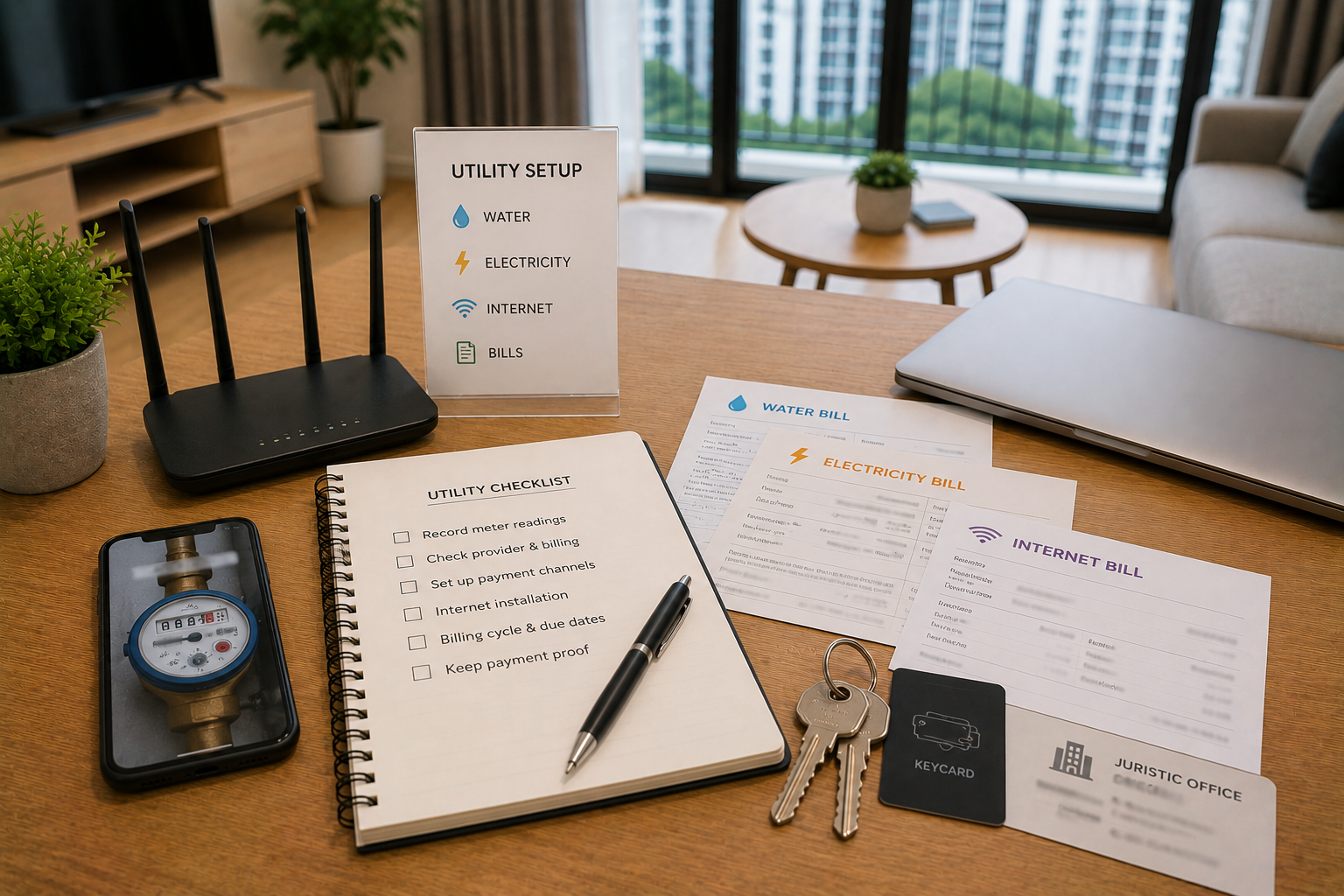
Setting up water, electricity, and internet for a condominium in Thailand is an important step after moving into a new unit. Utilities are recurring expenses that can easily cause confusion, especially in a rented unit where some charges are based on actual bills, some are paid through the juristic office, and some are collected by the unit owner. If these details are not checked from the first day, problems may arise from outstanding bills, incorrect meter readings, unusually high electricity charges, or uncertainty about which channel should receive payment.
This article is a guide for people who have just moved into a condominium in Bangkok, Pattaya, Chonburi, Phuket, Chiang Mai, or another province. It focuses on setting up and checking water, electricity, internet, and bills after moving in, for both tenants and unit owners. However, calculation methods and payment channels may vary by project, lease, juristic office, and the service area of the relevant authority.
English summary: After moving into a condo in Thailand, confirm water, electricity, internet, billing cycles, payment channels, meter readings, and who is responsible for each bill.
1. Start by Photographing the Water and Electricity Meters on the First Day
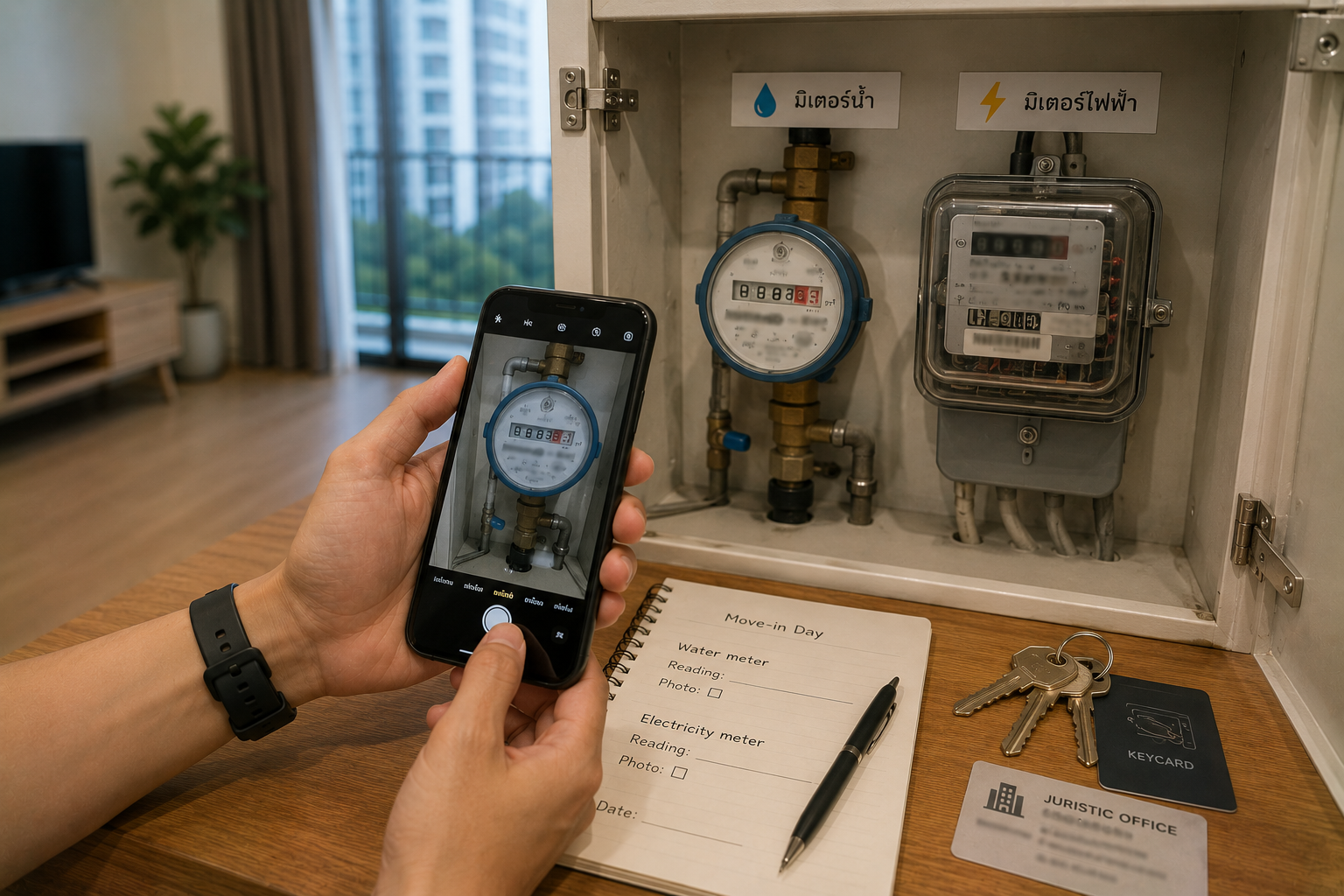
Before using the unit, take clear photographs of the water and electricity meters on the day the keys are received or on move-in day. The opening readings are important evidence for calculating utility charges and help prevent payment disputes involving bills incurred before move-in.
- Photograph the electricity meter with the reading clearly visible.
- Photograph the water meter with the reading clearly visible.
- Photograph the date or send the images in chat to create a time reference.
- Send the meter readings to the owner or landlord that same day.
- Ask whether these opening readings will be used to calculate the first bill.
- Keep the photographs in a separate folder with the rental documents.
For a rented condominium, ask the owner or landlord to confirm the meter readings in chat so they can be checked later if the first bill is questioned.
English summary: Take clear photos of water and electricity meters on move-in day and confirm the starting readings in writing.
2. Check Whether Electricity Is in an MEA or PEA Service Area
Electricity providers in Thailand vary by area. The MEA serves Bangkok, Nonthaburi, and Samut Prakan, while the PEA serves many regional areas in other provinces. Residents should ask the juristic office or owner which authority is connected with the condominium's electricity supply and through whom the bill is paid.
- Is the condominium in an MEA or PEA service area?
- In whose name is the electricity bill issued?
- Does the tenant pay the electricity authority directly or pay through the owner?
- Which app or channel should be used for electricity payment?
- Were any electricity bills outstanding before move-in?
- Is electricity charged according to the actual bill or at a rate set by the owner in the lease?
The MEA provides online services for checking and paying electricity bills, while the PEA provides payment channels and services for electricity users in regional areas. Always check the service area and payment channel directly with the relevant authority before paying.
3. Check How Condo Water Charges Are Calculated
Condo water charges may be handled in several ways, such as through the juristic office, the unit owner, or the local water authority. Some buildings use their own billing cycle. Tenants should clearly ask which meter is used, what rate applies, and who receives payment.
- Is water charged from the unit's meter or a shared meter?
- Is the water bill issued through the juristic office or unit owner?
- What is the water rate per unit?
- Are there common service charges or other fees?
- On what dates does the water billing cycle begin and end?
- Who should be notified if there is no water or low water pressure?
The PWA provides water-service information and the 1662 channel for no-water or low-pressure problems within its service areas. However, some condominiums may require residents to notify the juristic office first because the building manages its internal water system.
English summary: Condo water bills may be billed by juristic office, landlord, or water authority. Confirm the meter, rate, billing cycle, and payment method.
4. Ask About Billing Cycles and Payment Due Dates
After moving in, record every expense's billing cycle in a calendar because the bills may not be issued on the same day. For example, rent may be due at the beginning of each month, electricity follows the authority's cycle, water follows the juristic office's cycle, internet follows the installation date, and common-area fees follow the project's conditions.
- On what date is rent due?
- When is the electricity bill issued and due?
- When is the water bill issued and due?
- When does the internet billing cycle begin?
- Who receives common-area or parking-fee payments?
- Does late payment result in a penalty or service suspension?
Set phone reminders for important bills to avoid late payment, especially for electricity, internet, and rent, which may affect daily life.
5. Check for Outstanding Bills Before Move-In
Tenants should ask the owner or landlord whether any water, electricity, internet, common-area, or parking charges were outstanding before the lease began. It should be made clear who is responsible for amounts incurred before move-in.
- Were any electricity charges outstanding before move-in?
- Were any water charges outstanding before move-in?
- Are any charges outstanding from the previous internet service?
- Are any common-area, parking, or keycard fees outstanding?
- Who is responsible for bills incurred before the lease began?
- Is there proof that the previous balance was paid?
Do not take responsibility for bills incurred before the lease began without a clear written agreement. Always keep photographs of the bills and the owner's confirmation messages.
English summary: Ask whether there are unpaid utility bills before your move-in date and confirm who pays them in writing.
6. Set Up an Electricity Payment Channel
After determining whether the unit is in an MEA or PEA service area, set up a convenient and verifiable payment channel, such as the authority's app, website, bank, mobile app, service counter, or a channel designated by the juristic office. If paying through the owner, ask to see the actual bill before transferring money.
- Can payment be made directly to the MEA or PEA?
- Is an electricity-user number or CA/contract account number required?
- Can payment be made through an app, website, or bank?
- Is there a fee for the payment channel?
- Is a receipt or e-Receipt available?
- If paying through the owner, ask for the actual bill every month.
The MEA provides Smart Service and eBill for online bill management, while the PEA provides several payment channels. Users should check the latest channels on the relevant authority's official website.
7. Set Up a Water Payment Channel
Condo water charges are not always paid directly to a water authority. Some buildings collect them through the juristic office or unit owner. Tenants should therefore obtain payment instructions from the outset to prevent missed bills or payment through the wrong channel.
- Is water paid through the juristic office, owner, or water authority?
- Which unit number or water-user number is needed for payment?
- Is an invoice or photograph of the bill provided every month?
- Is payment made by bank transfer, app, counter, or at the juristic office?
- Is there a fee or penalty for late payment?
- Who should be notified if there is no water, low pressure, or an abnormal meter?
Keep the water receipt or payment slip every month, especially for a rented unit where payment is made through the owner or juristic office. It may be needed when moving out or receiving the security deposit.
English summary: Confirm whether water is paid to the juristic office, landlord, or water authority, and keep monthly payment proof.
8. Set Up Internet and Check the Contract Conditions
Internet is another service that should be arranged soon after moving in, especially for people who work from home or study online. Ask the juristic office which providers the building supports and how to arrange technician access. For a rented unit, obtain the owner's permission before running cables or drilling.
- Which internet providers does the building support?
- Does the unit have existing wiring or an installation point?
- Must the juristic office be notified before a technician enters the unit?
- Are the owner's documents or the lease required?
- How many months is the internet contract?
- Are there installation, activation, equipment, or early cancellation fees?
The NBTC is Thailand's telecommunications regulator and provides service/complaint channels through the NBTC Office's service system. Users should check package conditions directly with the internet provider before applying because prices and contracts may change.
9. Check the Bill Recipient's Name and Responsibility for Each Expense
Each bill may be in the unit owner's name, the tenant's name, or the name on a previous account. Tenants should clearly ask who receives each bill, who is responsible for paying it, and who must receive proof after payment.
- Is the electricity bill in the owner's or tenant's name?
- Is the water bill issued through the juristic office or another authority?
- Whose name is on the internet bill?
- Who pays the common-area and parking fees?
- Must a payment slip be sent to the owner or juristic office?
- Who should be contacted if payment is made incorrectly or a bill is missed?
If expenses are paid through the unit owner, request the actual bill and a receipt or confirmation message every time. Do not transfer money without details identifying the charge and billing period.
English summary: Confirm whose name is on each bill, who pays it, and what proof must be sent after payment.
10. Organise Payment Slips and Receipts
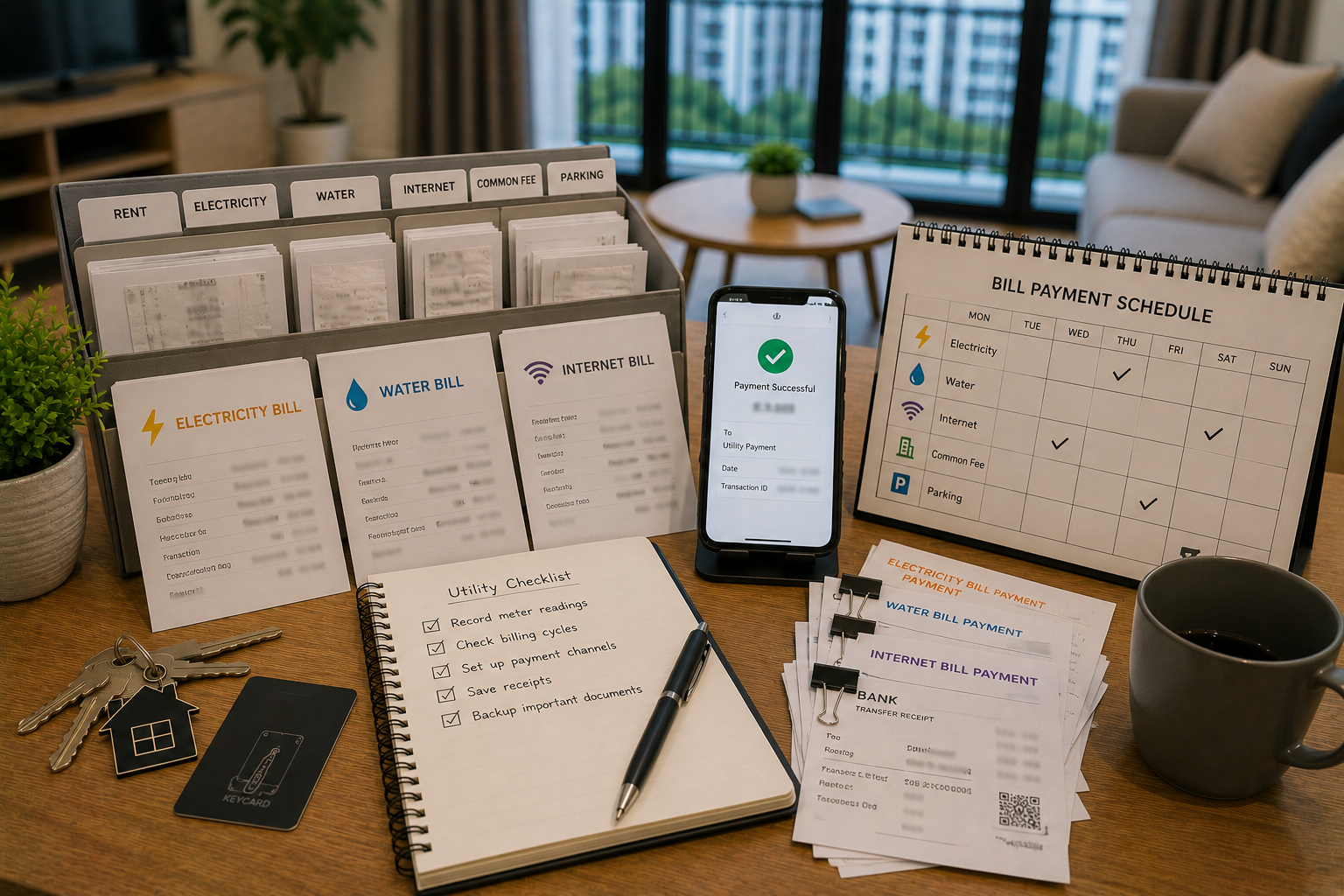
After moving into a condominium, create a folder for evidence of bills and payments, such as rent, water, electricity, internet, common-area fees, parking fees, and repairs. This evidence may be needed if a dispute arises or when moving out.
- Create a separate folder for each month.
- Keep every transfer slip.
- Keep invoices or photographs of bills.
- Use clear file names, such as electricity-june-2026.
- Keep chats in which the unit owner confirms receipt.
- Back up files in the cloud or by email.
Organising evidence helps prevent confusion, duplicate payments, or later claims for bills that cannot be verified.
11. Ask the Juristic Office About Building Bills and Services
In addition to water, electricity, and internet, residents should ask the juristic office about other building expenses or services, such as parking fees, keycard fees, common-area fees, moving fees, service-lift reservations, or penalties for breaking building rules.
- How do common-area fees apply to tenants and owners?
- Are parking fees paid monthly or annually?
- How much does a new parking card or keycard cost?
- Is there a service-lift reservation fee or moving deposit?
- Are there penalties involving waste, noise, or use of common areas?
- How can the juristic office's accounting department be contacted?
Rules and charges vary by condominium. Rely on information directly from the juristic office for that project, not on information from another condominium.
English summary: Ask the juristic office about building-related fees such as parking, keycards, service elevator, moving deposit, and common-area rules.
12. Check the First Bills Carefully
The first bills after move-in deserve particular attention because they may include calculations from before move-in or initial service charges. Compare them with the first-day meter readings and the contract conditions.
- From which date is the first bill calculated?
- Does the meter reading match the move-in photograph?
- Are charges from before the lease start date included?
- Are there fees or initial service charges?
- Is the billed amount unusually high?
- If anything is unclear, should you ask the owner, juristic office, or an authority?
If a first bill is unclear, ask immediately and keep the answer in writing. Do not wait for several billing cycles to accumulate because it may become harder to check the details later.
13. Checklist for Setting Up Condo Water, Electricity, Internet, and Bills
- Photograph the water and electricity meters on the first day.
- Confirm whether electricity is in an MEA or PEA service area.
- Ask how water charges are calculated and paid.
- Record the billing cycle and due date for every expense.
- Check for outstanding bills before move-in.
- Set up an electricity payment channel.
- Set up a water payment channel.
- Apply for or check internet service and its contract.
- Check the bill recipient's name and responsibility for each expense.
- Organise payment slips, receipts, and bills.
- Ask the juristic office about parking, keycards, and building services.
- Check the first bills carefully.
Conclusion
After moving into a condominium in Thailand, clarify water, electricity, internet, and other bills from the first day. Start by photographing the meters, checking whether electricity is provided through the MEA or PEA, asking how water is calculated, checking for outstanding bills, setting up payment channels, recording billing cycles, and keeping proof of every payment.
For a rented unit, the tenant should review the lease and clearly agree with the owner who is responsible for each expense. If payment is made through the owner or juristic office, request the actual bill and keep every payment slip. Baandeego is only a real estate listing platform and is not involved in bill payments or disputes between users.
English summary: Utility setup should be confirmed from day one: meter readings, electricity provider, water billing, internet contract, payment cycles, and proof of payment.
FAQ
1. What Should Be Set Up First After Moving into a Condo?
Start by photographing the water and electricity meters, confirming how water and electricity charges are calculated, checking for outstanding bills before move-in, recording billing cycles, setting up payment channels, and checking internet service or applying for a suitable package.
English: Start with meter photos, billing method, unpaid bills, payment channels, billing cycles, and internet setup.
2. Who Receives Condo Electricity Payments in Thailand?
It depends on the area and building. Some units pay the MEA or PEA directly, while others pay through the unit owner or juristic office. Tenants should review the lease and ask for the actual bill before every transfer.
English: It may be paid to MEA, PEA, the landlord, or juristic office depending on the building and contract.
3. What Should I Do If the First Bill After Moving In Is Unusually High?
Check the first-day meter reading against the actual bill and determine whether the billing period includes time before move-in. Then notify the unit owner, juristic office, or relevant authority in writing and provide the evidence.
English: Compare the bill with move-in meter photos and ask the landlord, juristic office, or utility provider in writing.
Platform Use Disclaimer
This website is only a real estate listing platform.
Users should verify information, documents, and conditions by themselves.
This website is only a real estate listing platform.
Users should verify information, documents, and conditions by themselves.
Baandeego is not a broker and is not a party to any rental, purchase and sale, booking, payment, contract, ownership transfer, water or electricity setup, internet installation, bill payment, meter inspection, or coordination with authorities on behalf of users. It is not responsible for disputes between users, buyers, tenants, owners, sellers, landlords, service providers, juristic persons, or relevant authorities. All parties should independently verify the information, documents, conditions, costs, and applicable laws before making a decision.
References / Sources
- Metropolitan Electricity Authority — MEA Smart Service: https://www.mea.or.th/en/our-services/mea-service/check-pay
- Metropolitan Electricity Authority — MEA eBill: https://www.mea.or.th/en/our-services/mea-service/e-service/mea-eBill
- Provincial Electricity Authority — Business & Service: https://www.pea.co.th/en/about-pea/pea-service
- Provincial Electricity Authority — Payment Channel: https://www.pea.co.th/en/our-services/payment-channel
- Provincial Waterworks Authority: https://en.pwa.co.th/
- National Broadcasting and Telecommunications Commission: https://telecominfra.nbtc.go.th/Home/
- NBTC Service Portal: https://serviceportal.nbtc.go.th/