Unusually High Condo Electricity Bills in Thailand: What Tenants Should Check
An unusually high condo electricity bill is a problem many tenants encounter after moving in, especially in Thailand, where air conditioners are used frequently. Whether you live in Bangkok, Pattaya, Chonburi, Phuket, Chiang Mai, Hua Hin, or another city, an electricity bill can rise for many reasons, such as running the air conditioner for long periods, an old air conditioner, afternoon sun entering the room, power-hungry appliances, an incorrect starting meter reading, or unclear electricity billing terms in the lease.
Before concluding that the bill is abnormal, tenants should check the information systematically, including the electricity bill, meter reading, move-in date, rate charged, payment method, appliances in the room, and evidence of conversations with the landlord. This article is a general guide for condo tenants in Thailand, intended to help with a polite, evidence-based initial review without accusing anyone in advance.
English summary: A high condo electricity bill in Thailand can come from air-conditioner use, room direction, old appliances, meter readings, billing method, or unclear lease terms. Tenants should check facts and keep proof.
1. First Check How the Electricity Bill Is Paid
The first thing to ask is whether the room's electricity bill is paid directly to the electricity authority, through the juristic office, or through the landlord, because each payment method may involve different documents, bills, and evidence. In Bangkok, Nonthaburi, and Samut Prakan, electricity service areas are generally associated with MEA, while most other provinces are associated with PEA. Tenants should check the actual bill or ask the landlord and juristic office directly.
- Is electricity paid directly to MEA or PEA?
- Is it paid through the building's juristic office?
- Is it paid through the landlord?
- Is an electricity bill available to review every month?
- Does the rate charged match the lease or the agreement in the chat?
- Are there any additional service charges or fees?
MEA provides online electricity bill checking and payment through MEA Smart Service, while PEA offers several payment channels through its services. Tenants should always use official websites to check the latest information.
English summary: First check whether you pay electricity directly to MEA/PEA, through the juristic office, or through the landlord.
2. Check the Electricity Bill Carefully
When you receive an electricity bill, look beyond the total amount due. The bill should contain important information such as the billing period, meter-reading date, meter number, units of electricity used, and amount due. If payment is made through the landlord or building, ask for information explaining how many units of electricity produced the amount and which rate was used.
- When does the billing period start and end?
- What are the previous and current meter readings?
- How many units of electricity were used during that period?
- What is the total amount?
- Are any service charges or other fees added?
- Does the room name or meter number match the rented room?
If the electricity charge is unusually high, photograph the bill and keep it for comparison with the previous and following months to see whether the irregularity occurred once or recurs over several months.
3. Check the Meter Reading on Move-in Day
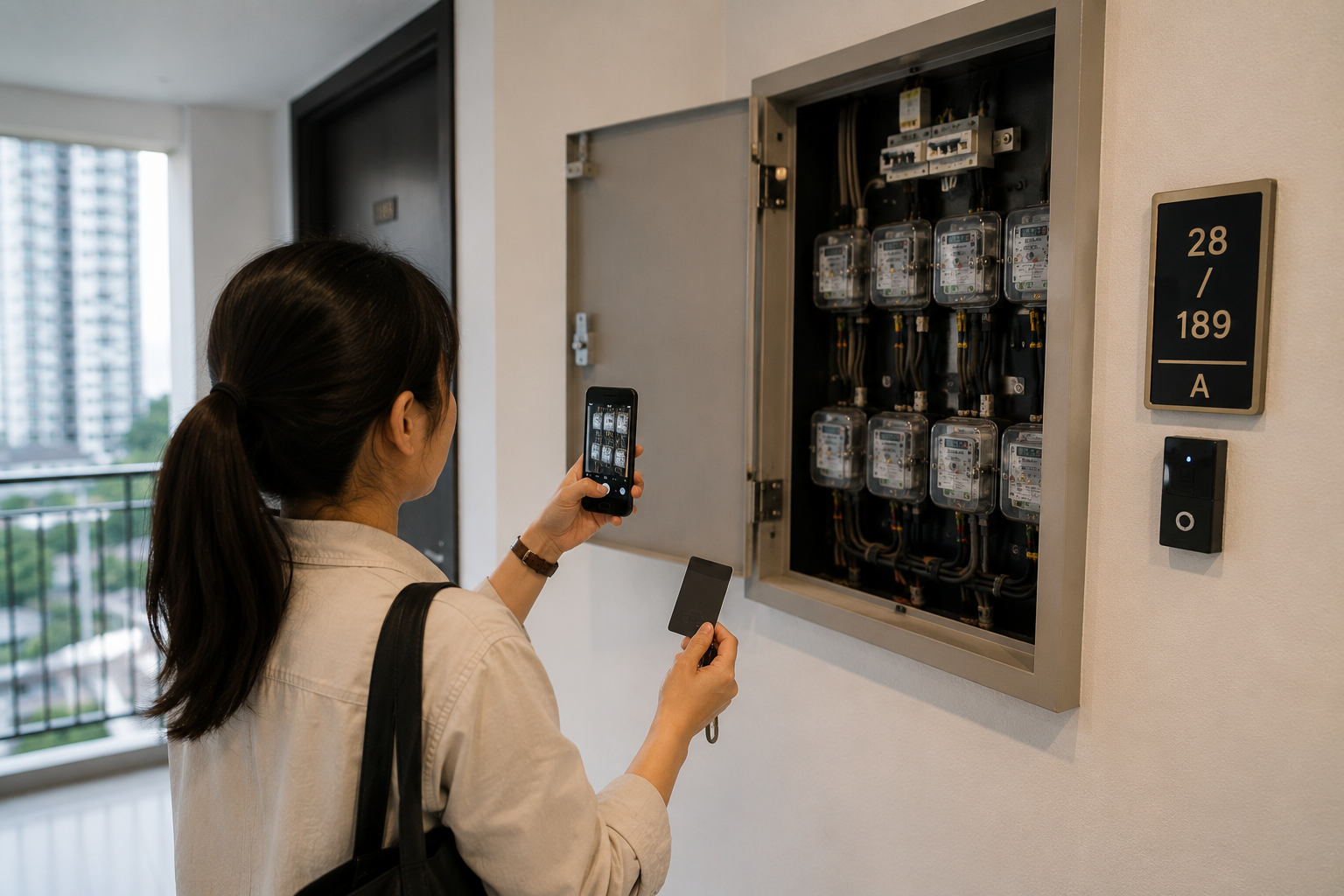
One point that can cause a misunderstanding is the meter reading on move-in day. If the meter was not photographed when the room was handed over, it may be difficult to check later whether electricity used before move-in was included. Tenants should always photograph the electricity meter on move-in and move-out day.
- Photograph the electricity meter reading on move-in day.
- Photograph the electricity meter reading on move-out day.
- Make sure the landlord or juristic office acknowledges the starting reading.
- Keep the photo with its date and time.
- Compare the meter reading with the first bill received.
- If the readings do not match, ask politely and provide evidence.
If you did not take a photo when moving in, start collecting evidence now, such as photos of bills, the current meter, and chats about electricity charges.
English summary: Always photograph the electricity meter on move-in and move-out day. This helps separate your usage from previous usage.
4. The Air Conditioner Is the Main Item to Check
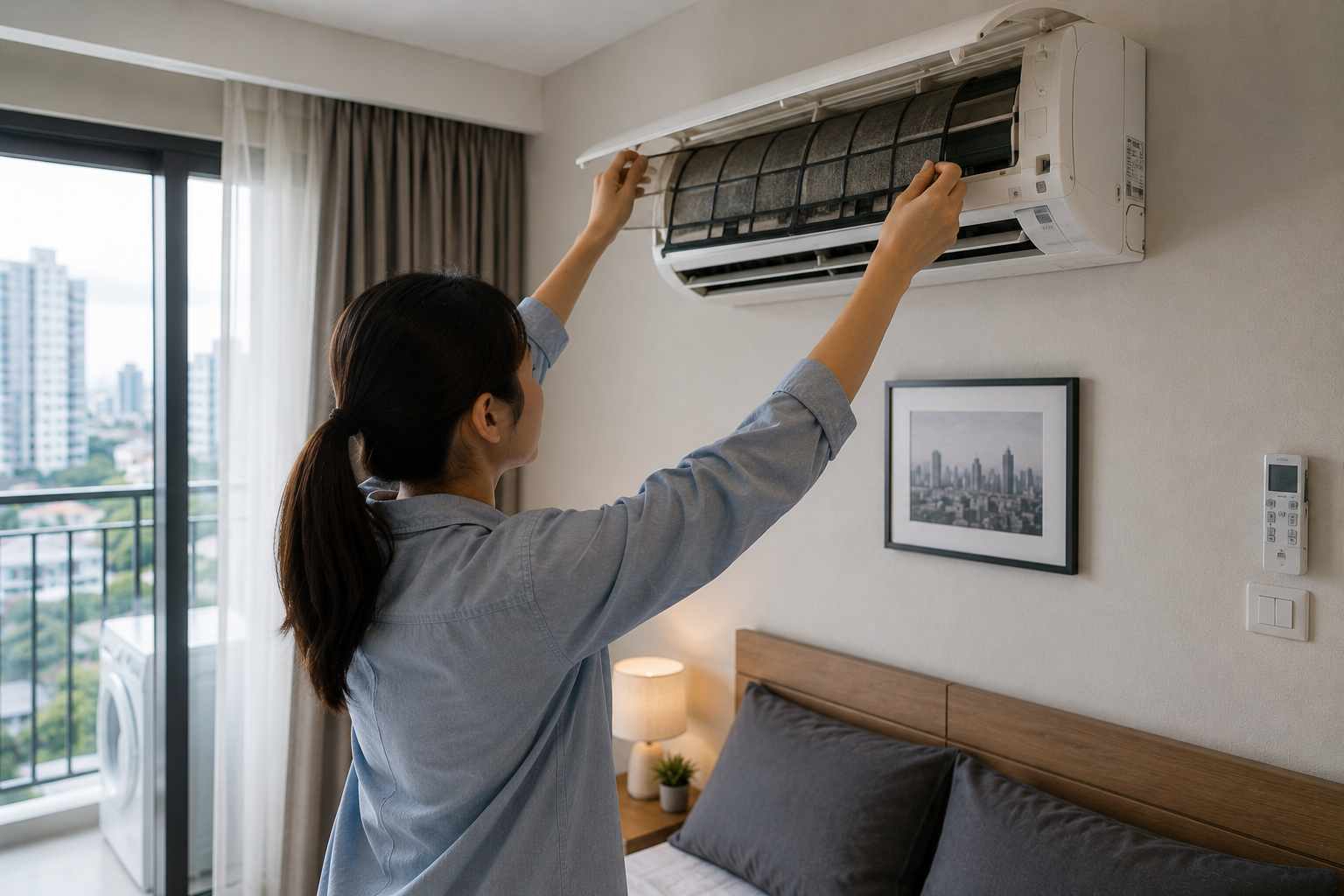
In Thai condos, the air conditioner is often the appliance that uses the most electricity. If it is old or has not been cleaned, the room receives strong sunlight, or it runs for long periods, the electricity bill may be higher than expected. Tenants should check the air conditioner's condition and use, as well as the air-conditioner cleaning terms in the lease.
- Does the air conditioner cool slowly or fail to cool?
- Is it noisy, dripping water, or producing a musty smell?
- When was it last cleaned?
- Is it set to a very low temperature for long periods?
- Does afternoon sun make it necessary to run the air conditioner at high power?
- Who is responsible for air-conditioner cleaning costs during the lease?
If the air conditioner appears to be working unusually hard, notify the landlord and provide details of the symptoms with photos or video. Do not call a technician yourself without checking the lease terms or notifying the landlord first, unless it is a necessary emergency.
5. Room Direction and Floor Level Affect Electricity Costs
Electricity bills for rooms of the same size can differ greatly because room direction, sunlight, and floor level affect heat. A room exposed to afternoon sun or with extensive glass walls may require the air conditioner to run longer, while a well-ventilated room or one without strong sun may use less electricity.
- Does the room receive morning or afternoon sun?
- Are there blackout curtains or heat-reducing window film?
- Do the windows and balcony door close tightly?
- Does a high-floor room receive more sun and wind?
- Is a low-floor room stuffy or difficult to ventilate?
- Do the lights or air conditioner need to remain on all day?
Electricity costs should be considered alongside the room's characteristics. Do not compare them directly with another room if direction, sunlight, room size, and electricity-use habits differ substantially.
English summary: Room direction, sunlight, glass walls, curtains, and floor level can affect air-conditioner use and electricity bills.
6. Check Other Appliances in the Room
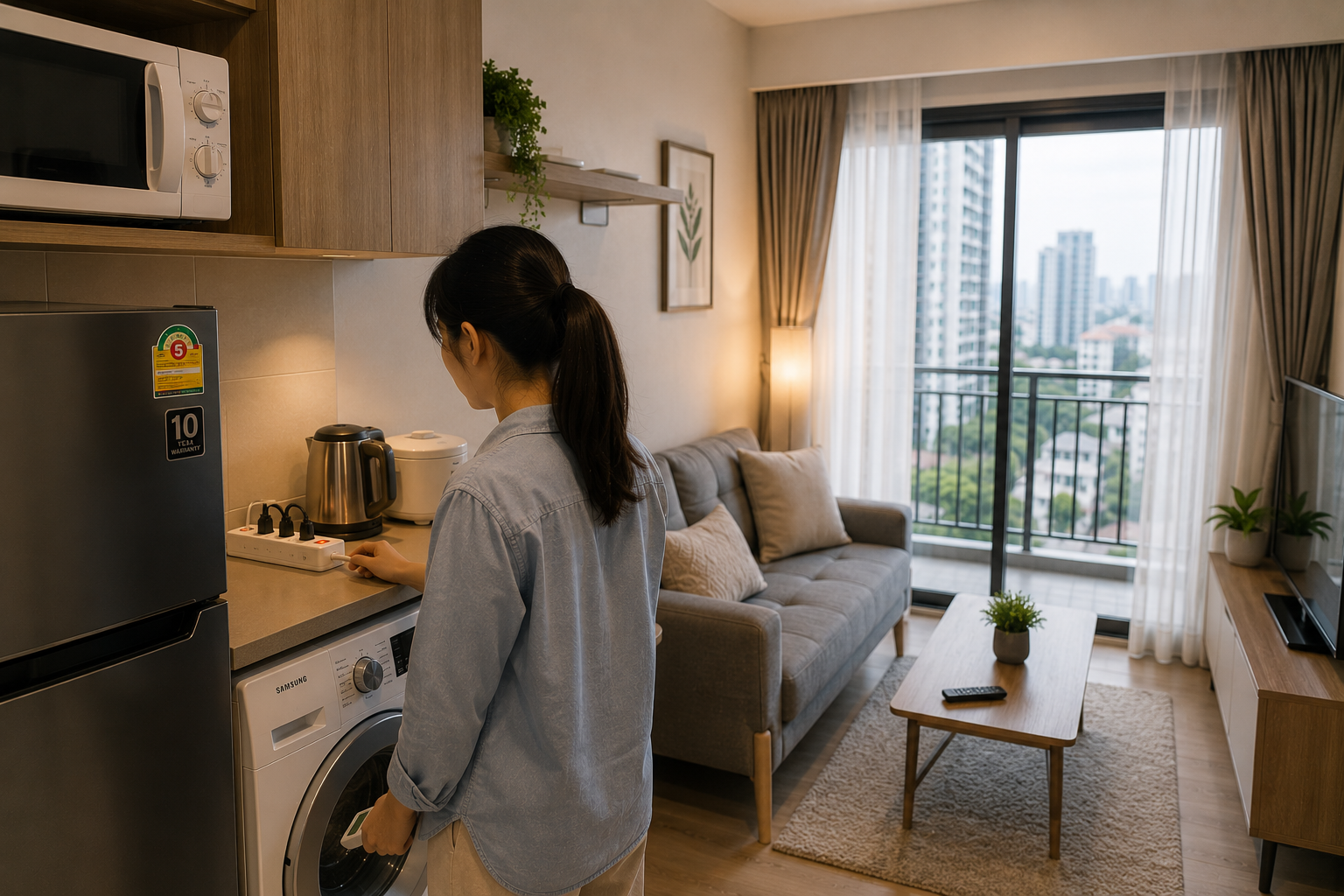
Besides the air conditioner, other appliances may raise electricity costs, such as an old refrigerator, water heater, washing machine, electric stove, microwave, television, or devices left plugged in continuously. If the room is furnished, ask whether each appliance is in good condition.
- Is the refrigerator cooling abnormally or running continuously?
- How often is the water heater used?
- Does the washing machine or dryer use a lot of electricity?
- Are the electric stove or microwave used frequently?
- Are any devices left plugged in all day?
- Do any appliances show signs of malfunctioning or abnormal power consumption?
If you suspect that an appliance is abnormal, record the symptoms and notify the landlord so that you can agree on how to inspect it.
7. Review Your Own Electricity-use Habits
A high electricity bill is not always caused by the room or the bill. Electricity-use habits can sometimes have a major effect, such as working from home, using the air conditioner during the day, running several appliances, or having several people in the room. Tenants should assess their actual use before concluding that the bill is abnormal.
- How many hours per day are you in the room?
- How many hours per day is the air conditioner on?
- Do you work from home?
- How many residents live in the room?
- Do you cook or use appliances frequently?
- Was the weather hotter than usual that month?
Keeping a simple record of electricity use, such as air-conditioner hours and the number of people in the room, will make it easier to speak clearly with the landlord or juristic office if the bill is unusually high.
English summary: Work-from-home, long air-con use, multiple residents, cooking, and hot weather can increase electricity use.
8. Check How the Electricity Rate Is Written in the Lease
The lease should state how electricity is charged, such as payment according to the actual bill, payment through the landlord, or a rate agreed per unit. If the lease is unclear, ask the landlord to summarize the arrangement in writing before move-in or before paying the first electricity bill.
- Does the lease clearly state the electricity charges?
- Is payment based on the actual bill or charged per unit?
- If charged per unit, what is the rate?
- Are there additional service charges?
- Who sends the bill to the tenant?
- When is the electricity payment due?
If the lease differs from what was discussed in the chat, ask for it to be corrected or clearly confirmed before signing or making any additional payment.
9. If Paying Through the Landlord, Ask to See the Bill or Details
Some rooms may require tenants to pay electricity through the landlord, who receives the main bill. In this case, the tenant should ask to see the bill or details showing the electricity units and amount so that the calculation is understandable.
- Ask to see the monthly electricity bill.
- Ask to see the actual units of electricity used.
- Check whether the billing period matches the period of occupancy.
- Ask which rate was used in the calculation.
- Request a receipt or confirmation message after payment.
- Keep every transfer slip and chat.
Ask for these details politely, explaining that you want to check them so both sides have the same understanding, not to accuse the landlord of charging incorrectly.
English summary: If paying electricity through the landlord, ask politely for the bill, unit usage, rate, and payment confirmation.
10. The First Month's Bill May Be Higher or Lower Than Usual
Check the billing period carefully for the first electricity bill after moving in, because it may not cover a full month or may include units used before move-in. Without checking the starting meter reading, a tenant may be unsure whether the entire amount charged relates to the period of actual occupancy.
- Does the first month cover a full billing period?
- Was charging started on the actual move-in date?
- Does the starting meter reading match the photo taken?
- Did repairs or cleaning before move-in use electricity?
- Is there any unpaid electricity charge from the previous tenant?
If you have questions, notify the landlord and provide the meter photo and move-in date so the details can be checked together.
11. How to Reduce Electricity Costs Without Making Life Too Uncomfortable
If the review shows that the high bill comes from actual use, tenants can adjust some habits to help reduce electricity costs without living uncomfortably, such as using sun-blocking curtains, setting the air conditioner appropriately, cleaning its filter, or turning off unused devices.
- Close doors and windows tightly when using the air conditioner.
- Use sun-blocking curtains in the afternoon.
- Set the air conditioner to an appropriate level, not lower than necessary.
- Clean the air-conditioner filter as appropriate.
- Turn off lights and unplug devices that are not in use.
- Use a fan with the air conditioner at certain times, if appropriate.
If the air conditioner or an appliance is very old and consumes an abnormal amount of electricity, discuss it with the landlord and provide evidence such as past bills, details of the appliance's symptoms, and supporting photos or video.
English summary: Tenants can reduce electricity use by managing air-con use, sunlight, curtains, filters, plugs, and appliance habits.
12. How to Discuss a Bill You Believe Is Abnormal
If a tenant believes an electricity bill is abnormal, begin by gathering information and asking politely, such as requesting bill details, asking to check the meter, or comparing billing periods. Do not begin with an accusation, because the issue may sometimes result from the billing period, meter reading, or an actual change in electricity use.
- Collect previous electricity bills.
- Photograph the current meter.
- Check the billing period and electricity units.
- Check how the lease states electricity will be charged.
- Send a polite message to the landlord.
- Ask the juristic office to help check the information, if relevant.
Keep every chat and piece of evidence so the review is systematic and misunderstandings between tenant and landlord are reduced.
13. Checklist for an Unusually High Condo Electricity Bill
- Check whether electricity is paid through MEA, PEA, the juristic office, or the landlord.
- Check the billing period, meter reading, and electricity units.
- Compare the bill with the previous month.
- Check the meter reading from move-in day.
- Check the air conditioner and its cleaning history.
- Consider the room's direction, sunlight, and heat.
- Check the appliances in the room.
- Assess your own electricity-use habits.
- Read the lease to see how electricity is charged.
- Ask to see the bill or details if paying through the landlord.
- Keep bills, transfer slips, chats, and meter photos as evidence.
Conclusion
An unusually high condo electricity bill in Thailand can result from many factors, including air-conditioner use, room direction, heat, appliances, the billing period, meter readings, or lease terms. Tenants should check the information one step at a time, politely and with evidence, rather than drawing a conclusion from the total amount alone.
Before renting a condo, ask clearly how electricity is charged, who receives the payment, whether a bill is available to review, and which meter reading is used as the starting point. Baandeego is only a real estate listing platform and is not involved in calculating electricity charges, collecting utility payments, checking meters, or coordinating with electricity authorities on behalf of users.
English summary: Check the bill, meter, air-conditioner, appliances, room direction, usage pattern, lease terms, and payment proof before concluding that a condo electricity bill is abnormal.
FAQ
1. What Should I Check First If My Condo Electricity Bill Is Unusually High?
Start with the electricity bill, billing period, meter reading, units used, and the electricity charging method in the lease. Then check the air conditioner, appliances, and your own electricity-use habits.
English: Start with the bill, billing period, meter reading, usage units, and lease terms.
2. If I Pay Electricity Through the Landlord, Can I Ask to See the Bill?
You can ask politely for the electricity-unit and payment details so both sides understand how the bill was calculated. Keep a transfer slip or confirmation message after every payment.
English: Yes. Ask politely for the bill or usage details and keep payment proof.
3. Should I Photograph the Electricity Meter Before Moving In?
Photograph the electricity meter reading on move-in and move-out day, and keep the photos with the lease and chats for checking billing periods and electricity charges later.
English: Yes. Photograph the meter on move-in and move-out day for proof.
Platform Use Disclaimer
This website is only a real estate listing platform.
Users should verify information, documents, and conditions by themselves.
This website is only a real estate listing platform.
Users should verify information, documents, and conditions by themselves.
Baandeego is not a broker and is not a party to any rental, purchase, sale, booking, payment, contract, ownership transfer, room inspection, document check, owner verification, meter inspection, electricity calculation, utility payment collection, refund, or coordination with juristic offices or electricity authorities on behalf of users. It is not responsible for disputes among users, buyers, tenants, owners, sellers, landlords, agents, juristic persons, service providers, or relevant authorities. All parties should independently verify the information, documents, terms, costs, and applicable laws before making a decision.
References
- Metropolitan Electricity Authority — Check/Pay Electricity Bills Online with MEA Smart Service: https://www.mea.or.th/en/our-services/mea-service/check-pay
- Metropolitan Electricity Authority: https://www.mea.or.th/en
- Provincial Electricity Authority: https://www.pea.co.th/en
- Provincial Electricity Authority — Payment Channel: https://www.pea.co.th/en/our-services/payment-channel