Studio vs 1-Bedroom Condo Rentals: What Is the Difference and Which Should You Choose?
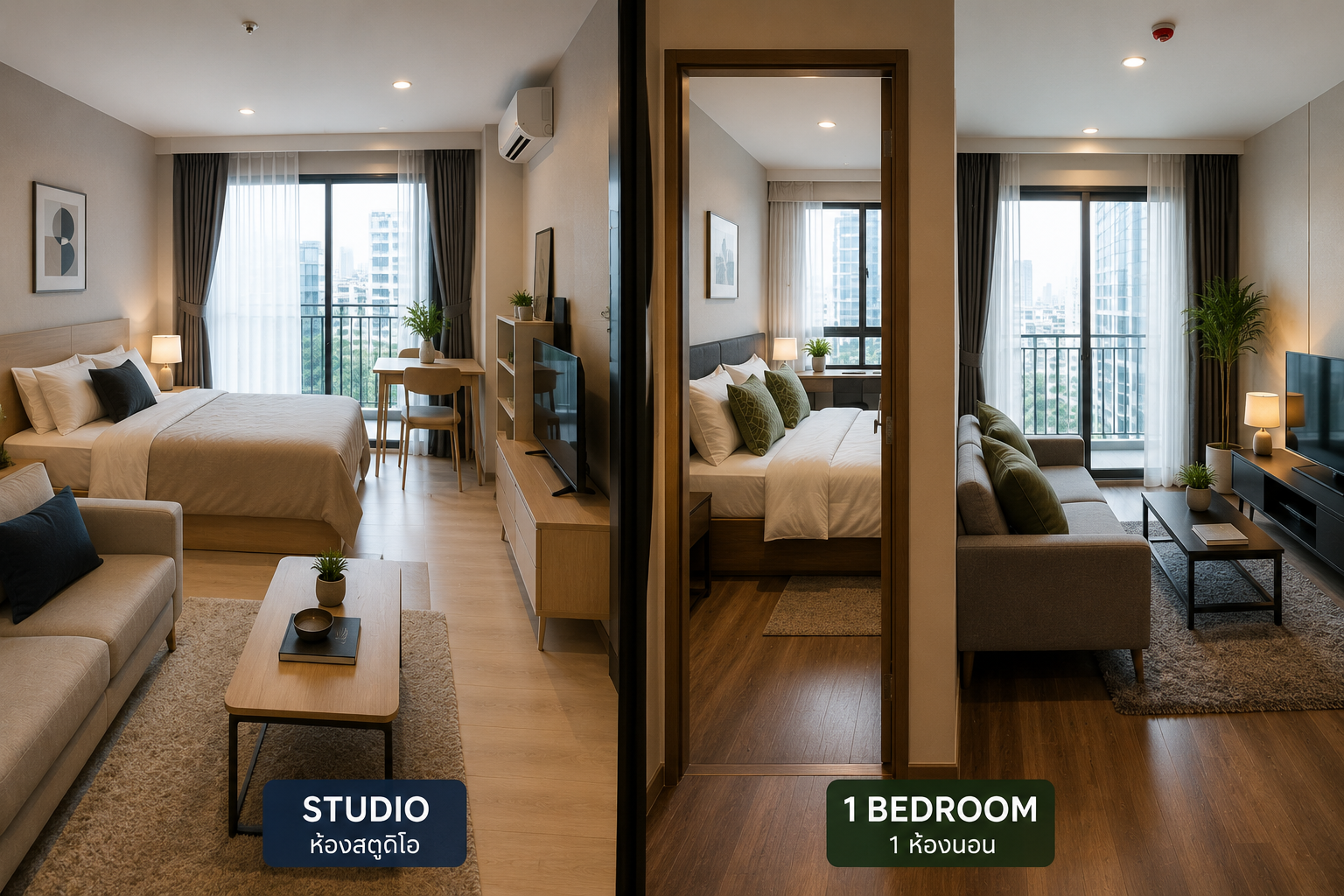
Whether to rent a studio or a 1-bedroom condo is a question many tenants face when they begin looking for a condo in Thailand, especially in Bangkok, Pattaya, Chonburi, Phuket, Chiang Mai, Hua Hin, and other major cities with a variety of rental condos. A studio often feels compact and makes expenses easier to manage, while a 1-bedroom unit generally provides more privacy and clearer separation between living areas.
There is no single answer as to which room type is best. The choice depends on the number of occupants, budget, lifestyle, lease term, work-from-home needs, storage, cooking frequency, and genuine need for rest. This article compares studio and 1-bedroom condos to help tenants choose a room that better fits everyday life before transferring a deposit or signing a lease.
English summary: Studio condos are usually more compact and budget-friendly, while one-bedroom condos offer clearer space separation and more privacy. The best choice depends on lifestyle, budget, storage, work-from-home needs, and contract terms.
1. What Is a Studio?
A studio is a condo that combines the sleeping area, living area, and sometimes workspace in a single room, with a separate bathroom and possibly a small kitchen area. This type of room suits someone living alone who does not have many belongings and wants an easy-to-maintain space.
- The sleeping and living areas are usually in the same zone
- It suits a tenant living alone
- In many cases, it is easier to clean
- The rent may be lower than for a 1-bedroom unit in the same building
- It suits someone who mainly uses the room for sleeping and relaxing and does not need to store many belongings
Check the placement of the bed, sofa, desk, wardrobe, and kitchen. If the layout is poor, the room may feel cramped even when the stated floor area seems adequate.
English summary: A studio condo combines sleeping and living areas in one open space. It can be practical for single tenants with a simple lifestyle.
2. What Is a 1-Bedroom Condo?
A 1-bedroom condo has a bedroom separated from the living area or kitchen, usually by a door or wall. It is suitable for tenants who want more privacy or use the room for several activities each day.
- The bedroom is separate from the living area
- It suits people who often work from home
- It suits couples or people who want clearly defined spaces
- In some cases, it controls cooking odors and noise better than an open-plan room
- Rent and total expenses may be higher than for a studio
A 1-bedroom unit may be better for a long-term stay if the tenant spends most of the time at home or has many belongings, but the rent and all expenses should still be compared before deciding.
3. Differences in Usable Space
The main difference between a studio and a 1-bedroom unit is how the space is divided. A studio combines its spaces, while a 1-bedroom separates the sleeping area from the living area. This division affects how the room feels in daily use more than many people expect.
- A studio suits people who like an open space
- A 1-bedroom suits people who want clearly separated zones
- If guests visit, a 1-bedroom generally offers more privacy
- If the room is very small, some 1-bedroom layouts may feel more cramped than a well-planned studio
- Look at the actual layout and stand inside the room rather than considering only its square meters
Check whether the actual usable space is sufficient: whether the wardrobe opens easily, whether you can walk around the bed, whether there is room for a desk, and whether there is enough storage.
English summary: Room layout matters as much as room size. A well-planned studio may feel more usable than a poorly planned one-bedroom unit.
4. Privacy and Rest
A 1-bedroom generally offers more privacy because its bedroom door can be closed to separate it from the living area or kitchen. It suits people who want a genuine place to rest, live with a partner or roommate, or occasionally have guests.
- A studio suits someone living alone who does not need extensive separation
- A 1-bedroom suits someone who wants to separate sleeping from other activities
- If guests visit often, a 1-bedroom may be more convenient
- If you cook frequently, a 1-bedroom may help limit odors entering the sleeping area
- If you must sleep and work in the same space, a studio may make it difficult for some people to rest
People who are sensitive to noise, smells, or light should carefully inspect the placement of the bed, windows, air conditioner, kitchen, and room entrance before choosing.
5. Working from Home and Online Study
If you need to work from home, study online, or frequently attend video meetings, a 1-bedroom may separate work and rest areas more effectively. A studio can still work if it has a clearly defined desk area, good light, and little noise.
- Is there a desk, or enough room to add one?
- Are power outlets near the workspace?
- Is the internet signal strong enough?
- Is the background suitable for video calls?
- Does the air conditioner cool the workspace?
- Can you separate working time from rest time?
Tenants who work from home every day should give the desk, chair, natural light, noise, and internet as much attention as the bed or room view.
English summary: For work-from-home tenants, check desk space, internet, noise, lighting, power outlets, and separation between work and rest areas.
6. Rent and Total Expenses
In general, a studio may have lower rent than a 1-bedroom unit in a similar building and location. However, do not decide based on rent alone. Calculate total monthly expenses such as electricity, water, internet, transport, and other costs.
- How much does the monthly rent differ?
- Do the deposit and advance rent differ?
- Electricity costs may differ with room size and air-conditioner use
- Is internet included in the rent, or must you subscribe separately?
- If the 1-bedroom unit is farther away, will transport cost more?
- Do the total monthly expenses genuinely fit the budget?
A larger room may be worthwhile if you genuinely use the space, but if you live alone and use the room little, a well-located studio may suit you better.
7. Storage and Organization
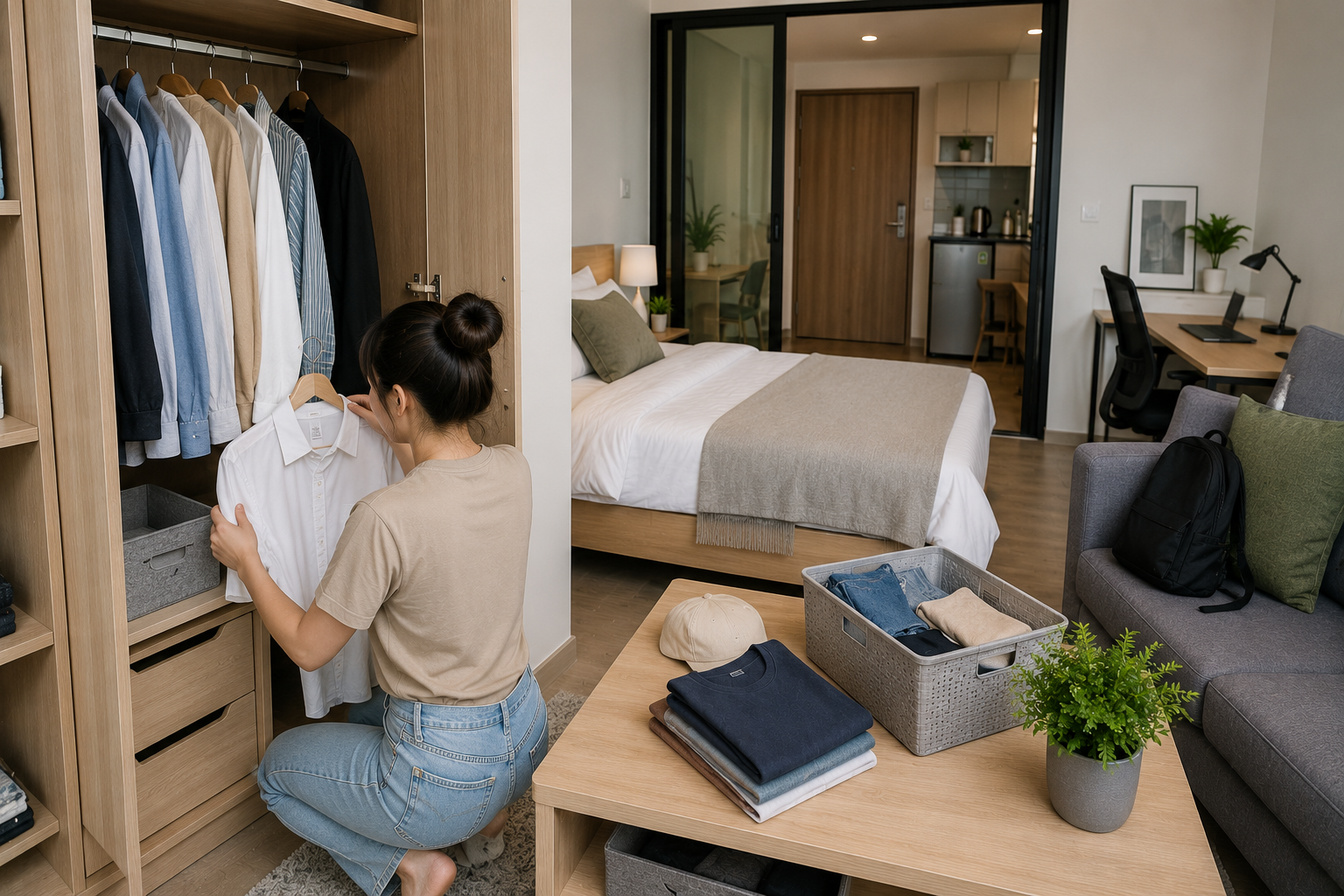
Tenants often overlook storage. A studio may look attractive in photographs, but without enough cabinets or shelves it may quickly become cluttered after move-in. A 1-bedroom often offers more opportunities to organize storage by area, although this still depends on the layout and furniture.
- Is the wardrobe large enough?
- Is there space for luggage or storage boxes?
- Are there shelves or storage for documents?
- Can the area under the bed or wall space be used for storage?
- If you have sports equipment, a musical instrument, or work equipment, is there enough room?
- Imagine the room with the belongings you actually own, not only as shown in a sample unit
If you have many belongings or plan to stay long term, give storage cabinets particular attention because storage affects everyday comfort.
English summary: Storage is important. A small room can work well if storage is smart, but it can feel crowded quickly if storage is limited.
8. Cooking and Odors in the Room
If you cook often, check where the kitchen is located, whether there is an extractor hood, how well the area is ventilated, and whether cooking odors will enter the sleeping area or cling to clothes. A studio may have more limitations with odors than a 1-bedroom because everything shares one space.
- Is the kitchen separate or in the same room as the bed?
- Is there an extractor hood or ventilation window?
- Can you cook substantial meals, or is the kitchen more suitable for lightly heating food?
- Will food odors cling to the curtains, bed, or clothes?
- What types of cooking do the building rules permit?
- Open and inspect the cabinets, kitchen area, space under the sink, and ventilation before renting
For someone who cooks every day, a 1-bedroom or a unit with a separate kitchen may be more suitable. A studio may be sufficient if you mostly eat out or prepare simple food.
9. Living Alone, with a Partner, or with a Roommate
The number of occupants strongly affects the choice of room. If you live alone, a studio may be sufficient and more economical. If you live with a partner or roommate, a 1-bedroom may provide more personal space and feel less confined.
- Living alone: a studio may be suitable if you do not have many belongings
- Living with a partner: a 1-bedroom is generally easier to use
- Living with a roommate: give privacy greater consideration
- Frequent guests: a 1-bedroom may be more convenient
- Studying or working at different times: more separate space may be necessary
Do not choose solely by monthly rent. If the space is too small for the number of people, daily life may become difficult and lead to long-term problems.
English summary: A studio can suit one person, while a one-bedroom unit is usually better for couples, frequent guests, or tenants who need more privacy.
10. Should You Choose Differently for a Short-Term or Long-Term Rental?
A studio may be sufficient for a short-term rental when the priorities are convenience and manageable expenses. For a long-term rental, a 1-bedroom may make daily life more comfortable, especially if you work from home, have many belongings, or live with someone else.
- Short term: focus on location and move-in readiness
- Long term: consider storage, privacy, and everyday comfort
- For a long-term stay, inspect noise, neighbors, and building quality more carefully
- If you expect to renew the lease several times, choose a room that will not feel cramped
- Clearly ask about conditions for moving out before the lease ends
Tenants who are unsure how long they will remain in an area may begin with an appropriately sized room and a more flexible lease, then adjust after understanding their real lifestyle.
11. Look at the Layout, Not Only the Floor Area
Rooms of the same size can differ greatly in comfort because the layout, furniture, windows, balcony, and column positions affect how the space can be used. View the actual room and imagine your daily routine inside it.
- Will an open cabinet door hit the bed or table?
- Is it easy to walk from the bed to the bathroom?
- Will adding a desk make the walkway too narrow?
- Is the drying area or balcony genuinely usable?
- Does too much or too little natural light enter the room?
- Can the existing furniture be moved or adjusted?
A well-planned studio may be easier to use than a poorly divided 1-bedroom, so focus on practical use rather than only the room category.
English summary: Room layout can matter more than square meters. Always inspect the real unit and imagine daily routines inside it.
12. What to Check Before Transferring a Deposit
Whether choosing a studio or a 1-bedroom, tenants should always verify the basic information before transferring a deposit, especially when renting directly from an owner or through an online listing.
- View the room in person or by live video call before transferring money
- Check whether the actual room matches the listing photos
- Verify the landlord's name and payment account
- Read the lease and deposit conditions
- Check the rent, water, electricity, internet, and parking charges
- Ask about building rules for occupants, pets, smoking, and guests
- Always request a receipt or written confirmation
Users with questions about payments or services can consult information from the Office of the Consumer Protection Board. Ownership or real estate documents should be checked with the Department of Lands or a relevant professional.
13. Checklist for Choosing a Studio or 1-Bedroom Condo
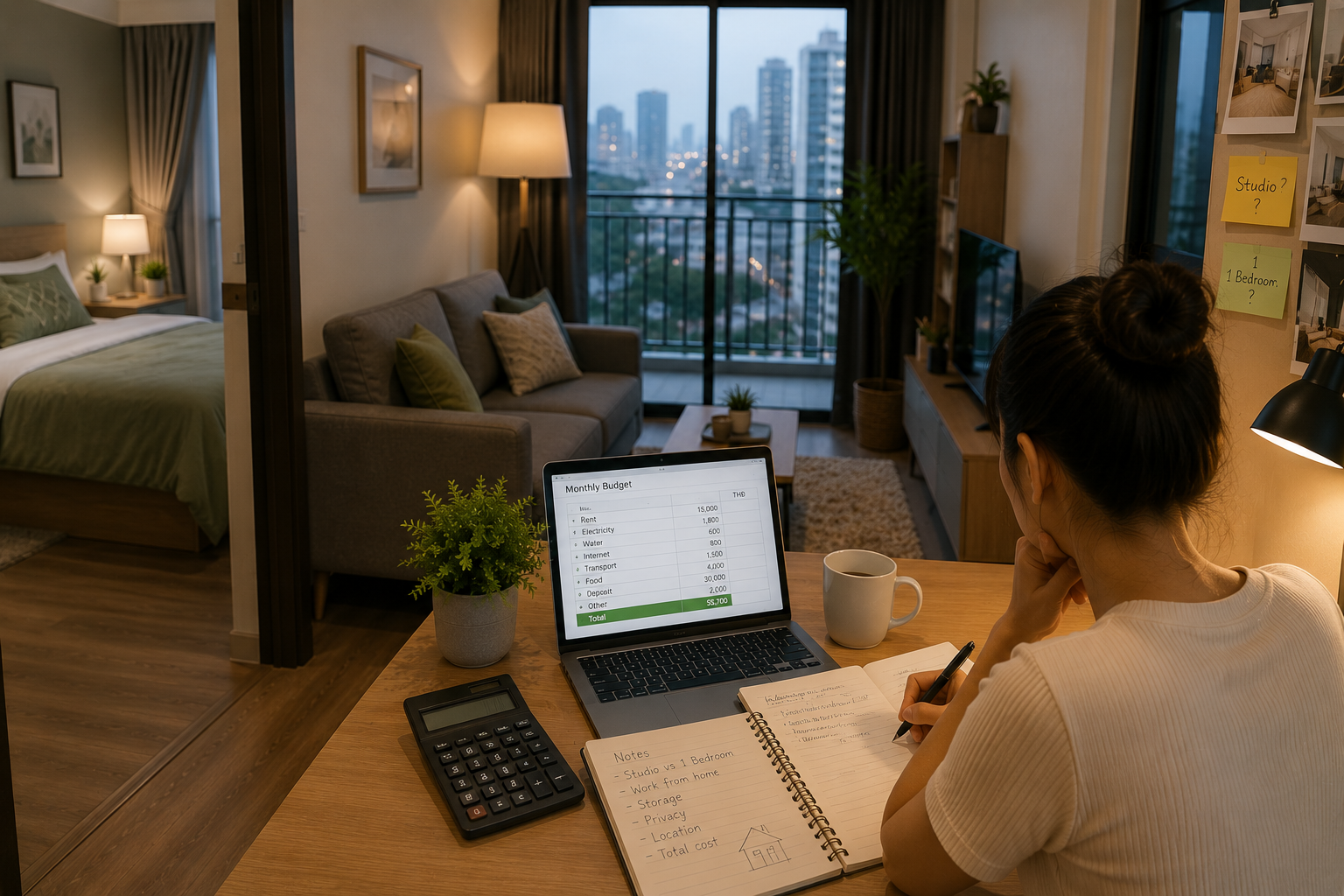
- Will you live alone or with someone else?
- Will you often work from home or study online?
- How many belongings and clothes do you have?
- Do you cook often or mainly eat out?
- How much privacy do you need?
- Do guests visit often?
- Is the rental short term or long term?
- Do the rent and total monthly expenses fit the budget?
- Is the layout convenient in actual use?
- Are the lease, deposit, and expenses clear?
Summary
The main differences between renting a studio and a 1-bedroom condo are the division of space, privacy, costs, and comfort during a long-term stay. A studio suits a tenant living alone with few belongings who wants to manage expenses. A 1-bedroom suits someone who wants to separate areas for rest, work, or cooking, or who lives with a partner.
Before deciding, view the actual room, inspect the layout, consider your everyday routine, calculate total expenses, read the lease, and keep evidence at every step. Baandeego is only a real estate listing platform. It is not involved in bookings, payments, contracts, or room inspections on behalf of users.
English summary: Choose a studio or one-bedroom condo by real lifestyle, not only rent price. Check layout, privacy, storage, work needs, cooking habits, total cost, and contract proof before renting.
FAQ
1. If I Live Alone, Should I Rent a Studio or a 1-Bedroom?
If you live alone, have few belongings, and want to manage expenses, a studio may be sufficient. If you often work from home, have many belongings, or want to separate sleeping and living areas, a 1-bedroom may be more suitable.
English: A studio may suit simple solo living, while a one-bedroom is better for more privacy, storage, and work-from-home needs.
2. Is a Studio Always Cheaper Than a 1-Bedroom?
Not always. Rent depends on the location, building, floor, view, furniture, and lease. A studio in a good location may cost more than a 1-bedroom farther away. Compare the total monthly expenses.
English: Not always. Rent depends on location, building, view, furniture, and contract terms.
3. What Is Most Important to Check Before Choosing a Room Type?
Check the actual layout, storage, workspace, kitchen, noise, total expenses, and lease. Do not decide based only on photographs or the stated floor area.
English: Check real layout, storage, work space, kitchen, noise, total cost, and lease terms.
Platform Use Disclaimer
This website is only a real estate listing platform.
Users should verify information, documents, and conditions by themselves.
This website is only a real estate listing platform.
Users should verify information, documents, and conditions by themselves.
Baandeego is not a broker and is not a party to any rental, sale, booking, payment, contract, ownership transfer, room inspection, document check, owner verification, deposit receipt, refund, or coordination on behalf of users. It is not responsible for disputes among users, buyers, tenants, owners, sellers, landlords, agents, juristic persons, or relevant authorities. All parties should independently verify the information, documents, conditions, expenses, and applicable laws before making a decision.
References / Sources
- Office of the Consumer Protection Board, Thailand: https://www.ocpb.go.th/index_en.php
- Department of Lands, Thailand: https://www.dol.go.th/
- Bangkok Metropolitan Administration — Visit Bangkok: https://visit.bangkok.go.th/