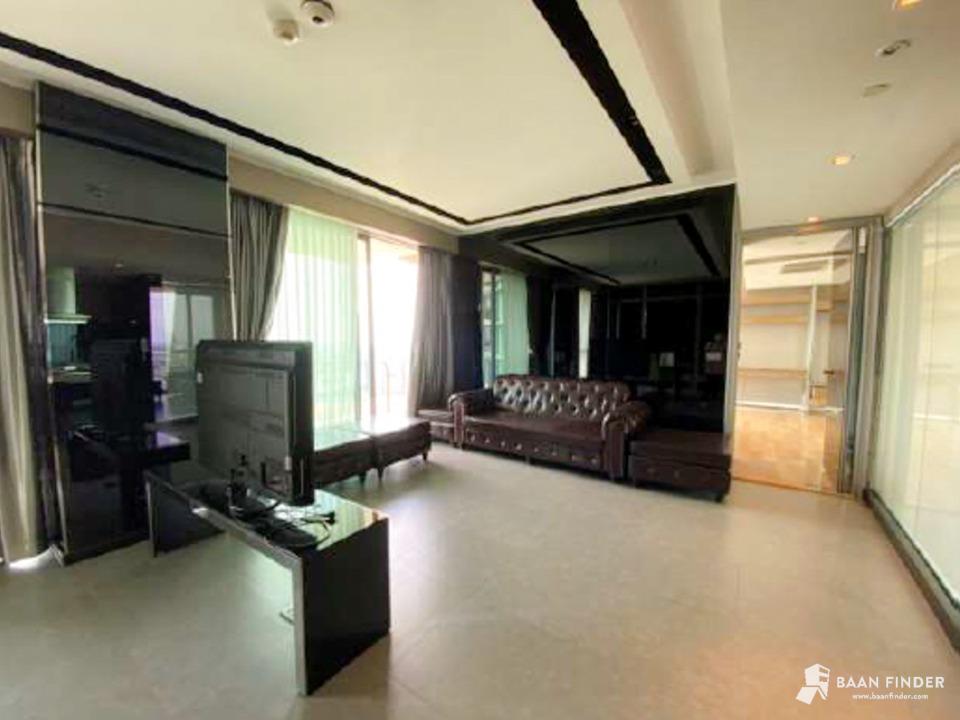
Pattaya Condo Rental Guide 2026: Deposits, Contracts, Utilities, and Move-In Dates
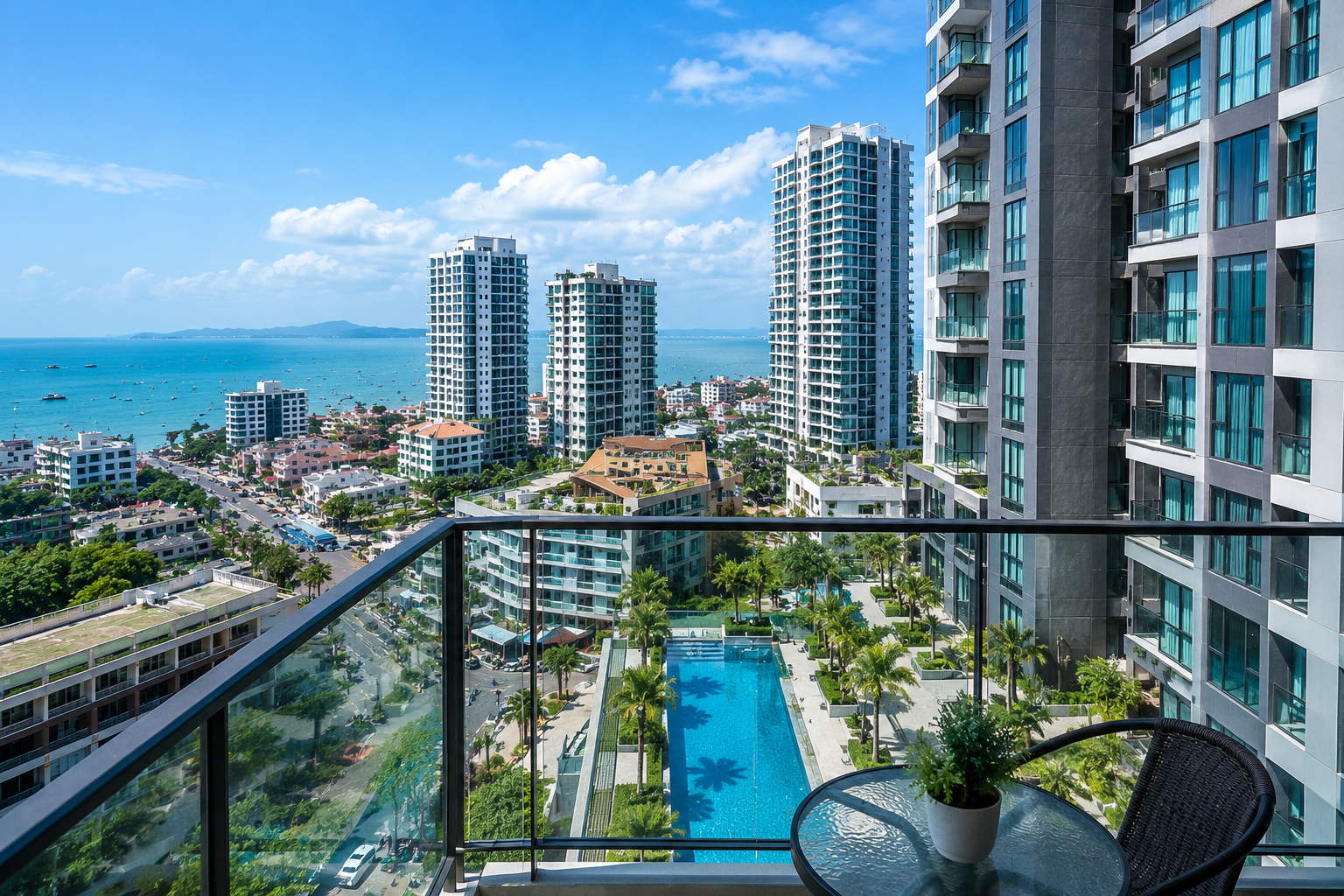
This Pattaya condo rental guide for 2026 is for people looking for a condo to rent in Pattaya, whether they are Thai tenants, foreign residents, employees, medium-term occupants, or people moving into a condo for the first time. A condo rental should not be judged only by the monthly rent or listing photographs. Before transferring money, clearly check the deposit, contract, move-in costs, utilities, internet, parking, furniture, and move-in date.
Pattaya has several areas to choose from, including Central Pattaya, Jomtien, Naklua, Wongamat, and Pratumnak. Each area differs in rent levels, atmosphere, transportation, and tenant groups. Tenants should compare both the price and the actual terms, rather than deciding only from phrases such as 'beautiful unit,' 'near the sea,' or 'good price.'
English summary: Before renting a condo in Pattaya, check the deposit, contract, move-in cost, utilities, internet, parking, furniture, and actual room condition before paying.
1. Start with Your Real Budget Before Renting a Condo in Pattaya
Monthly rent is only one part of the total cost. Tenants should calculate their real budget before contacting an owner or advertiser, because the move-in date often brings costs beyond one month's rent, such as a deposit, advance rent, internet, moving services, or small expenses to prepare the unit.
- Monthly rent
- Deposit
- Advance rent
- Water, electricity, and internet charges
- Parking fees, if the building charges extra
- Housekeeping or cleaning costs before move-in
- Travel or moving costs on the move-in date
For example, if the rent is 15,000 baht per month and the owner requires a 2-month deposit plus 1 month's rent in advance, the tenant may need to prepare an initial move-in payment of approximately 45,000 baht, excluding other expenses. This is only an example because each unit and owner may set different terms.
English summary: Monthly rent is not the full move-in cost. Calculate deposit, advance rent, utilities, internet, and moving expenses before deciding.
2. What Is a Condo Deposit?
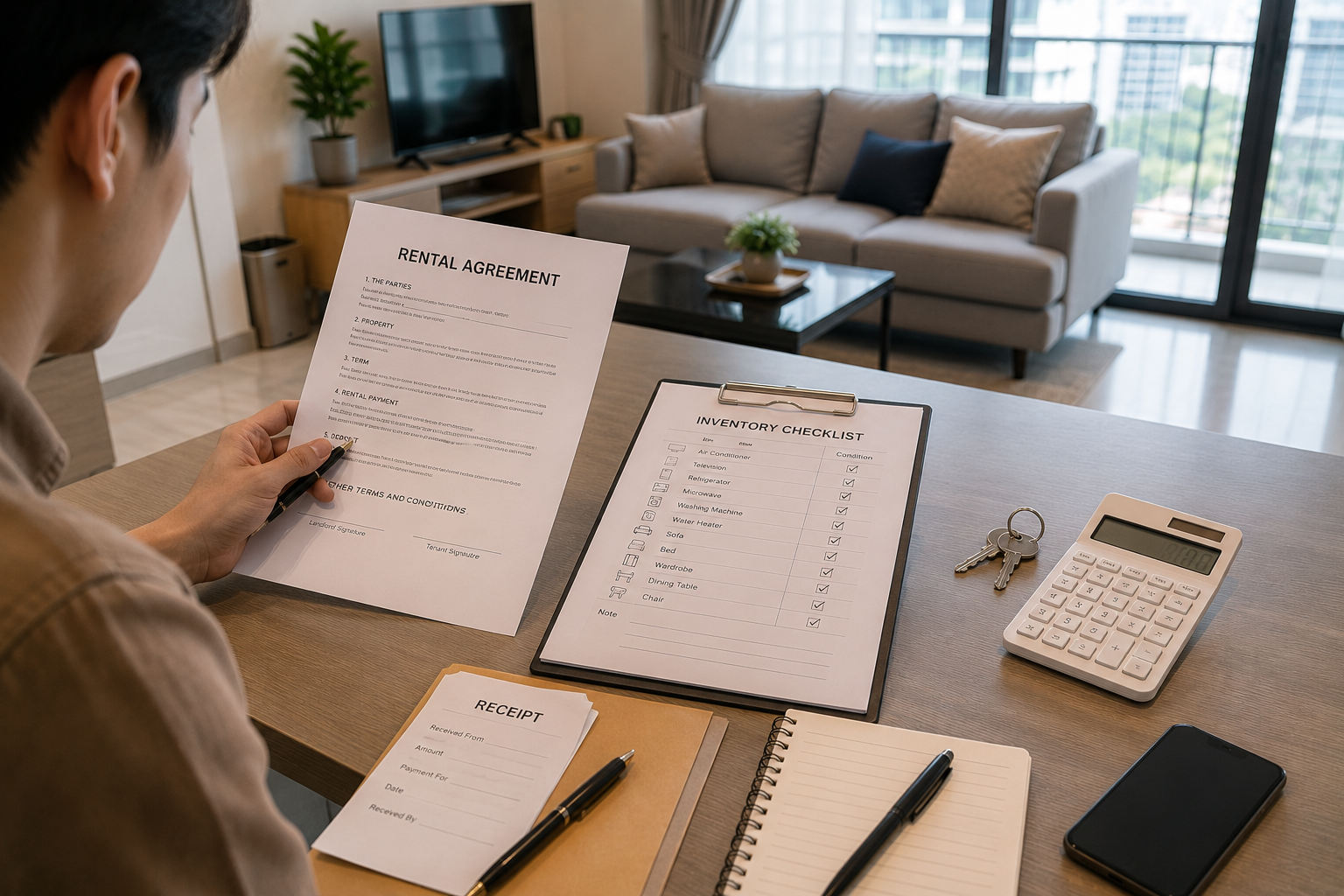
A condo deposit is money a tenant pays to an owner or landlord as security for damage, outstanding expenses, or conditions under the contract. When the contract ends and the tenant moves out, the owner may refund the deposit after deducting documented expenses, such as outstanding utility bills or damage beyond normal wear and tear.
Tenants should clearly ask how much the deposit is, when and how it will be refunded, and when deductions may be made. All terms should be stated in the rental contract and should not be agreed only verbally.
- How many months' deposit is required?
- How many months' rent must be paid in advance?
- Within how many days after move-out will the deposit be refunded?
- In what circumstances may deposit deductions be made?
- Will a receipt or proof that the money was received be provided?
- Must the unit be inspected jointly before the refund?
Deposit rules may vary according to the type of landlord, nature of the business, and legal conditions in force at the time. Tenants should check the latest information with the relevant authorities or a professional if there is a dispute or uncertainty about the terms.
3. What Should a Condo Rental Contract Include?
The condo rental contract is the most important rental document. Tenants should read every page before signing and should always retain a fully signed copy. If any wording is unclear, ask for clarification before transferring money or receiving the keys.
- The names and contact details of the tenant and landlord
- The condominium name, unit number, floor, and address
- The monthly rent and payment due date
- The deposit and advance rent amounts
- The contract term, such as 6 months or 1 year
- The contract start and end dates
- Renewal and cancellation terms
- An inventory of furniture and appliances
- Responsibility for water, electricity, internet, and common-area fees
- Deposit refund conditions
If the contract is in both Thai and English, tenants should check whether the content is consistent and understand which version is controlling in the event of a conflict. This article provides general information, not legal advice.
English summary: A rental contract should clearly state parties, room details, rent, deposit, lease term, utilities, furniture list, cancellation terms, and deposit refund conditions.
4. Ask Clearly About Water, Electricity, and Internet
Tenants should ask about water, electricity, and internet before agreeing to rent because each building or owner may calculate them differently. Some units follow electricity or water authority bills, some use a per-unit rate stated in the contract, and some may include internet in the rent.
Tenants should ask whether electricity follows the actual bill or a per-unit rate, how water is charged, who pays the bills, whether internet is already installed, and whether the package can be changed. The Provincial Electricity Authority publishes the official electricity tariff structure, while the Provincial Waterworks Authority provides water tariff tables by user category and consumption. Tenants should check the actual costs for the building or unit again because they may differ by area and building conditions.
- Is electricity charged according to the actual bill or per unit?
- Is water charged according to the actual bill or per unit?
- Are there additional common service fees that the tenant must pay?
- Is internet included in the rent?
- May the tenant arrange their own internet installation?
- Is there a penalty for late utility payments?
English summary: Ask how electricity, water, and internet are billed. Utility costs can differ by building, owner, and contract terms.
5. Confirm the Move-In Date and Unit Condition Before Paying
Before paying a deposit or transferring money, tenants should confirm the exact move-in date and verify that the unit is genuinely ready for occupancy. 'Ready to move in' should mean the unit is clean and that the electricity, water, air conditioner, furniture, and main appliances work as agreed.
- What date is the unit available for move-in?
- Has the unit been cleaned?
- Does the air conditioner cool without dripping?
- Do the refrigerator, washing machine, microwave, and water heater work?
- Do the water, electricity, and door locks work normally?
- Are there any repairs to complete before move-in?
If the owner promises to repair or provide anything else, record it in writing through chat or an attachment to the contract to prevent misunderstandings after move-in.
6. Pattaya Locations to Consider Before Renting
Pattaya has several locations suited to different tenant groups. Choose based on daily life rather than popularity alone. Tenants should consider the distance to work, the beach, restaurants, shopping malls, hospitals, schools, or places they use frequently.
- Central Pattaya: Suitable for people who want convenience and proximity to restaurants, shopping malls, and city services
- Jomtien: Suitable for people who want a beach atmosphere and relaxed living
- Naklua: Suitable for people who want somewhere quieter than some inner-city areas
- Wongamat: Suitable for people seeking privacy and a seaside atmosphere
- Pratumnak: Suitable for people who want to live between Central Pattaya and Jomtien
Test the actual journey, especially if you do not have a private vehicle. Some condominiums may look close to the sea on a map but be inconvenient on foot or be in a lane where a motorcycle is the main form of transport.
English summary: Choose a Pattaya location based on daily life, transport, beach access, and convenience, not only rental price.
7. Parking, Pets, and Building Rules
Each condominium has different rules. Before signing the contract, tenants should ask about parking, pets, use of common facilities, resident registration, moving belongings, and receiving guests because these matters can directly affect daily life.
- Is parking available?
- Is parking included in the rent, or does it cost extra?
- Are pets permitted?
- Must residents register with the juristic person?
- May tenants fully use the swimming pool, fitness center, or common areas?
- Are there designated times for moving belongings?
- Are there rules concerning foreign residents or additional documents?
Tenants with pets should ask for the terms to be clearly stated in the contract and should not rely on verbal assurances. Some buildings may prohibit pets even when the unit owner agrees.
8. Inspect the Unit Before Receiving the Keys
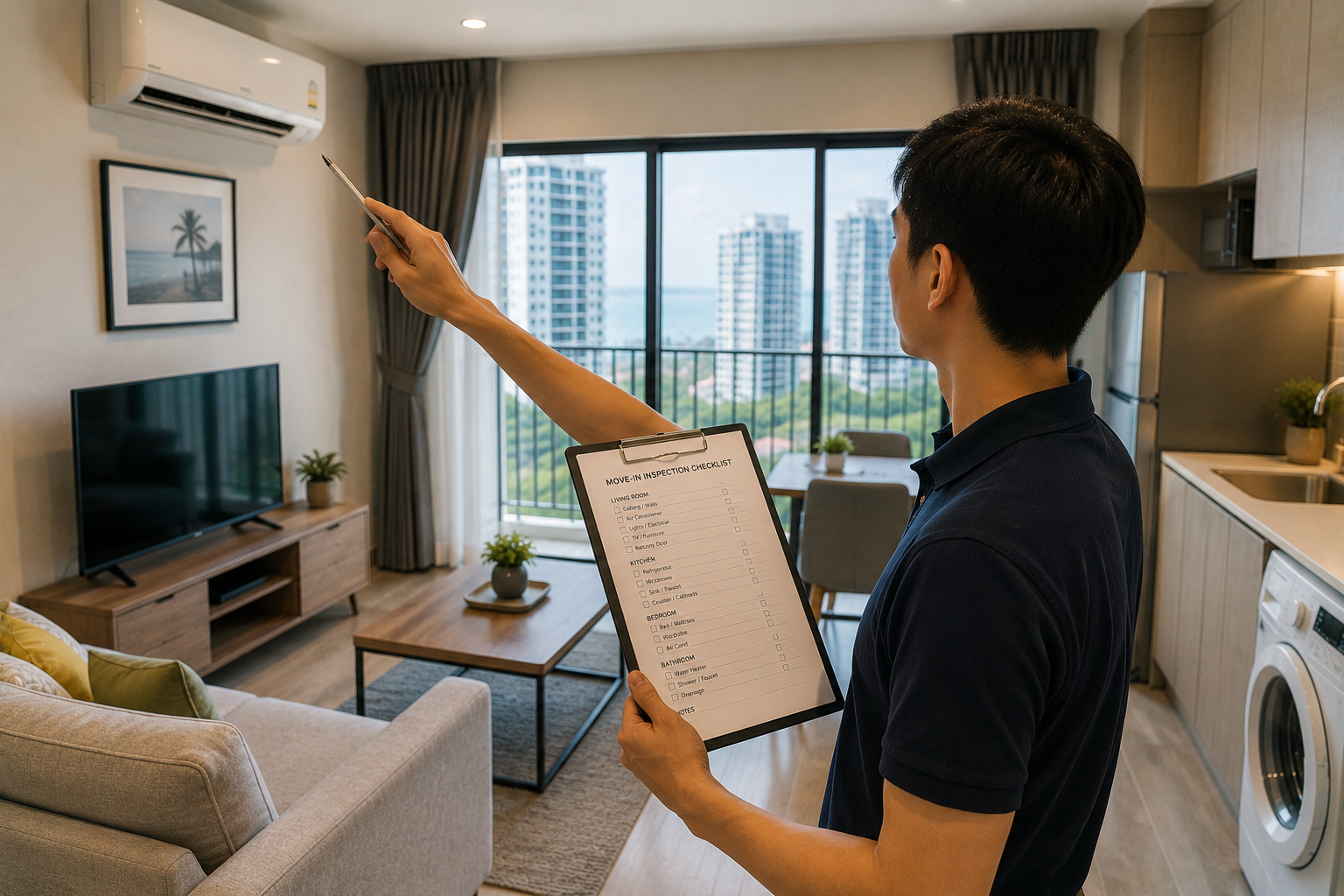
Before receiving the keys and moving in, tenants should inspect the unit carefully and take photographs or videos, particularly of scratches, cracks, damaged furniture, appliances, and utility meters, as evidence of the condition before occupancy.
- Photograph every part of the unit
- Photograph the furniture and appliances
- Record the water and electricity meter readings on the move-in date
- Check the doors, windows, locks, and keys
- Check the air conditioner, refrigerator, washing machine, and water heater
- Check the bathroom, pipes, and leaks
- Send a written issue list to the owner for acknowledgment
English summary: Before receiving the keys, record the room condition, furniture, appliances, and utility meter readings with photos or videos.
9. Precautions Before Transferring a Deposit
Renting a condo directly from an owner is possible, but tenants should verify the information themselves. Do not transfer money merely because the photos are attractive, the price is low, or someone is pressuring you to decide quickly. If possible, inspect the actual unit or request a live video call showing its current condition before transferring money.
- Verify that the unit exists and matches the listing photos
- Verify the identity of the owner or person entitled to rent it out
- Check the payment recipient's account name clearly
- Read the contract before paying a deposit
- Always request a receipt or proof that the money was received
- Retain the transfer slip and chat history
- Avoid urgent transfers before verifying the information
10. Pattaya Condo Rental Checklist 2026
- View the actual unit or request a current video
- Check the rent, deposit, and advance rent
- Read the entire rental contract before paying
- Check water, electricity, and internet charges
- Ask about parking and pets
- Confirm the actual move-in date
- Check the condition of the air conditioner, furniture, and appliances
- Photograph the unit's condition before moving in
- Request a receipt or proof that the money was received
- Always keep the documents, transfer slips, and chat history
Summary
Renting a condo in Pattaya in 2026 should begin with checking the actual costs, deposit, contract, utilities, internet, move-in date, and unit condition before transferring money. Tenants should not decide only from photographs or the advertised price; they should independently verify all information, documents, and terms.
If renting directly from an owner, arrange to view the actual unit, verify the landlord's identity, read the contract, request proof of payment, and always retain communication records. Checking everything at the outset can reduce risk and make move-in smoother.
English summary: Renting a condo in Pattaya requires careful checks on deposit, contract, utilities, move-in date, room condition, landlord authority, and payment records.
FAQ
1. How Much Money Is Needed to Move into a Condo in Pattaya?
It depends on the rent and the owner's terms. Costs may generally include a deposit, advance rent, and other expenses such as utilities, internet, or moving services. Tenants should always ask for the complete total before transferring money.
English: Move-in cost depends on rent, deposit, advance rent, and other agreed expenses.
2. What Should I Check Before Transferring a Deposit?
Verify that the unit exists and matches the listing photos, that the landlord is entitled to rent it out, that the contract and all costs are clear, and that you will receive a receipt or other proof that the money was received. Also retain the chat history and transfer slip.
English: Verify the room, landlord authority, contract, total costs, and payment proof before paying.
3. How Is Condo Electricity Charged in Pattaya?
It depends on the building and contract. Some units charge according to the electricity authority bill, while others use a per-unit rate set by the owner or building. Ask clearly before signing and check the bill or meter on the move-in date.
English: Electricity billing can be based on the official bill or a contract rate. Ask clearly before signing.
Platform Use Disclaimer
This website is only a platform for real estate listings.
Users should verify information, documents, and all conditions themselves.
This website is only a real estate listing platform.
Users should verify information, documents, and conditions by themselves.
Baandeego is not a broker and is not a party to any rental, purchase, sale, reservation, payment, contract, or ownership transfer. It is not responsible for disputes among users, tenants, owners, sellers, or related persons. Every party should independently verify the information, documents, conditions, and applicable laws before making a decision.
References / Sources
- Provincial Electricity Authority — Electricity Tariff: https://www.pea.co.th/en/our-services/tariff
- Provincial Waterworks Authority — Water Tariff Rate: https://en.pwa.co.th/contents/service/table-price
- Thailand Civil and Commercial Code reference translation — Lease and hire of property sections should be checked with official Thai-language law or legal professional before relying on them: https://wsrlawgroup.com/th/publications/law-library/thailand-civil-and-commercial-code/