What Should You Check Before Paying a Deposit on a Condo Rental in Thailand?
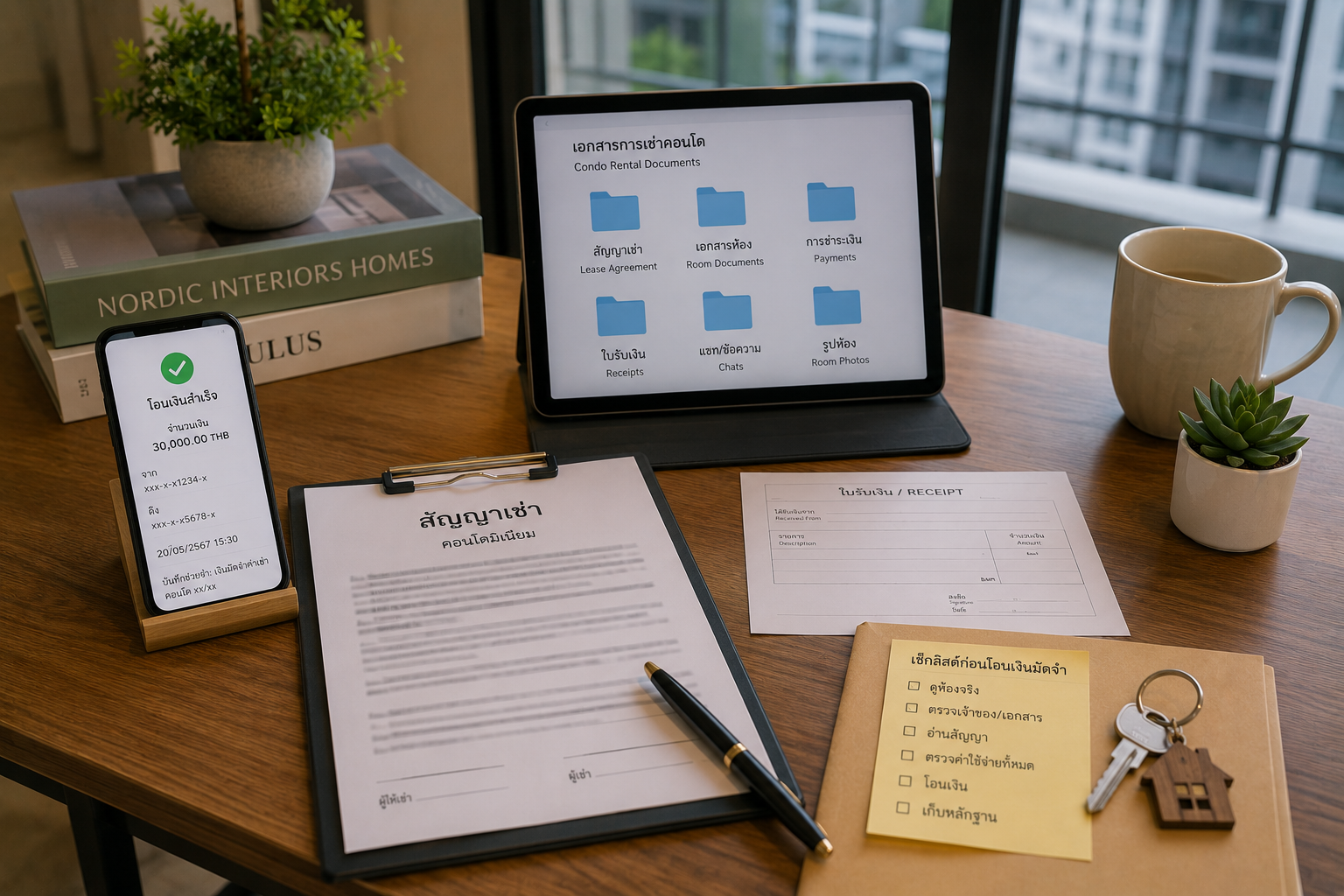
Thailand has many condos for rent in Bangkok, Pattaya, Chonburi, Phuket, Chiang Mai, Hua Hin, and other tourist destinations and employment centers. Tenants may find a room that looks good at a suitable price, then be asked by the owner to transfer a deposit immediately to reserve it. Before paying a condo deposit, however, always clarify several matters. The deposit is connected to the rental agreement, the right to rent the room, the landlord's identity, refund terms, and proof of payment.
This article is a guide for people renting a condo in Thailand, especially directly from an owner or through a listing on a real estate platform. The key point is not to decide from photos or advertising text alone. View the actual room, verify the owner or person authorized to rent it out, read the agreement, check the expenses, and retain evidence at every stage before transferring money.
English summary: Before paying a rental deposit for a condo in Thailand, check the room, landlord identity, rental rights, contract terms, payment account, receipts, and written confirmations.
1. Do Not Rush to Transfer Money Only Because the Price Is Good or the Room Looks Appealing
A suitably priced room in a good location with attractive photos may prompt a quick decision, but paying a deposit before checking the information can create risks. For example, the room may not exist, the person posting may not be the owner or have the right to rent it out, the terms may differ from what was discussed, or a later refund may not be available as you understood.
- Do not transfer money immediately only because the person who posted says many people are interested
- Do not rely only on photos or videos sent in a chat
- Do not decide based on rent far below the market without further checks
- Do not transfer money to an account whose name does not match the landlord or responsible party
- Do not transfer money without a message stating what the payment is for
- Request sufficient documents or evidence before deciding
Exercise particular caution if the landlord pressures you to transfer money within minutes, refuses a room viewing, will not show documents, or will not prepare an agreement.
English summary: Do not rush to pay only because the room looks good or the rent is attractive. Verify the room, person, and terms first.
2. Obtain Complete Room Information Before Arranging a Viewing
Before arranging a viewing, obtain the basic information so you can determine whether the room genuinely meets your needs and avoid wasting time traveling to see a room whose conditions do not fit from the outset.
- Condo name, building, floor, and approximate room number
- Room size and number of bedrooms and bathrooms
- Monthly rent, deposit, and advance rent
- Minimum agreement length, such as 6 months or 1 year
- Furniture and appliances included with the room
- How water, electricity, internet, and other expenses are charged
- Whether pets and smoking are allowed and how many people may stay
Keep this information in a chat. If the terms in the agreement later differ from what was discussed, you can refer back to it more easily.
3. View the Actual Room or Ask Someone You Trust to View It
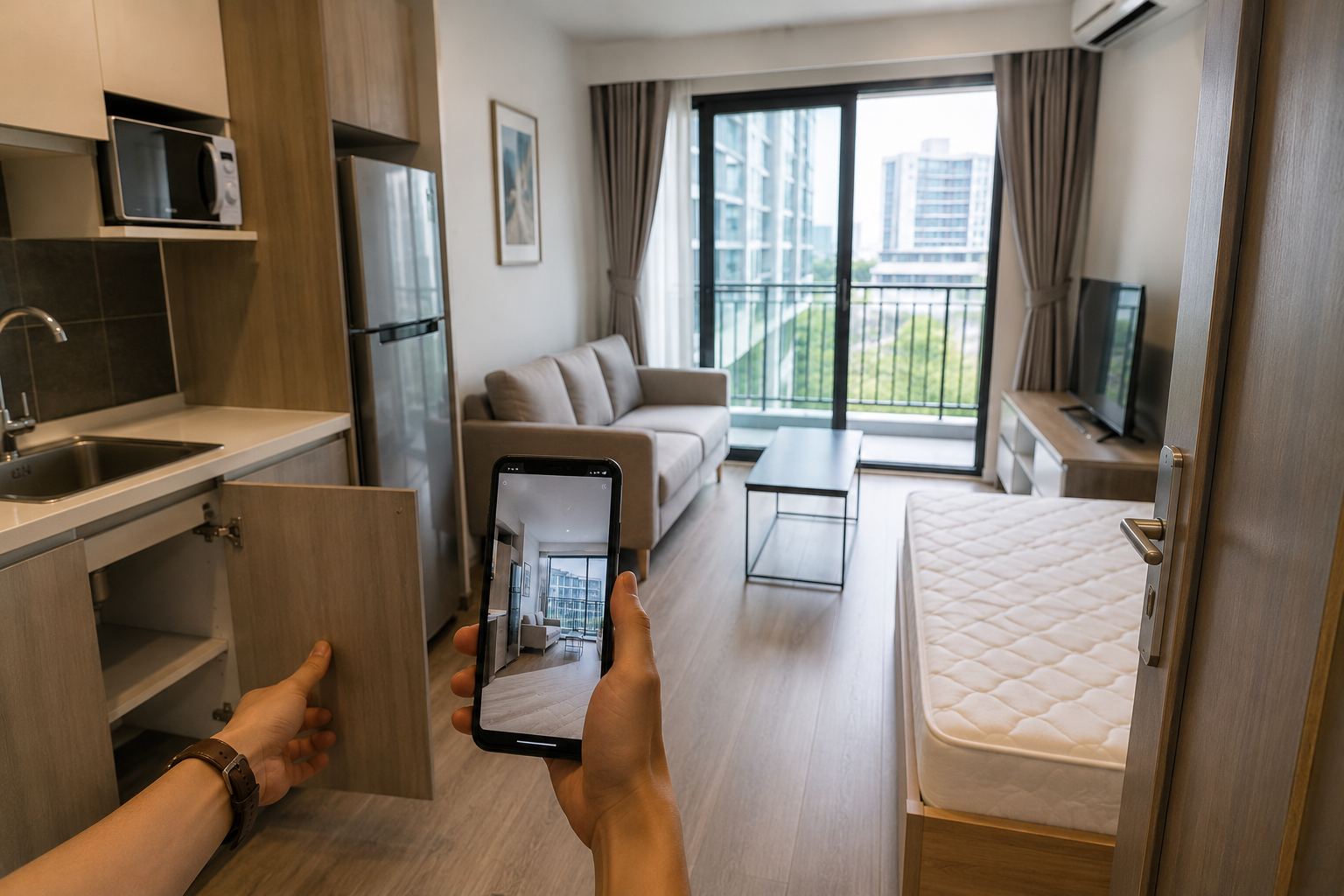
Before paying a deposit, make every effort to view the actual room, especially for a long-term rental. An in-person viewing lets you assess the room's condition, location, noise, sunlight, odors, water and electricity systems, internet, and building atmosphere more effectively than photos alone.
- Check whether the actual room matches the listing photos
- Check the floors, walls, doors, windows, and balcony
- Turn on the lights, air conditioners, water, and appliances included with the room
- Check the bathroom, kitchen, area under the sink, and drain odors
- View the corridors, lifts, parking, and common areas
- Ask the juristic office about building rules if necessary
If you are abroad or in another province and cannot visit, ask someone you trust to view the room, or request a live video call from the front of the condo through the lobby and corridor and into the room. Do not rely on an edited video or one sent without context.
English summary: View the room in person when possible. If not, ask a trusted person or request a live video call showing the condo, lobby, hallway, and room.
4. Verify That the Landlord Has the Right to Rent Out the Room
Before transferring money, verify whether the person you are speaking with is the owner, an authorized person, or an agent with the genuine right to rent out the room. The person posting the listing may not be the direct owner or may lack authority to decide matters involving the deposit and rental agreement.
- Ask for the landlord's full name and check that it matches the documents or receiving account
- Request an appropriate level of documentation confirming the person's connection to the room
- If dealing with an agent, ask whether they have a power of attorney or evidence from the owner
- If necessary, ask the juristic office whether the room may be rented under building rules
- Check whether the deposit recipient's name matches the landlord or responsible party
- If the information does not match, clarify it before transferring money
For ownership information and real estate documents in Thailand, users should refer to relevant authorities, such as the Department of Lands, or to verifiable official documents. Document checks should be proportionate and respect the room owner's personal information.
5. Check the Receiving Account Before Transferring a Deposit
Check the receiving account carefully. If money is sent to the wrong account or to an unrelated person, recovering it may be difficult. Ask the landlord to send the account details in writing and check whether the account name corresponds to the landlord or room owner.
- Does the account name match the landlord?
- Are the bank and account number correct?
- Is the amount a deposit, advance rent, or reservation fee?
- If the account belongs to someone else, is there a clear reason and supporting evidence?
- State the details on the payment slip or in a chat every time
- Do not transfer through a channel that provides no verifiable evidence
For example, a message sent after payment should be clear: "I have transferred a rental deposit for [condo name/room number] in the amount of XX baht on XX for a rental agreement beginning on XX. Please confirm receipt."
English summary: Check the receiving bank account carefully. The account name should match the landlord or authorized party, and the payment purpose must be written clearly.
6. Clearly Distinguish a Reservation Fee, Deposit, and Advance Rent
Many people use "deposit" interchangeably with "reservation fee" or "advance rent," but each term may have a different effect under the agreement. Ask exactly what the payment is for, whether it is refundable, and how it will be applied to rent or the security deposit.
- What is the room reservation fee, and is it refundable?
- What is the amount of the deposit or security deposit?
- How many months of rent must be paid in advance?
- If the tenant changes their mind, is the reservation fee refundable?
- If the owner cannot hand over the room, how will the money be refunded?
- Will the transferred amount be stated in the rental agreement or receipt?
Do not transfer any amount without a written confirmation of the refund terms or how it will be applied to rent, as the parties may understand it differently later.
7. Read the Rental Agreement Before Making a Large Payment
Before paying the full deposit or advance rent, request a draft rental agreement and read every detail, especially the agreement term, return of the security deposit, early termination, penalties, water, electricity, internet, repairs, and building restrictions.
- Are the landlord's and tenant's names correct?
- Are the room address and details correct?
- Do the rent, deposit, and advance rent match what was discussed?
- Are the start and end dates clear?
- How are the security deposit refund conditions stated?
- Who is responsible for water, electricity, internet, and repairs?
- What are the conditions for moving out before the agreement ends?
A rental agreement is an important document. If you have questions about the law or terms with financial consequences, consult a qualified professional or relevant authority before deciding.
English summary: Read the rental contract before paying a large amount. Check rent, deposit, lease term, refund rules, utilities, repairs, and early termination terms.
8. Check All Monthly Expenses Before Deciding
Monthly rent is not the entire cost of renting a condo. Before paying a deposit, ask about all other expenses so you can assess the real budget and prevent unexpected costs after moving in.
- Is water charged at the actual bill amount or through the juristic office?
- Is electricity paid directly or through the owner?
- Is internet included in the rent, or must the tenant subscribe?
- Is there a parking fee?
- Are keycards and parking cards provided, or is there an extra card fee?
- Is there a cleaning or air-conditioner cleaning charge before move-out?
- How do common-area fees relate to the tenant and owner?
Important expenses should be stated in the agreement or a chat that can be reviewed later. Do not rely only on verbal statements without evidence.
9. Check Building Rules and Restrictions Before Renting
Each condo has different rules on matters such as pets, smoking, number of residents, parking, use of common areas, working from the room, admitting technicians, or short-term rental. Tenants should clarify them before paying a deposit.
- Are pets allowed?
- Is smoking allowed in the room or on the balcony?
- What is the maximum number of residents?
- Is parking available, and how is a vehicle registered?
- May tenants use the fitness center, swimming pool, or common areas?
- Must the juristic office be notified before a technician or delivery person enters the room?
- Are there restrictions on short-term rentals?
If the building rules do not fit the tenant's lifestyle, such as the need to keep a pet, park a car, or work from home, consider this before paying a deposit. Moving out later may create additional costs.
English summary: Check building rules before paying: pets, smoking, parking, residents, common facilities, technicians, and short-term stay restrictions.
10. Request a Receipt or Confirmation Message Every Time
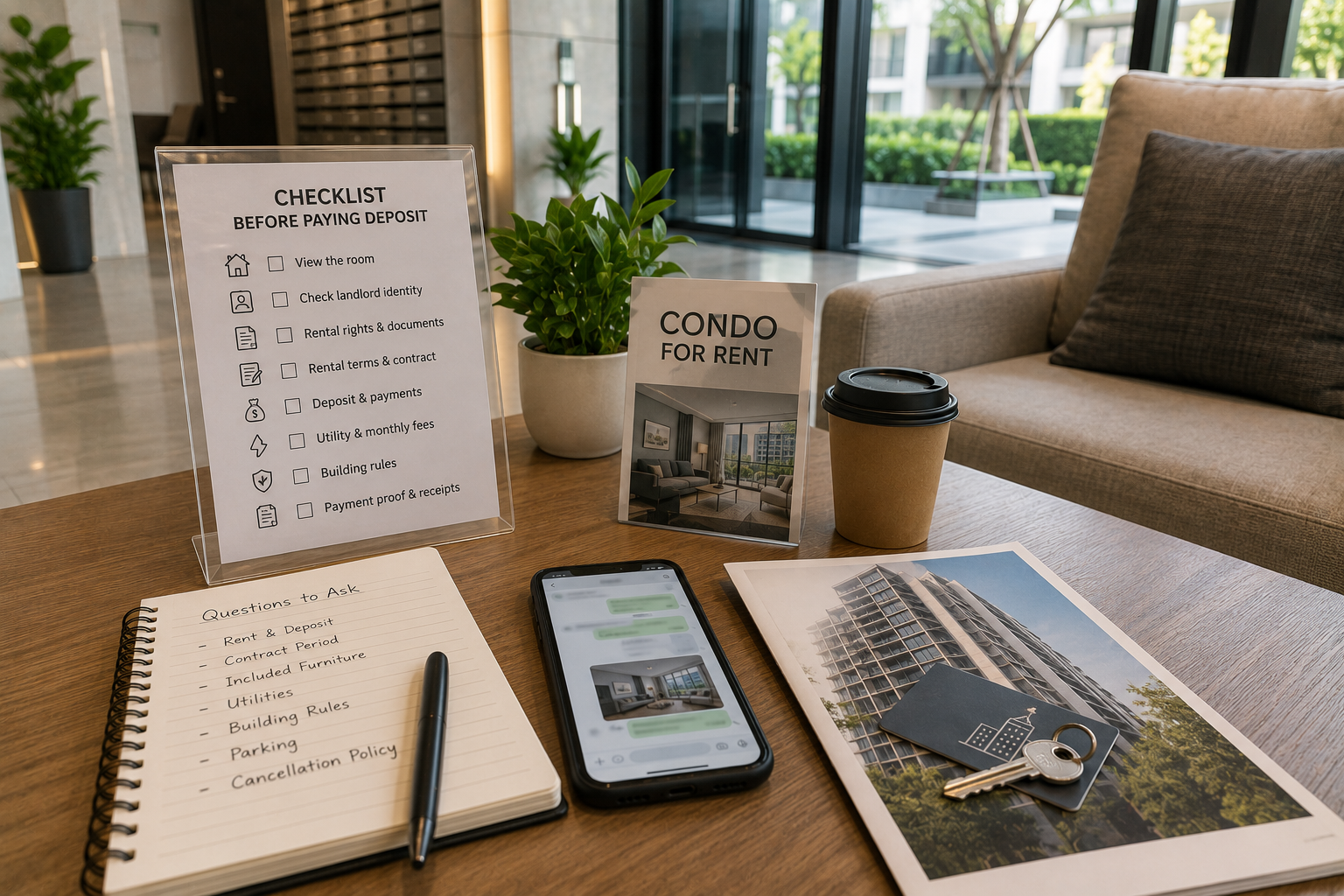
After transferring money, always request a receipt or confirmation message from the landlord. It should state the amount, transfer date, purpose of payment, related room, and important conditions, such as whether the payment counts as a security deposit or advance rent.
- Retain the transfer slip
- Request a message confirming receipt
- Request a receipt if the landlord can issue one
- State the condo name and room in the message
- State what the payment is for
- Keep the evidence until you move out and all balances are settled
Exercise particular care with cash payments and request a receipt containing complete details. Do not pay cash without evidence.
11. Watch for Signs That Require Further Checks Before Transferring Money
Tenants should be cautious about behavior that leaves information unclear, such as refusing an in-person viewing, frequently changing the receiving account, refusing to send an agreement, withholding the landlord's name, or providing inconsistent expense information. These signs do not necessarily mean there is a problem in every case, but they warrant further checks before payment.
- Refusing an in-person viewing or live video call
- Using room photos that appear inconsistent with the condo or location
- Offering a price unusually far below comparable rooms
- Pressuring you to transfer a deposit immediately without checking documents
- Providing landlord, account, and agreement names that do not match
- Refusing to provide a receipt or confirmation message
- Giving terms in the chat that differ from the agreement
If you have doubts, stop and check further before transferring money. Spending time verifying information may reduce risk more effectively than rushing to pay to reserve the room.
English summary: Be cautious if the landlord refuses room viewing, avoids documents, changes payment accounts, pressures you to pay fast, or gives inconsistent terms.
12. Systematically Retain All Conversation Records
When renting directly from an owner, retain evidence at every stage, including the listing images, chats, rent details, received documents, transfer slips, receipts, and rental agreement. You may need this information when moving in, moving out, or reconciling the security deposit later.
- Save images of the listing and the listing link
- Keep chats about rent and the deposit
- Keep received room photos and videos
- Keep appropriate landlord documents or evidence of the right to rent out the room
- Keep transfer slips and receipts
- Keep the signed rental agreement
- Organize folders by room or month for easy retrieval
The Office of the Consumer Protection Board is Thailand's consumer protection authority. Users with questions about services or payments can check information and contact channels on its official website. Each case should be assessed using the relevant agreement, evidence, and facts.
13. Checklist Before Paying a Condo Deposit in Thailand
- Obtain complete room information
- View the room or ask someone you trust to view it
- Verify that the landlord has the right to rent out the room
- Check the receiving account before transferring money
- Clearly distinguish a reservation fee, deposit, and advance rent
- Read the rental agreement before making a large payment
- Check all monthly expenses
- Check building rules and restrictions
- Request a receipt or confirmation message
- Watch for signs that require further checks
- Keep all chats, slips, receipts, and documents
Conclusion
Before paying a deposit on a condo rental in Thailand, tenants should view the actual room, verify the owner or person with the right to rent it out, check the receiving account, read the rental agreement, confirm all expenses, and request proof that every payment was received. Do not transfer money merely because of urgency or pressure. A deposit begins the long-term rental relationship and may affect the later return of the security deposit.
When renting directly from an owner, communicate through channels that can be reviewed later and retain all evidence until you move out and every balance is settled. Baandeego is only a real estate listing platform. It is not involved in reservations, payments, agreements, room inspections, or disputes between users.
English summary: Before paying a rental deposit, verify the room, landlord, payment account, lease terms, building rules, and keep written proof of every step.
FAQ
1. Should I View the Actual Condo Before Paying a Deposit?
You should always view the actual room. If you cannot go yourself, ask someone you trust to view it or request a live video call showing the condo name, lobby, corridor, and actual room. Do not decide from photos alone.
English: Yes, viewing the room is strongly recommended before paying a deposit.
2. Can I Transfer the Deposit to Someone Else's Account?
Exercise caution. If the receiving account does not match the owner or landlord's name, ask why and request additional evidence before transferring money. Always retain the confirmation message and transfer slip.
English: Be careful if the receiving account does not match the landlord or authorized person.
3. Are a Reservation Fee and Deposit Different?
They may differ under the agreement. A reservation fee may temporarily hold the room, while a deposit or security deposit may relate to the rental agreement and return of the room. Ask exactly what the payment is, whether it is refundable, and how it will be stated in the agreement.
English: Reservation money and deposit may have different conditions. Clarify refund and contract terms before paying.
Platform Use Disclaimer
This website is only a platform for real estate listings.
Users should verify all information, documents, and conditions themselves.
This website is only a real estate listing platform.
Users should verify information, documents, and conditions by themselves.
Baandeego is not a broker and is not a party to any rental, purchase, sale, reservation, payment, agreement, ownership transfer, room inspection, document inspection, deposit receipt, refund, or coordination on behalf of users. It is not responsible for disputes between users, buyers, tenants, owners, sellers, landlords, agents, service providers, juristic persons, or relevant authorities. Before making a decision, all parties should independently verify the information, documents, conditions, costs, and applicable laws.
References / Sources
- Office of the Consumer Protection Board, Thailand: https://www.ocpb.go.th/index_en.php
- Department of Lands, Thailand: https://www.dol.go.th/
- Thailand.go.th — Ownership of real estate by foreigners in Thailand: https://thailand.go.th/public/issue-focus-detail/010_011