Why Thailand Condo Aircon Bills Are High and How to Save
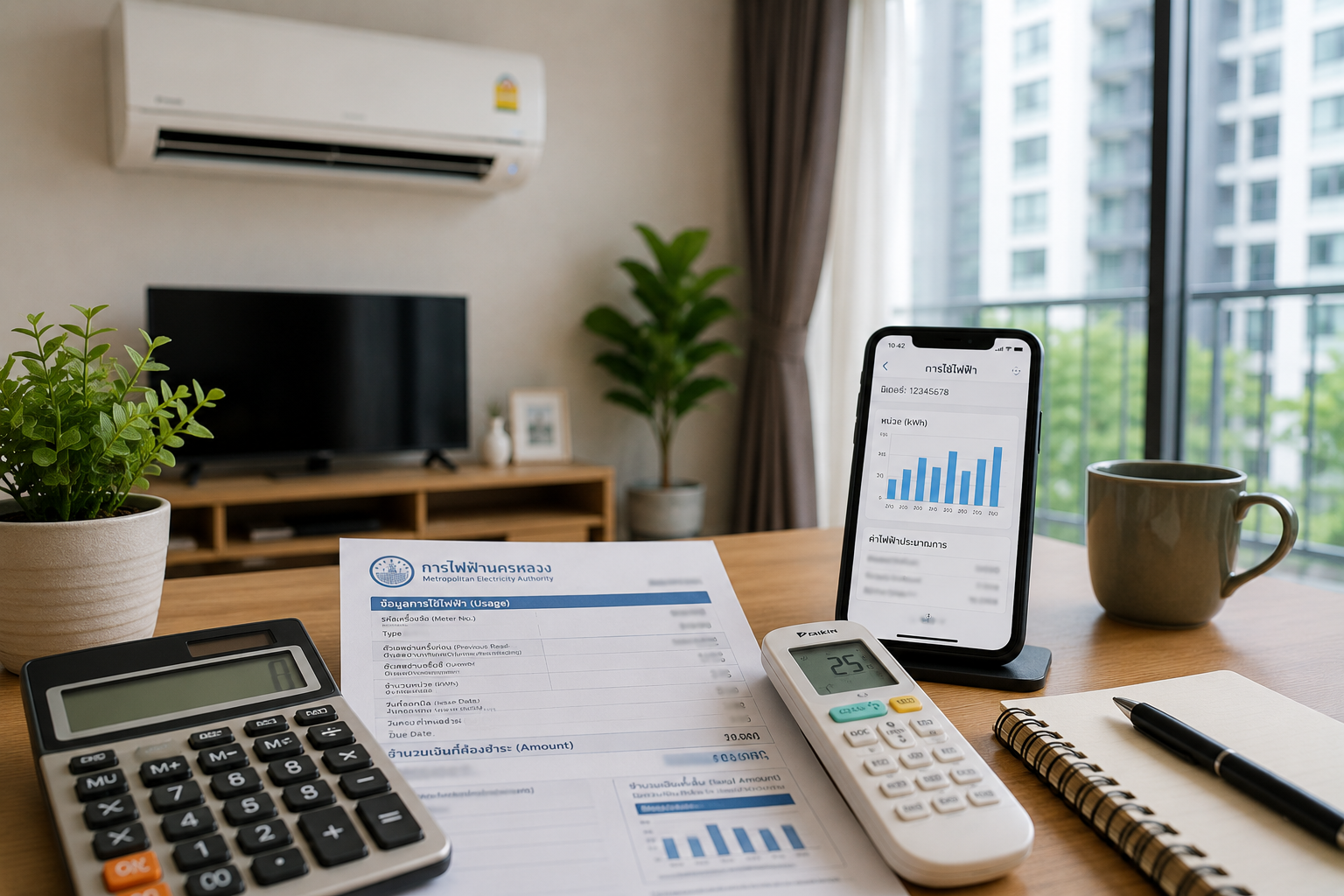
Condo aircon electricity bills in Thailand are among the expenses that tenants and unit owners worry about most. Air conditioners are used frequently in the hot, humid climate. If the aircon runs for many hours a day, the temperature is set too low, the room receives strong sunlight, the unit is old, or it has not been cleaned for a long time, the electricity bill may be higher than expected.
Anyone renting a condo in Thailand, whether in Bangkok, Pattaya, Chonburi, Phuket, Chiang Mai, or another province, should ask before signing the contract how electricity charges are calculated. Find out whether charges follow the actual MEA or PEA bill or a rate set by the owner or building, because the amount actually paid may differ according to the area and the terms for each unit.
English summary: Condo air conditioner bills in Thailand can be high because of long usage hours, low temperature settings, strong sunlight, old units, poor maintenance, and unclear electricity billing terms.
1. Air Conditioners Are Major Energy Users in Condos
Air conditioners are often among the appliances that use the most electricity in a condo, especially in units where they run every night or while someone works from home. If an aircon runs for many hours a day, the monthly electricity bill will rise according to the hours of use, the temperature setting, and the condition of the unit.
- Running the aircon for many hours a day
- Setting a very low temperature, such as 18-20 degrees
- Strong sunlight entering the room and making the aircon work harder
- An old aircon or one that has not received scheduled maintenance
- Hot air entering the room or doors and windows not closing tightly
- The compressor working hard because the unit is dirty or unsuitable for the room size
MEA provides energy-saving guidance for electricity users in the metropolitan area, while PEA supplies electricity in many provincial areas. Users should check electricity rates and payment channels directly with the authority serving their area, because rates and terms may change over time.
English summary: Air conditioners can be a major part of condo electricity bills, especially when used for long hours or in hot rooms.
2. Actual Utility Bill or an Owner-Set Rate
Before renting a condo, tenants should clearly ask whether electricity is charged according to the actual bill from the electricity authority or at a per-unit rate set by the owner or building. The billing method can have a major effect on monthly costs, especially in a unit where the aircon is used frequently.
- Is electricity charged directly according to the MEA or PEA bill?
- Is the electricity account in the name of the owner, tenant, or building?
- If the owner sets the rate, how much is charged per unit?
- Are there any additional common-area service or administration fees?
- Can you see sample bills from previous months?
- How is the meter read and how should its reading be submitted?
If the owner or landlord charges a specific electricity rate, it should be stated clearly in the rental contract. Do not rely on a verbal agreement alone, and photograph the meter on move-in day for comparison with the first bill.
3. Setting the Temperature Too Low Raises the Bill
Setting the aircon very cold may make the compressor work harder and use more electricity, especially in a room exposed to sunlight or with accumulated heat. EGAT has published information stating that raising the aircon temperature by 1 degree may reduce electricity costs to some extent, and that cleaning the aircon may help it operate more efficiently. Actual results depend on the condition of the unit, the room, and usage habits.
- Try a temperature that still feels comfortable, such as 25-26 degrees
- Use a fan to help circulate cool air where appropriate
- Do not leave the aircon at a very low setting all night without need
- Use Sleep or Timer mode if the unit has one
- Turn off the aircon when no one is in the room
An appropriate temperature setting should account for health, comfort, and the actual room conditions. Do not endure excessive heat, but avoid setting the room colder than necessary for long periods.
English summary: Very low temperature settings can increase electricity use. A moderate setting with good airflow may help reduce cost.
4. Running the Aircon Longer Than Necessary
The number of hours the aircon operates directly affects the electricity bill. Running it all day or leaving it on when going out can make the bill much higher. Tenants should observe their actual usage habits and adjust them to suit daily life.
- Turn off the aircon when leaving the room for a long time
- Set it to turn off automatically at night if this suits your sleep
- Use a fan instead of lowering the aircon temperature excessively
- Close doors to unused rooms so the aircon does not cool more space than necessary
- Avoid opening the balcony door while the aircon is running
People working from home should position their desk where air from the unit circulates well, so they do not need to set the temperature too low or run the aircon at high power all the time.
5. Strong Sunlight Makes the Aircon Work Harder
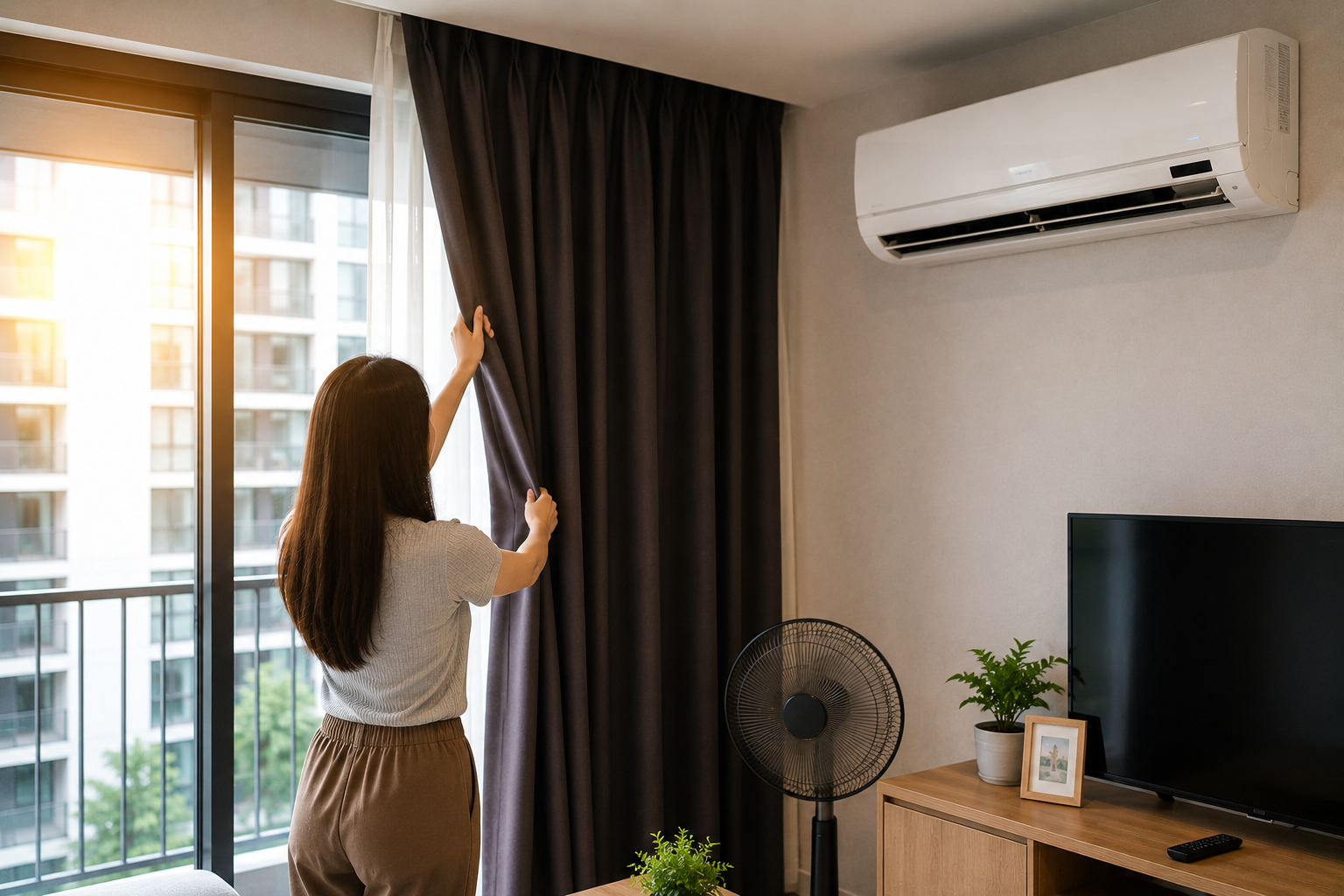
A condo that receives afternoon sun or has large glass windows may retain more heat than a unit facing another direction, making the aircon work harder to cool the room. Tenants should examine the unit's orientation and sunlight conditions when viewing it before renting.
- Does the room receive afternoon sun?
- Are there sun-blocking or blackout curtains?
- Does the glass have film or heat-resistant material?
- Do the balcony and exterior walls retain a great deal of heat?
- Does a high-floor unit receive more sunlight and hot air than other units?
Basic ways to reduce heat include closing curtains during strong sun, using blackout or thermal curtains, and keeping doors and windows tightly closed while the aircon is running. Always ask the owner's permission before installing window film or changing curtains in a rental unit.
English summary: Strong sunlight and large windows can make the air conditioner work harder, increasing electricity bills.
6. An Old Aircon or One Unsuitable for the Room Size
A very old aircon or one that is unsuitable for the space may use more electricity than it should. If the unit is too small for the room, it may work hard but still cool slowly. If it is old or has not been maintained, efficiency may decline and the electricity bill may rise.
- Is the aircon very old?
- Does it cool slowly or fail to cool the whole room?
- Does the compressor run continuously even after the aircon has been on for a long time?
- Is the BTU capacity appropriate for the room size?
- Is it an inverter system, if the owner has this information?
- Does it have an energy-efficiency label or performance information?
EGAT operates Thailand's No. 5 energy-efficiency label program for electrical appliances, which can help consumers select efficient appliances. In a rental unit, however, tenants may not be able to replace the aircon themselves, so they should ask for unit information and sample electricity bills before deciding to rent.
7. Long Periods Without Cleaning May Make the Aircon Work Harder
An aircon that has not been cleaned for a long time may accumulate dust in its filter or evaporator coil, reducing airflow and making the room cool more slowly. EGAT has published information in an energy-saving campaign stating that aircon cleaning can reduce electricity costs in some cases. Results depend on the condition of the unit and actual use.
- Ask when the aircon was last cleaned
- Check whether the airflow is strong or weak
- Notice any musty smell or dust at the air outlet
- Look for dripping water or water stains below the aircon
- Check the contract to see who pays for aircon cleaning
- Keep receipts and post-cleaning photos as evidence
If the owner agrees to clean the aircon before move-in, request evidence such as a receipt or photographs taken after cleaning. Record the terms in chat or in the contract so they can be reviewed later.
English summary: Dirty air conditioners may cool poorly and use more energy. Cleaning responsibility should be written in the rental agreement.
8. Open Doors, Windows, or Air Leaks While the Aircon Is Running
If the aircon runs while the balcony door or windows are open, or if the room has air leaks, cool air will escape and hot air will enter, making the unit work harder. After moving in, tenants should inspect doors, windows, door seals, and other possible air gaps.
- Does the balcony door close tightly?
- Are there gaps or leaks around the windows?
- Are the seals around doors or windows worn?
- Does hot air enter through vents from the bathroom or kitchen?
- Is the extractor hood or ventilation fan left on for too long?
An air leak may seem minor, but it can affect cooling and electricity costs. In a rental unit, photograph the issue and notify the owner if a door or window does not close tightly.
9. Using Other Appliances Alongside the Aircon
A high electricity bill does not always come from the aircon alone. Other condo appliances, such as a water heater, electric stove, microwave, refrigerator, washing machine, or computer, also affect the total bill. If the bill is unusually high, examine all electricity use rather than the aircon alone.
- Is the water heater used frequently?
- How often are the electric stove or microwave used?
- Is the refrigerator old or malfunctioning?
- Are a computer or monitors left on for many hours a day?
- Are the washing machine or dryer used frequently?
- Are power strips or devices left on continuously?
To understand the bill, record the daily use of major appliances and compare it with the electricity bill or meter reading for the billing period.
10. Safe Ways to Reduce Condo Aircon Electricity Costs
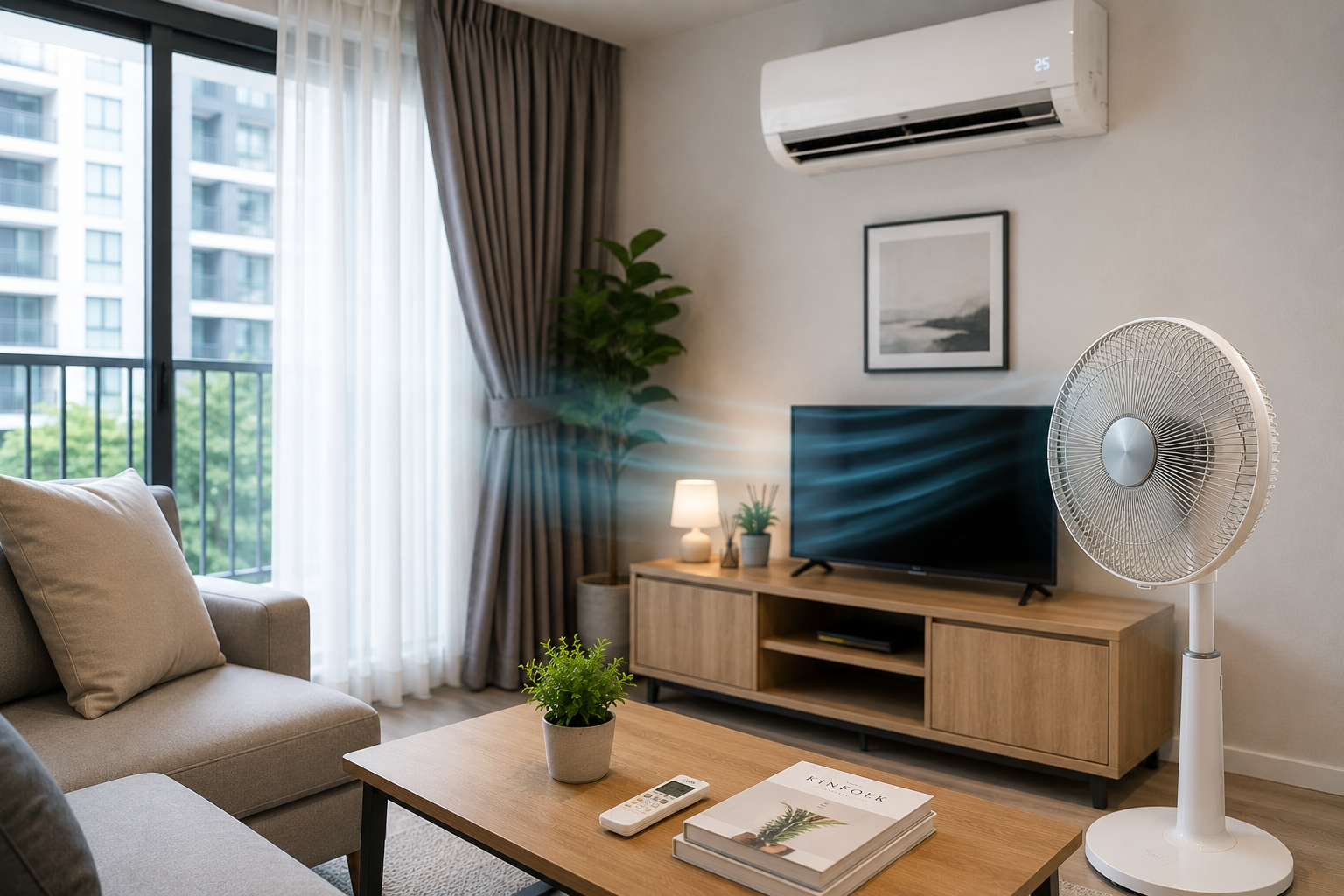
Reducing aircon electricity costs should not mean turning it off until the room becomes excessively hot or health is affected. Instead, adjust habits and room conditions so the aircon operates more efficiently while the living space remains comfortable.
- Set an appropriate temperature, such as 25-26 degrees, if comfortable
- Use a fan to circulate cool air
- Close the curtains during strong sun
- Keep doors and windows tightly closed
- Clean the aircon on an appropriate schedule and according to the contract
- Turn it off when no one is in the room
- Use Timer or Sleep Mode if available
- Safely make a basic check of the filter and dust
- Clearly ask about electricity charges and the billing method before renting
Do not modify the electrical system, aircon, or internal equipment yourself without the necessary knowledge, because this could cause damage or danger. If the aircon is not operating normally, notify the owner or call an appropriate technician according to the contract terms.
English summary: Safe ways to reduce aircon bills include moderate temperature, fan support, curtains, sealed windows, scheduled cleaning, and clear billing terms.
11. What to Ask About Aircon Electricity Costs Before Renting
Tenants should ask about electricity charges before paying a deposit, because terms may be difficult to change after move-in, especially for a unit where the aircon will be used frequently or someone will work from home.
- Is electricity charged according to the actual bill or a specific rate?
- How much is charged per unit if it does not follow the actual bill?
- Can you see a sample electricity bill for the unit?
- When was the aircon last cleaned?
- Is it an inverter system, if known?
- At what time of day does the room receive sunlight?
- In which cases does the owner pay for aircon repairs?
- Must the tenant clean the aircon before returning the unit?
These answers should be recorded in the rental contract, chat, or another document that can be reviewed later to prevent misunderstandings about electricity charges and aircon cleaning or repair costs.
12. What to Do If the Electricity Bill Is Unusually High After Move-In
If the electricity bill is unusually high after moving in, do not immediately conclude that the aircon is faulty or the owner calculated the bill incorrectly. Check each possible factor step by step and keep complete evidence.
- Photograph the electricity meter on the starting date and inspection date
- Ask to see the itemized electricity bill
- Check whether the electricity rate matches the contract
- Record the approximate number of hours the aircon runs
- Check whether the aircon is not cooling or is working unusually hard
- Check other appliances that consume large amounts of electricity
- Notify the owner or landlord in writing
If a dispute arises over a bill, expense, or service, users should keep the contract, bills, meter photographs, transfer slips, and all chat records. For consumer-rights matters, information is available from the Office of the Consumer Protection Board.
13. Condo Aircon Electricity-Saving Checklist
- Ask how electricity charges are calculated before renting
- Photograph the electricity meter on move-in day
- Check whether electricity follows the actual bill or a specific rate
- Set the aircon to an appropriate temperature
- Use a fan if appropriate for the room
- Close the curtains during strong sun
- Keep doors and windows tightly closed
- Do not leave the aircon running when no one is in the room
- Clean the aircon on schedule and keep the receipt
- Check for poor cooling, dripping water, or a musty smell
- Check other appliances that use large amounts of electricity
- Keep every electricity bill and proof of payment
Summary
Condo aircon electricity bills in Thailand may be high for many reasons, including long operating hours, low temperature settings, strong sunlight, an old unit, lack of cleaning, air leaks, or an unclear electricity billing method. Tenants should ask about electricity terms before renting and photograph the meter on move-in day as evidence.
Electricity costs should be reduced safely and in ways appropriate for actual living conditions, such as setting a moderate temperature, using a fan, closing curtains, closing doors and windows, cleaning the aircon on schedule, and keeping every receipt. If a bill is unusually high, check the bill, meter, and actual usage before drawing a conclusion about the cause.
English summary: High aircon bills usually come from usage hours, temperature settings, room heat, maintenance, and billing method. Keep meter photos, bills, receipts, and written records.
FAQ
1. Why Is My Condo Aircon Electricity Bill So High?
Possible causes include running the aircon for long hours, setting a low temperature, strong sunlight, an old unit, lack of cleaning, air leaks, or an electricity rate set by the owner or building. Check both usage and the billing method stated in the contract.
English: High aircon bills may come from long usage, low temperature, sunlight, old units, poor maintenance, or billing method.
2. What Aircon Temperature Can Help Save Electricity?
Many energy-saving recommendations suggest setting the aircon at around 25-26 degrees if that remains comfortable, and using a fan to circulate cool air. Actual savings depend on the room, the air conditioner, and usage habits.
English: Around 25-26°C may help if comfortable, but savings depend on the room and air conditioner.
3. What Should I Ask About Condo Electricity Before Renting?
Ask whether charges follow the actual MEA/PEA bill or a specific rate, whose name is on the bill, the rate per unit, whether additional service fees apply, and whether sample bills are available. State the terms clearly in the contract.
English: Ask whether electricity is billed by official utility bill or a landlord/building rate, and get it in writing.
Platform Use Disclaimer
This website is only a platform for real estate listings.
Users should verify all information, documents, and terms themselves.
This website is only a real estate listing platform.
Users should verify information, documents, and conditions by themselves.
Baandeego is not a broker and is not a party to any rental, sale, purchase, reservation, payment, contract, ownership transfer, unit inspection, aircon cleaning, aircon repair, or electricity billing, and is not responsible for any service. It is also not responsible for disputes among users, buyers, tenants, owners, sellers, landlords, service providers, or related persons. All parties should independently verify the information, documents, terms, expenses, and applicable laws before making a decision.
References
- Metropolitan Electricity Authority — Electricity Saving Tips: https://www.mea.or.th/en/electricity/energy-saving-tips/
- Provincial Electricity Authority: https://www.pea.co.th/en
- Electricity Generating Authority of Thailand — Energy-saving campaign: https://www.egat.co.th/home/en/20230426e/
- Office of the Consumer Protection Board, Thailand: https://www.ocpb.go.th/index_en.php