How to Check the Air Conditioner Before Renting a Condo in Thailand
Checking the aircon before renting a condo is a step tenants should not overlook. The aircon directly affects comfort, electricity bills, and post-move-in expenses, especially in hot cities such as Pattaya, Bangkok, Chonburi, Phuket, or other tourist destinations. If the aircon does not cool, drips water, smells musty, or consumes a great deal of electricity, the tenant may face additional time and expense after moving in.
Before paying a deposit or signing a condo rental contract in Thailand, tenants should run the aircon for an actual test, listen for noise, check for dripping water, test the remote, ask about the cleaning history, and read the contract to determine who pays for repairs, cleaning, or replacement equipment. If the terms are unclear, ask the owner or landlord to summarize them in writing before making payment.
English summary: Before renting a condo in Thailand, always test the air conditioner, check cooling, dripping water, smell, noise, remote control, cleaning history, electricity cost, and repair responsibility.
1. Why Check the Aircon Before Renting a Condo?
Air conditioners in Thai condos are often used more heavily than in many countries because of the hot, humid climate. If an aircon has not been cleaned or maintained for a long time, it may stop cooling, smell musty, drip water, make a loud noise, or use more electricity. Tenants should therefore check it while viewing the unit rather than discovering the problem after moving in.
- The aircon affects the monthly electricity bill
- An aircon that does not cool may need repair or cleaning before actual use
- Dripping water may damage the floor, walls, or furniture
- A musty smell may be related to moisture or lack of aircon cleaning
- Loud noise may disturb sleep or working from home
- An unclear contract may lead to a dispute over repair costs after move-in
MEA provides advice on saving electricity at home, including appropriate use of electrical appliances. EGAT has published information stating that aircon cleaning can improve efficiency and reduce electricity costs to some extent. Actual savings depend on the unit's condition, aircon age, usage habits, and the electricity rate at that time. Tenants should check current information from the authority serving their area, such as MEA or PEA.
English summary: Air conditioners affect comfort, electricity bills, repair costs, and rental disputes. Check them before paying a deposit.
2. Test the Aircon for at Least 15-30 Minutes
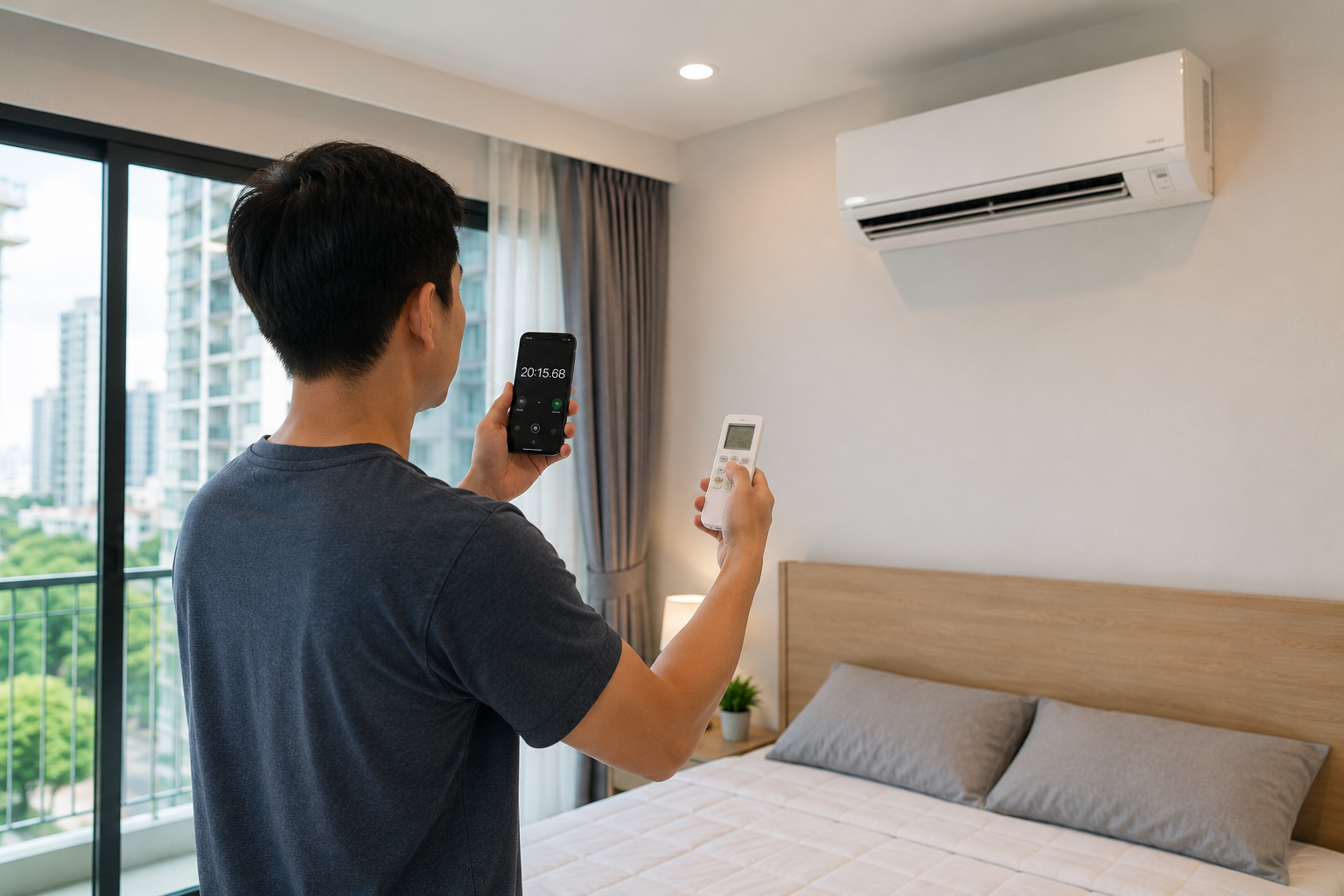
Running the aircon for only 1-2 minutes may not be enough, because some units begin cooling slowly or develop problems after operating for a while. Ask the unit owner or landlord to run the aircon for at least 15-30 minutes during the viewing to see whether it cools consistently.
- Run the aircon in cooling mode
- Set the temperature at around 24-26 degrees for a preliminary test
- Wait to see whether the room begins to cool
- Listen to the compressor and fan
- Notice any dripping water or musty smell
- Check whether airflow is strong and consistent
If the aircon does not cool within a reasonable time, ask when it was last cleaned, whether it has a repair history, and who will be responsible if it must be repaired or cleaned before move-in.
3. Check Whether the Air Is Truly Cold or Merely Blowing
Some units appear to work normally because air comes from the outlet, but the air may not actually be cold. Tenants should stand near the outlet and notice whether the temperature drops. If possible, use an app or thermometer to measure the room temperature before and after turning on the aircon.
- Is the air from the aircon cold or merely room-temperature air?
- Does the whole room cool, or only the area near the aircon?
- Does cooling take an unusually long time?
- Is the aircon capacity appropriate for the room size?
- Does strong sunlight make the aircon work hard?
If the room is very hot because of sunlight or large glass windows, electricity costs may be higher even if the aircon still works. Tenants should also consider the room's orientation, curtains, and ventilation.
English summary: Check whether the air is truly cold, not only blowing. Room size, sunlight, and insulation also affect cooling performance.
4. Check for Water Dripping from the Aircon
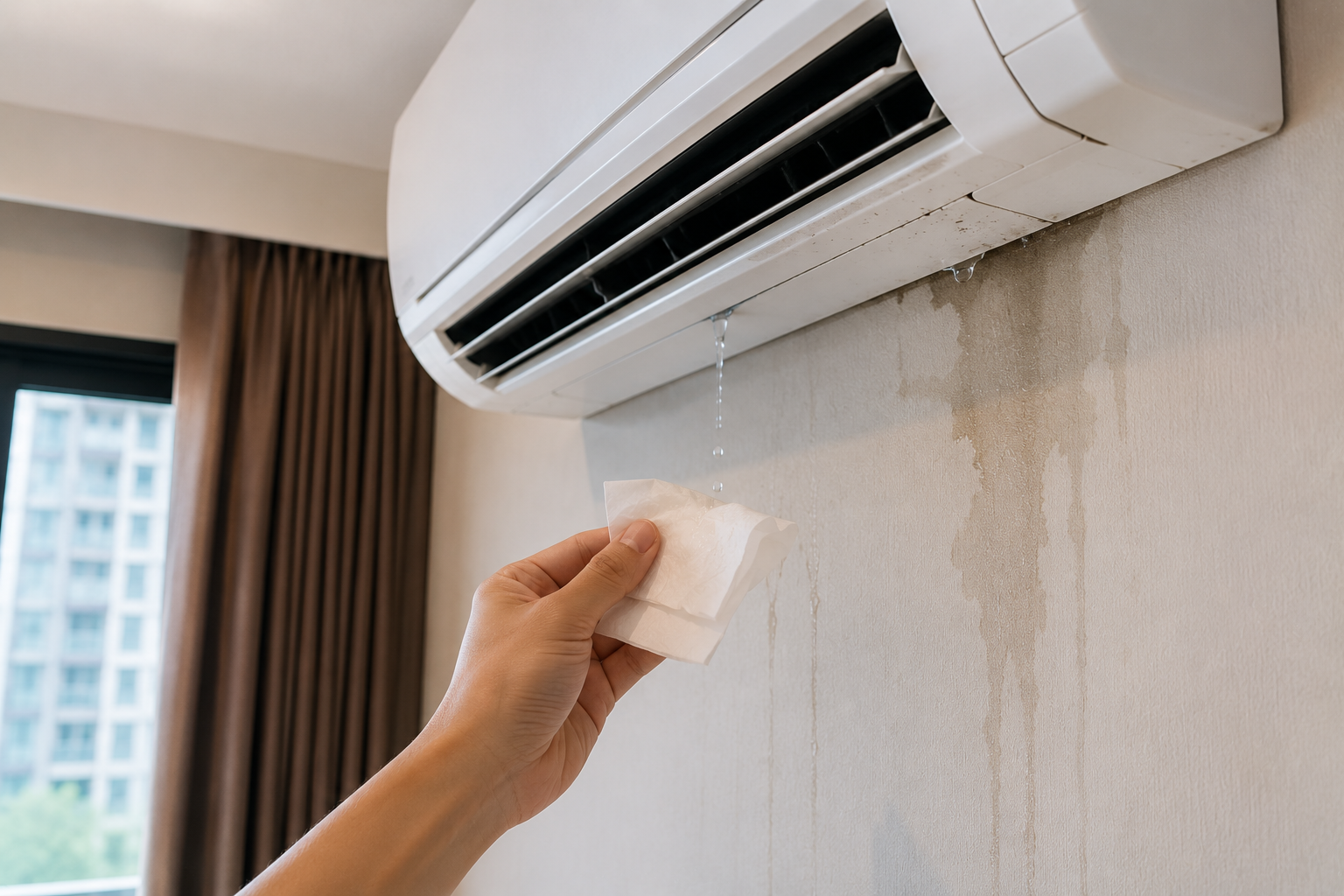
Dripping aircon water is a common condo problem. A blocked drainpipe, leaking drain pan, or improper installation may cause water to drip onto the floor, wall, bed, table, or electrical appliances. Tenants should observe the area below the aircon and around the drainpipe during the test.
- Is water dripping from the unit?
- Are there water or mold stains on the wall below the aircon?
- Is the floor below the aircon swollen or marked by previous water damage?
- Is the drainpipe in an appropriate position?
- Does water drip around the balcony or compressor?
If you find existing water marks, photograph them and ask the unit owner whether the problem has been repaired. Do not immediately agree to rent without a clear answer, because dripping may recur after move-in.
5. Check the Aircon for Musty Odors and Cleanliness
A musty aircon odor may result from dust, moisture, mold, or a long period without cleaning. Although the cause cannot be determined immediately, tenants should take care if the aircon emits a strong odor or makes them feel unwell.
- Is there a musty or damp smell when the aircon is turned on?
- Is there dust around the air outlet?
- Does the filter look very dirty, if it can be opened for inspection?
- Are there black marks on the wall or ceiling near the aircon?
- Ask for the date of the latest aircon cleaning
If the aircon smells musty, ask whether the owner will have it cleaned before move-in and record this in chat or another document as evidence for any later follow-up.
English summary: Musty aircon smell may indicate dust, moisture, or lack of cleaning. Ask for cleaning history and written confirmation if cleaning is promised.
6. Check Aircon and Compressor Noise
Aircon noise also affects actual living conditions, especially in a studio or bedroom where the unit is near the bed. Some air conditioners may still cool but be loud enough to disturb sleep or work.
- Is the fan inside the unit unusually loud?
- Are there vibrations, grinding sounds, or metal striking metal?
- Does the outdoor compressor vibrate or make a very loud noise?
- Does the noise increase when the fan speed is adjusted?
- Is there a sound of running water or another unusual noise after extended operation?
Test the aircon while the room is quiet so the sound can be heard clearly. If you notice an unusual noise, record a short video and ask about repairs before deciding to rent.
7. Test the Aircon Remote and Operating Modes
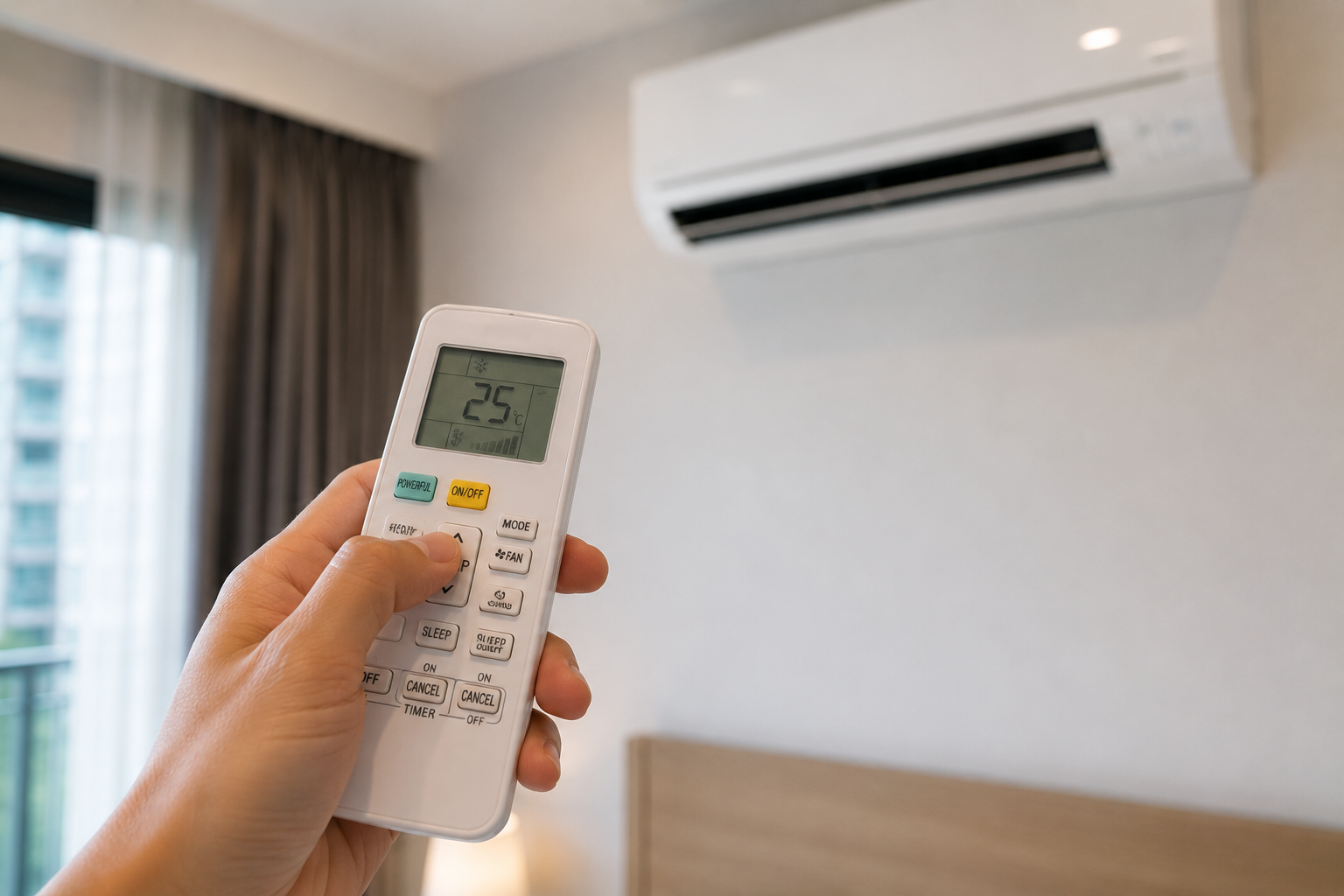
The aircon remote is a small item that is often overlooked, but a broken remote, unresponsive buttons, or an unclear display can make the unit difficult to use. Tenants should test the remote for every aircon in the unit and check that temperature, mode, and fan speed can be adjusted normally.
- Can the remote turn the aircon on and off?
- Can the temperature be adjusted?
- Can the mode be changed?
- Can the fan speed and airflow direction be adjusted?
- Is the remote display clear?
- Does it have working batteries?
If the unit has multiple air conditioners, check every one. Do not test only one unit and assume that all of them work properly.
English summary: Test every remote control, mode, temperature setting, fan speed, and swing function before renting.
8. Check the Number and Position of Air Conditioners
Tenants should check how many air conditioners the unit has and whether their installation positions suit actual use. Some layouts have an aircon only in the bedroom and none in the living room, or the unit may be positioned so air does not circulate throughout the room, requiring longer use and potentially increasing electricity costs.
- Is there an aircon in the bedroom?
- Is there an aircon in the living room?
- Does the aircon blow too directly onto the bed or desk?
- Is it near a door or glass that receives strong sunlight?
- Where is the compressor, and can it be accessed for repair or cleaning?
A poor aircon position may prevent even a working unit from cooling the room evenly. Tenants should consider actual use according to their own lifestyle.
9. Ask About Aircon Cleaning and Repair History
Before renting a condo, ask the owner or landlord when the aircon was last cleaned and whether it has any repair history, such as adding refrigerant, replacing parts, fixing dripping water, or repairing the compressor. These answers help the tenant assess post-move-in risk.
- When was the aircon last cleaned?
- Is there a receipt or other evidence of aircon cleaning?
- Has the aircon previously failed to cool?
- Has it previously had a dripping-water problem?
- What parts have been repaired or replaced?
- Will the owner clean the aircon before move-in?
If the owner agrees to clean the aircon before move-in, ask for evidence such as a receipt, photograph, or confirmation message after cleaning is complete.
English summary: Ask when the air conditioner was last cleaned and whether it has repair history. Keep written confirmation.
10. Who Pays for Aircon Cleaning and Repairs?
Aircon cleaning and repair costs should be clearly stated in the rental contract because different owners and contracts may set different terms. In some cases, the tenant pays for scheduled cleaning; in others, the owner pays for major repairs. Every case depends on the agreement stated in the contract and the actual condition causing the problem.
- Who pays for aircon cleaning during the contract?
- How many times a year must the aircon be cleaned?
- Who pays for repairs if the aircon fails during normal use?
- Who pays if the aircon fails because of improper use?
- Must a technician specified by the building or owner be used?
- Is an aircon cleaning receipt required before returning the unit?
Do not rely on verbal statements alone. Aircon terms should be recorded in the contract, chat, or another document that can be reviewed later. If a service or contract dispute arises, consumers can check information from the Office of the Consumer Protection Board.
11. What Should You Ask About Aircon Electricity Costs?
Electricity costs are important for condo tenants in Thailand because the aircon is often the appliance that uses the most electricity in the unit. Tenants should ask whether electricity follows the bill from the electricity authority or a rate set by the owner or building.
- Does the charge follow the actual electricity bill?
- Is the bill in the name of the owner, tenant, or building?
- Is electricity charged at a specific per-unit rate?
- Can you see previous monthly electricity bills as examples?
- Does the room receive a great deal of sunlight?
- Is the aircon an inverter system, if the owner has this information?
MEA and PEA are electricity authorities serving different areas of Thailand. Users should check electricity information and payment channels directly with the authority serving the unit's area. Rates and policies may change, so check current information before deciding.
English summary: Confirm whether electricity is billed by official utility bill or a fixed rate set by the landlord or building.
12. What Photographs or Videos Should You Keep as Evidence?
When viewing the unit and testing the aircon, take photographs or video as evidence, especially if you find a problem or the owner agrees to repair or clean the aircon before move-in. This evidence helps reduce misunderstandings after moving in.
- Record video while testing the aircon
- Photograph the remote and temperature setting
- Photograph water stains or damage below the aircon
- Record unusual sounds on video, if any
- Photograph the aircon cleaning receipt, if provided
- Keep chats where the owner agrees to aircon repairs or cleaning
13. Aircon Inspection Checklist Before Renting a Condo
- Test the aircon for at least 15-30 minutes
- Check that it actually cools rather than merely blowing air
- Check for dripping water from the unit and drainpipe
- Check for musty odors, dust, and cleanliness
- Listen to the aircon and compressor
- Test the remote, modes, fan speed, and airflow direction
- Check the number and installation position of the air conditioners
- Ask about aircon cleaning and repair history
- Ask who pays for cleaning and repairs
- Ask how electricity charges are calculated
- Keep photographs or video as evidence
- Have important terms recorded in the contract or chat
Summary
Before renting a condo in Thailand, tenants should inspect the aircon thoroughly, not merely check whether it turns on. Check whether it truly cools, whether it drips water or smells musty, whether it is noisy, whether every remote function works, and its cleaning and repair history, because the aircon affects comfort, electricity costs, and post-move-in expenses.
Most importantly, clearly ask about aircon cleaning costs, repair costs, and electricity charges before paying a deposit or signing the contract. If the owner or landlord promises to repair or clean the aircon before move-in, keep written evidence such as chat records, the contract, receipts, or photographs.
English summary: Air conditioner inspection before renting helps prevent comfort issues, high electricity bills, and repair disputes. Always keep written proof.
FAQ
1. How Long Should You Test the Aircon Before Renting a Condo?
Test it for at least 15-30 minutes to see whether it truly cools and whether there is dripping water, loud noise, or a musty smell. Running it for only a few minutes may not reveal some problems.
English: Test the air conditioner for at least 15-30 minutes before renting.
2. Who Should Pay for Condo Aircon Cleaning?
It depends on the rental contract and the agreement between the owner and tenant. Some contracts make the tenant responsible for scheduled cleaning, while in some cases the owner may clean the aircon before move-in. Record the terms clearly in writing.
English: Aircon cleaning responsibility depends on the rental contract. Get it in writing.
3. What Should You Do If the Aircon Does Not Cool After Move-In?
Take video or photographs as evidence, notify the owner or landlord immediately in chat, and check the contract to determine who is responsible for repair costs. If a promise was made before move-in, include that earlier evidence.
English: Document the problem, notify the landlord in writing, and check the repair responsibility in the contract.
Platform Use Disclaimer
This website is only a platform for real estate listings.
Users should verify all information, documents, and terms themselves.
This website is only a real estate listing platform.
Users should verify information, documents, and conditions by themselves.
Baandeego is not a broker and is not a party to any rental, sale, purchase, reservation, payment, contract, ownership transfer, unit inspection, aircon cleaning, aircon repair, or arrangement of a technician, and is not responsible for any service. It is also not responsible for disputes among users, buyers, tenants, owners, sellers, landlords, service providers, or related persons. All parties should independently verify the information, documents, terms, expenses, and applicable laws before making a decision.
References
- Metropolitan Electricity Authority — Electricity Saving Tips: https://www.mea.or.th/en/electricity/energy-saving-tips/
- Provincial Electricity Authority: https://www.pea.co.th/en
- Electricity Generating Authority of Thailand — Energy-saving campaign: https://www.egat.co.th/home/en/20230426e/
- Office of the Consumer Protection Board, Thailand: https://www.ocpb.go.th/index_en.php