Air Conditioner Not Cooling After Moving Into a Condo: What to Check Before Calling a Technician
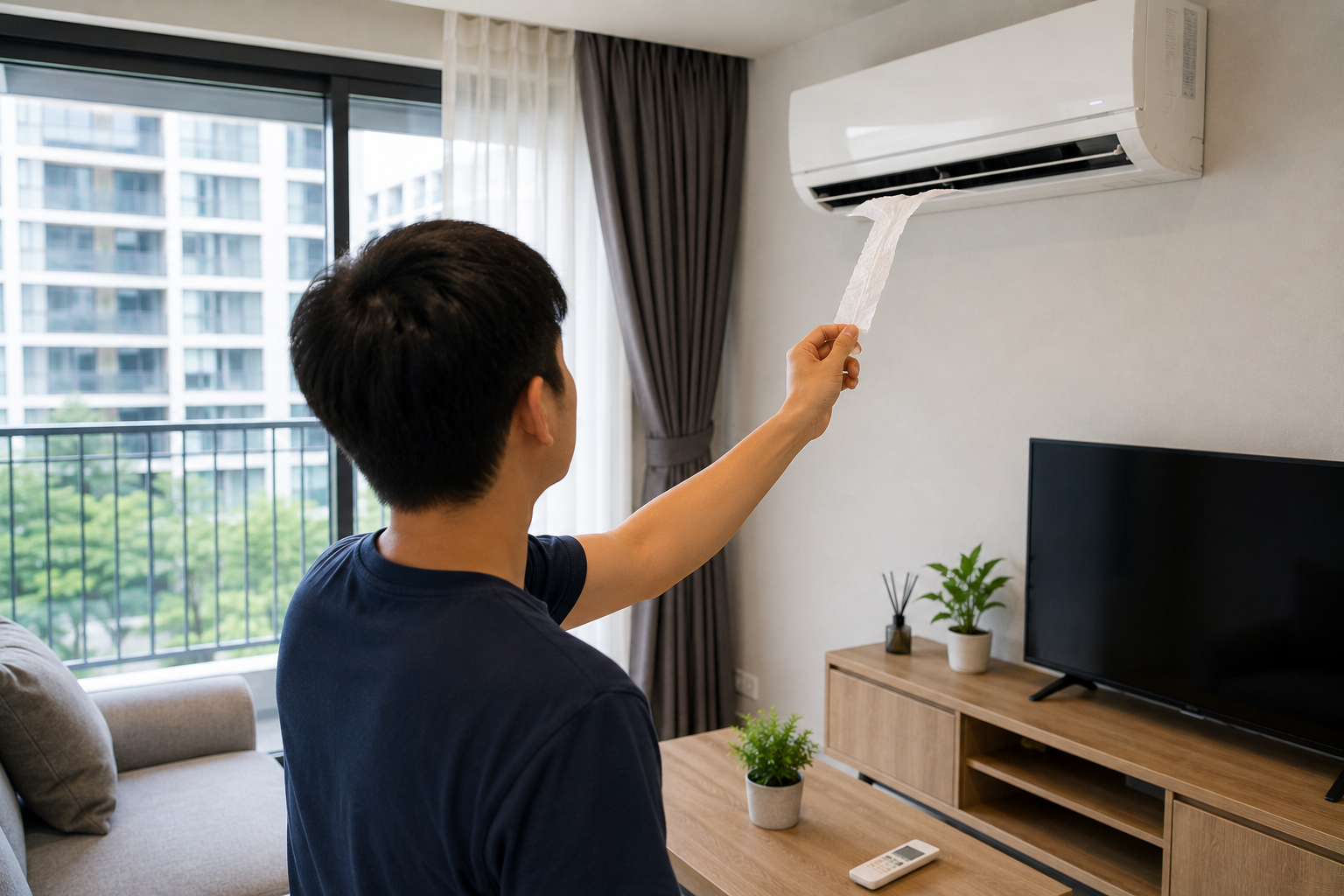
An air conditioner not cooling after moving into a condo is a common problem in Thai condos, especially in units left unused for a long time, units with a recent change of tenant, or units where the aircon has not been cleaned on schedule. The cause may be something simple, such as the wrong mode, an unsuitable remote temperature setting, a dirty filter, or doors and windows that do not close tightly. In some cases, however, it may involve refrigerant, the compressor, the drainpipe, or parts that require a technician's inspection.
Before calling a technician or transferring payment for repairs, tenants should perform safe preliminary checks and notify the unit owner or landlord in writing, especially if they have just moved in and are still inspecting the unit at handover. Responsibility for repair, aircon cleaning, or parts replacement costs should be based on the rental contract and the agreement between the parties, not on verbal statements alone.
English summary: If the condo air conditioner is not cooling after move-in, check remote settings, cooling mode, airflow, filter, room heat, dripping water, and contract repair responsibility before calling a technician.
1. Is the Aircon Set to the Correct Mode?
The first thing to check is the mode on the aircon remote. Sometimes the unit is not broken; the remote may be set to fan, dry, or an automatic mode that does not cool as expected. Tenants should check the symbols on the remote and select cooling mode before testing.
- Check whether the remote is set to cooling mode
- Set an appropriate temperature, such as around 24-26 degrees
- Check that the unit is not running in fan-only mode
- Check that the on/off timer has not been set incorrectly
- Check that the remote has batteries and actually controls the unit
- Try turning it off and on again after waiting briefly, if safe to do so
If you are unsure what each button means, photograph the remote and ask the owner or find the manual for the actual aircon model. Do not press buttons at random and make the settings more complicated.
English summary: Start with the remote control. The unit may be in fan, dry, or auto mode instead of cooling mode.
2. Strong Airflow Without Cooling, or No Airflow
An aircon can fail to cool in different ways. Tenants should distinguish clearly between "air is blowing but is not cold" and "airflow is very weak," because the causes may differ. Strong airflow that is not cold may involve the cooling system, refrigerant, or compressor. Weak airflow may involve dust, the filter, or a partial blockage.
- Is airflow from the aircon strong or weak?
- Is the air cold or merely room-temperature air?
- Does the room begin to cool within 15-30 minutes?
- Does it cool only near the unit rather than throughout the room?
- Can you hear the outdoor compressor operating?
- Does the problem affect every aircon or only one unit?
This information helps the owner or technician assess the problem and reduces the chance of repeated costs from calling a technician without a clear description of the symptoms.
3. Is the Aircon Filter Dirty?
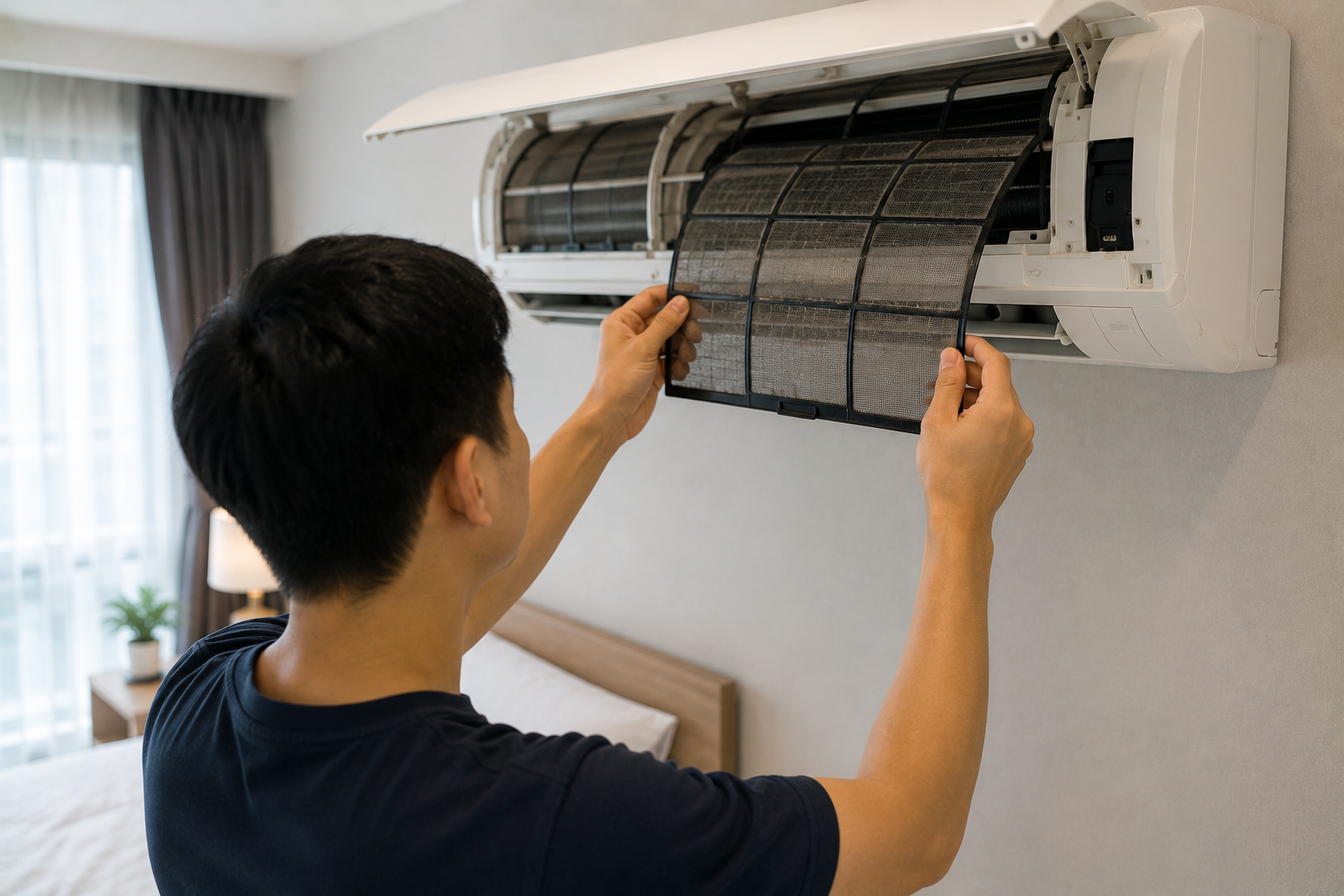
A dirty aircon filter may reduce airflow and make the room cool more slowly. If it is safe, a tenant may ask the owner's permission before opening the cover for a basic look at the filter, but should not remove internal parts or perform deep cleaning without the necessary knowledge.
- Is there obvious dust at the air outlet?
- Is the filter heavily covered in dust, if it can be viewed safely?
- Does the aircon smell musty when turned on?
- Is there a record of the latest cleaning?
- Did the owner agree to clean the aircon before move-in?
If you find heavy dust or a musty smell, take photographs and notify the owner or landlord. Clearly establish whether this is routine aircon cleaning or a problem that existed before move-in, because this may affect who is responsible for the cost.
English summary: Dirty filters can reduce airflow and cooling. Take photos and ask the landlord before doing any deep cleaning yourself.
4. Is the Room Too Hot or the Aircon Undersized?
Sometimes the aircon is not broken, but the room has accumulated a great deal of heat. A room receiving afternoon sun, large glass windows, poor sun-blocking curtains, or an open balcony door while the aircon is running can make the unit work harder and cool more slowly than usual.
- Does the room receive strong afternoon sun?
- Does it have sun-blocking curtains or only sheer curtains?
- Do the doors and windows close tightly?
- Are there gaps that let hot air enter?
- Is the aircon too small for the space?
- Are appliances or an electric stove adding heat to the room?
MEA provides guidance on saving electricity and using household appliances, while PEA is the electricity authority for many areas outside the metropolitan region. Users should check current electricity information and recommendations directly with the authority serving the area where the unit is located.
5. Is the Outdoor Compressor Running?
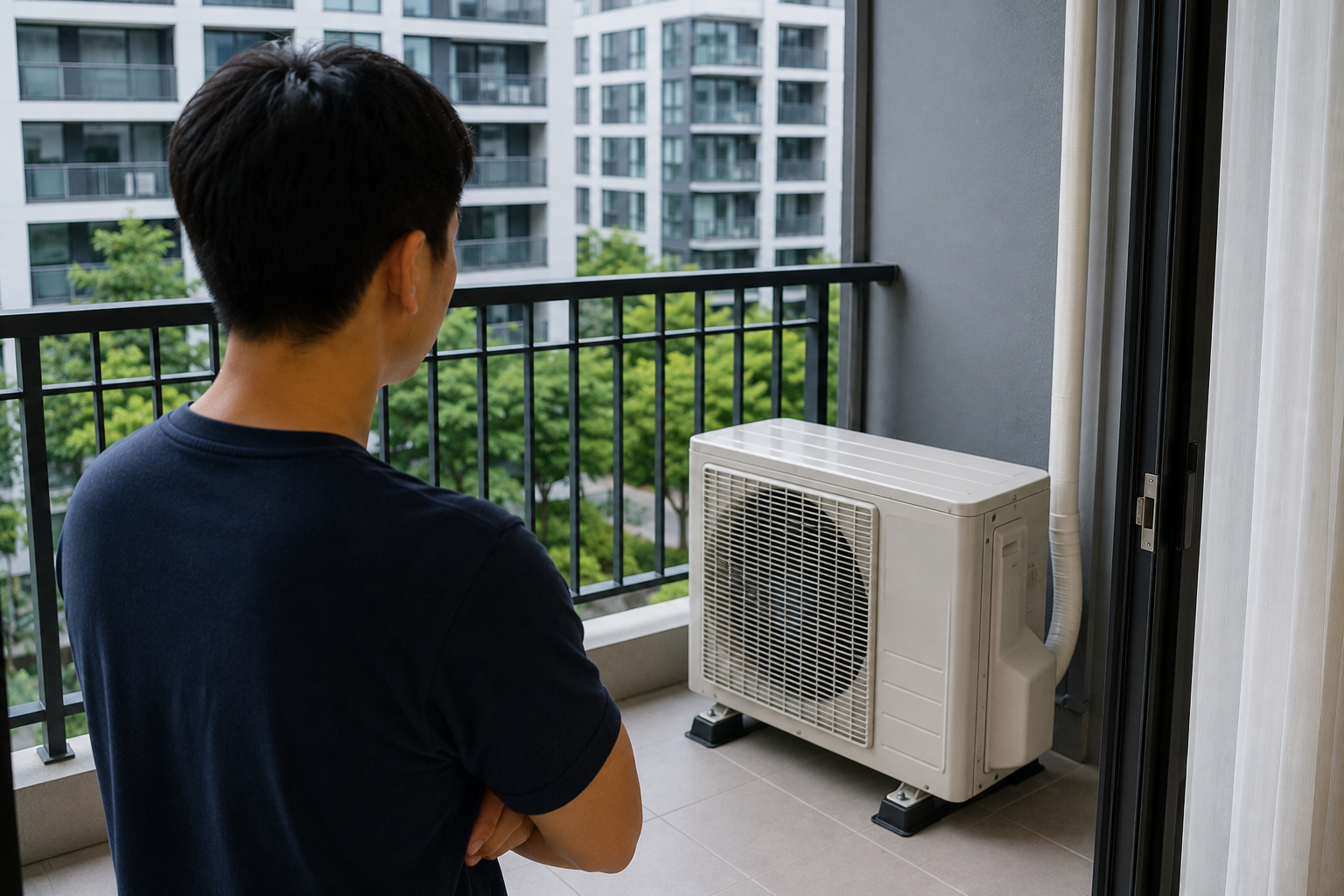
The compressor, or outdoor unit, is essential to cooling. If the indoor unit turns on but the compressor does not operate, air may blow without being cold. Tenants should not climb outside to inspect a compressor in a hazardous position, however. Observe it only from a safe location.
- Can you hear the compressor operating?
- Is the compressor fan turning, if it can be seen safely?
- Is the compressor unusually loud or vibrating heavily?
- Are there obstructions around the compressor?
- Is there good ventilation around the compressor?
If the compressor is outside the balcony or in a location that is difficult to reach, have an appropriate technician or staff member inspect it. Do not risk climbing or removing equipment yourself.
English summary: If the indoor unit runs but the outdoor compressor does not, cooling may fail. Check only from a safe position and contact a technician if needed.
6. Is Water Dripping or Is the Drainpipe Blocked?
In some cases, poor cooling occurs with dripping water or water stains beneath the unit. This may involve a blocked drainpipe, a problem with the drain pan, or improper installation. If you find water stains or dripping, take photographs and video immediately.
- Is water dripping from the unit?
- Are there water stains below the aircon or on the wall?
- Is the floor below the aircon swollen, or has furniture been damaged?
- How long does the aircon run before water begins to drip?
- Does the problem recur every time the aircon is turned on?
If water drips onto the floor, bed, or electrical appliances, stop using the aircon temporarily if necessary and notify the owner immediately to prevent further damage and reduce disputes over responsibility.
7. Does the Aircon Have a Musty or Unusual Smell?
A musty smell from the aircon may come from dust, moisture, or a long period without cleaning. A burning or other unusual smell requires particular caution because it may involve the electrical system or internal equipment. If there is a burning smell, turn off the unit and notify the relevant person immediately.
- Does the musty smell appear immediately when the aircon is turned on?
- Does the smell lessen after it runs for a while, or does it remain?
- Is there a burning or electrical smell?
- Is there dust or black residue around the air outlet?
- When was the aircon last cleaned?
For a musty smell, ask about aircon cleaning and keep evidence of the report. For a burning smell or a severe unusual odor, avoid further use until a specialist has inspected the unit.
English summary: Musty smell may indicate cleaning is needed, while burning smell should be treated as a safety warning.
8. Is an Unusually High Post-Move-In Electricity Bill Related to the Aircon?
If the electricity bill is higher than expected after move-in, the aircon may be an important factor, but do not reach a conclusion without checking other use, such as the water heater, electric stove, refrigerator, washing machine, or the electricity rate charged by the owner or building.
- How many hours a day does the aircon run?
- Is the temperature set very low?
- Does the room receive strong sunlight?
- Is the aircon old or inefficient?
- Does electricity follow the actual bill or a specific rate?
- Are there other appliances that consume a great deal of electricity?
EGAT has published an aircon cleaning project to encourage energy savings, and MEA provides advice on household electricity use. Actual electricity costs, however, depend on usage habits, room conditions, unit condition, and the electricity rate at that time. Tenants should clearly check the bill and billing method with the owner or building.
9. How Should You Notify the Unit Owner?
If the aircon is not cooling after move-in, notify the unit owner or landlord in writing rather than verbally alone. A chat message with photographs or video provides a record that can be reviewed later if there is a dispute about repair costs or the security deposit.
- State the date and time when the problem was found
- Record video while the aircon is running and show the temperature setting
- Photograph the remote, aircon mode, and unit
- Photograph any dripping water, water stains, or dust
- State when you moved in
- Ask whether the owner will send a technician or wants the tenant to contact one
Avoid immediately calling a technician and agreeing to pay without notifying the owner if the contract requires prior approval, because reimbursement may later be disputed.
English summary: Report the issue in writing with photos and videos before arranging repair, especially in rental units.
10. Who Should Pay for Repair or Aircon Cleaning?
Repair and aircon cleaning costs should primarily be determined by the rental contract. If the problem exists on the first day or the owner promised to deliver a unit with a working aircon, the tenant should report it immediately and keep evidence. If the problem results from improper use or failure to maintain the unit as required by the contract, responsibility may differ.
- Check whether the contract addresses aircon cleaning costs
- Check whether the contract addresses aircon repair costs
- Determine whether the symptom existed before move-in or began after a period of use
- Check whether there is evidence of the owner's promise
- Keep every quotation, receipt, and transfer slip
If a dispute concerns a service or payment, consumers can check information from the Office of the Consumer Protection Board. Legal decisions or disputes should be discussed with the relevant authority or an appropriate specialist.
11. What Information Should You Prepare Before Calling a Technician?
If a technician needs to inspect the aircon, complete information will help them assess the problem and help the owner or tenant review costs more clearly.
- Aircon brand and model, if available
- Number of aircon units with problems
- Main symptoms, such as no cooling, dripping water, loud noise, or an odor
- How long the aircon runs without cooling
- When it was last cleaned or repaired
- Whether the compressor operates, if this can be checked safely
- Unit location and condo rules for bringing a technician into the building
Before making an appointment, ask the juristic office whether technicians may work only during permitted hours, whether they must exchange an ID card or register a vehicle, and whether they must use the service lift.
English summary: Prepare brand, model, symptoms, cleaning history, access rules, and photos before calling a technician.
12. What Not to Do When the Aircon Is Not Cooling
When an aircon is not cooling, some tenants may try to fix it immediately, but certain actions may cause more damage or affect responsibility under the contract. Take particular care.
- Do not remove internal aircon parts without the necessary knowledge
- Do not add refrigerant yourself
- Do not climb out to inspect a compressor in a hazardous location
- Do not continue using the unit if there is a burning smell or severe unusual noise
- Do not call a technician and pay without notifying the owner if the contract requires prior notice
- Do not delete chats, photographs, or videos related to the problem
Addressing the issue safely and keeping evidence can substantially reduce disputes among the tenant, owner, and aircon repair provider.
13. Checklist for an Aircon Not Cooling After Condo Move-In
- Check whether the remote is in cooling mode
- Set an appropriate temperature and fan speed
- Run the aircon for a 15-30 minute test
- Check whether airflow is strong or weak
- Check whether the air is truly cold or merely room-temperature air
- Check dust and the filter only as far as can be done safely
- Check for dripping water, water stains, and a musty smell
- Observe the compressor from a safe location
- Check whether the room receives sunlight or hot air enters through gaps
- Take photographs and video as evidence
- Notify the owner or landlord in writing
- Check the contract for aircon cleaning and repair costs
Summary
An aircon not cooling after condo move-in may have many causes, from incorrect remote settings, a dirty filter, or an excessively hot room to a compressor, refrigerant, or internal part problem. Tenants should perform safe preliminary checks, take photographs and video as evidence, and notify the unit owner or landlord immediately.
Most importantly, do not rush to pay repair costs or call a technician without a clear agreement. For a rental unit, check the contract to determine who is responsible for cleaning, repairs, and parts. If the owner promises a repair or an inspection by a technician, keep evidence in chat, receipts, and photographs every time.
English summary: When the aircon is not cooling after move-in, check basic settings and symptoms first, document everything, and confirm repair responsibility in writing.
FAQ
1. What Should I Do First If the Aircon Is Not Cooling After Condo Move-In?
Check whether the remote is in cooling mode, set an appropriate temperature and fan speed, run a 15-30 minute test, and see whether the air is truly cold. If it still does not cool, take photographs or video and notify the unit owner in writing.
English: Check cooling mode, temperature, airflow, and record the issue before notifying the landlord.
2. What Causes an Aircon to Blow Air Without Cooling?
There may be several causes, including the wrong setting, a dirty filter, a refrigerant problem, a compressor that is not operating, or an aircon unsuitable for the room size. Have a technician inspect it if preliminary checks do not resolve the problem.
English: It may be settings, dirty filter, refrigerant, compressor, or room-size issues.
3. Who Should Pay for Aircon Repairs After Move-In?
Check the rental contract and handover evidence. If the problem exists on the first day, notify the owner immediately and keep evidence, but actual responsibility depends on the contract terms and the cause of the problem.
English: Repair responsibility depends on the rental contract and the cause of the issue.
Platform Use Disclaimer
This website is only a platform for real estate listings.
Users should verify all information, documents, and terms themselves.
This website is only a real estate listing platform.
Users should verify information, documents, and conditions by themselves.
Baandeego is not a broker and is not a party to any rental, sale, purchase, reservation, payment, contract, ownership transfer, unit inspection, aircon cleaning, aircon repair, or arrangement of a technician, and is not responsible for any service. It is also not responsible for disputes among users, buyers, tenants, owners, sellers, landlords, service providers, or related persons. All parties should independently verify the information, documents, terms, expenses, and applicable laws before making a decision.
References
- Metropolitan Electricity Authority — Electricity Saving Tips: https://www.mea.or.th/en/electricity/energy-saving-tips/
- Provincial Electricity Authority: https://www.pea.co.th/en
- Electricity Generating Authority of Thailand — Free Air-con Cleaning Service Project: https://www.egat.co.th/home/en/20220411e/
- Office of the Consumer Protection Board, Thailand: https://www.ocpb.go.th/index_en.php