What to Check on Your First Day in a Thai Condo
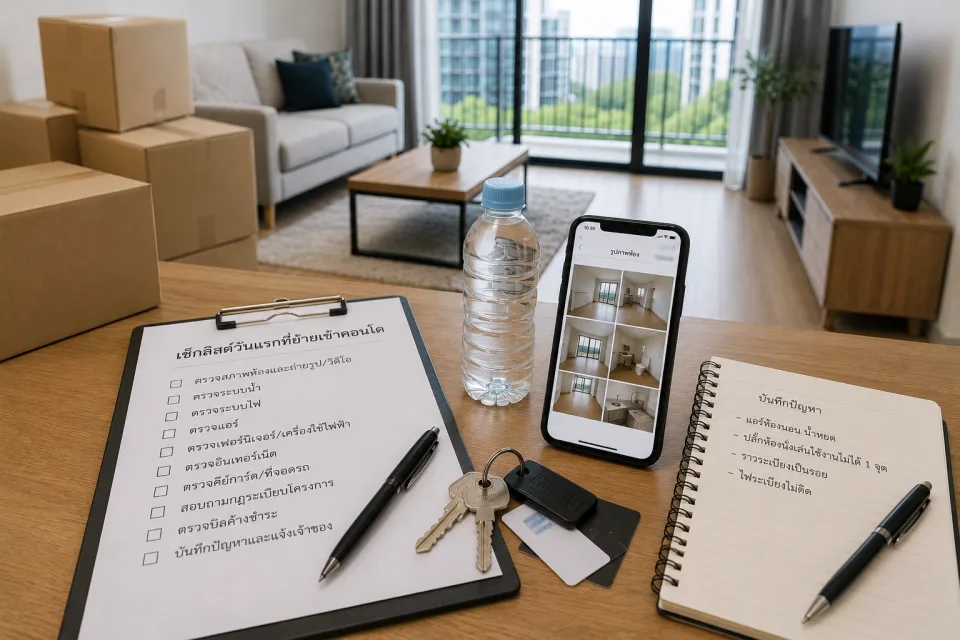
Your first day moving into a condo in Thailand is a time to inspect the room carefully again after receiving the keys. Even if you inspected the room during handover, problems that were not initially visible may appear once you turn on the water, electricity, and air conditioner, move in your belongings, and actually use the unit. These may include water leaks, an air conditioner that does not cool, nonworking outlets, musty odors, blocked drains, unavailable internet, or items missing from the contract.
Tenants, buyers, and anyone moving into a new unit in Bangkok, Pattaya, Chonburi, Phuket, Chiang Mai, or another province should use the first day to reinspect everything and record complete evidence. This is particularly important when renting a condo directly from the owner: report problems in chat immediately rather than waiting several days, as questions may arise about whether a problem existed before move-in or occurred after the tenant began using the room.
1. Inspect the Empty Room Before Filling It With Belongings
Before filling the room with boxes, bags, or furniture, walk through it once more while it is still empty. You will be able to see the floors, walls, ceiling, balcony, and corners more clearly. If you find scratches, water marks, swelling, or cracks, photograph them immediately.
- Check the floor for swelling, cracks, or scratches
- Check the walls and ceiling for water stains or signs of previous repairs
- Check that doors, windows, and sliding panels open and close normally
- Check the balcony for standing water or signs of leakage
- Record a walk-through video before placing belongings in the room
If it is a rental, send any photos or videos showing problems to the owner or landlord on the same day. This provides evidence that the condition was found on the first day after move-in.
2. Turn On Every Water Point and Check for Leaks
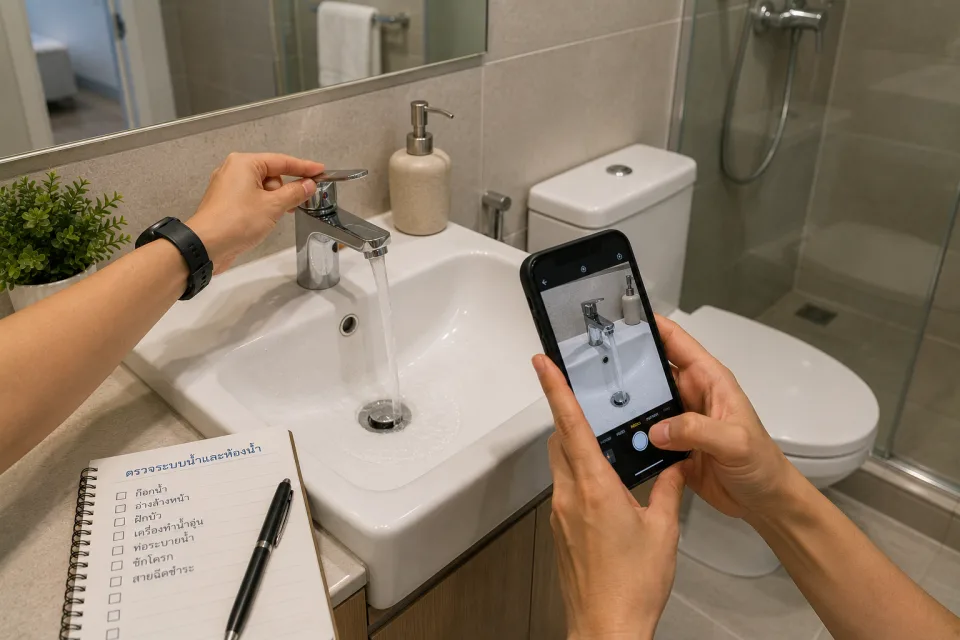
After actually moving in, turn on every water point to test the water pressure and drainage, including the bathroom sink tap, kitchen tap, shower, toilet, bidet sprayer, and water heater. If there is a leak under a sink or a blocked drain, it is best to find it before placing many belongings in the kitchen or bathroom.
- Turn on the bathroom and kitchen taps
- Check the water pressure and color
- Check under the sinks for drips or water stains
- Flush the toilet several times and check for leaks
- Run the shower and observe drainage across the bathroom floor
- Check for odors from the drains
If you find a water leak, notify the unit owner and juristic office immediately because some leaks may affect the unit below or the building's common systems. PWA provides information about tap water services and customer service channels in many provincial areas. Users should contact the authority responsible for their own area directly.
3. Turn On Every Light and Test Outlets Safely
The electrical system should be checked on the first day because it directly affects residential safety. Turn on every light, test the switches, check outlets with a low-power device, and watch for abnormal breaker operation. If you notice a burning smell, flickering lights, or a loose outlet, stop using that point immediately.
- Turn on every light in the room
- Test every switch
- Test outlets with a safe device
- Check outlets for scorch marks, looseness, or cracks
- Check the breaker and electrical panel inside the unit
- Avoid connecting power strips in multiple layers
MEA provides guidance on electricity use and energy conservation, while PEA supplies electricity in many provincial areas. Users should check with the electricity authority responsible for the unit's area for the latest billing and service information.
4. Run Every Air Conditioner and Observe It During Actual Use
On the first day after moving into the condo, run every air conditioner again once you begin using the unit. Some problems appear only after it has been running for a while, such as dripping water, a musty smell, loud noise, or slow cooling. Test each unit for at least 15-30 minutes and record a video if you notice abnormal behavior.
- Set the air conditioner to cooling mode
- Check whether the airflow is actually cold
- Listen to the unit and compressor
- Check for dripping water and water stains below the unit
- Check for musty or burning smells
- Test the remote control and different modes
If an air conditioner does not cool or drips water on the first day, notify the owner immediately and check the contract to determine who is responsible for cleaning or repair costs. A clear written agreement helps reduce later disputes.
5. Check Furniture and Appliances After Their First Use
Some furniture or appliances may look normal at a glance but show problems during actual use. A refrigerator may not cool, a washing machine may leak, a bed may make noise, a wardrobe may not close properly, or a television may not turn on. Test everything on the first day and photograph any pre-existing marks.
- Test whether the refrigerator cools normally
- Run the washing machine on a short cycle, if provided
- Test the microwave, television, and other appliances
- Inspect the bed, mattress, sofa, tables, cabinets, and chairs
- Check hinges, drawers, handles, and cabinet doors
- Photograph damaged items and pre-existing marks
If an inventory is attached to the contract, compare the contents of the room with that list. If anything is missing, notify the owner in writing immediately.
6. Check for Musty Odors, Humidity, and Ventilation
After closing the doors and windows and turning on the air conditioner or fan, you may begin to notice musty odors, humidity, or smells from the drains. Check possible sources such as the bathroom, areas under sinks, wardrobes, curtains, air conditioners, and balcony.
- Check for musty odors in the bedroom and wardrobes
- Check for smells from the bathroom and kitchen drains
- Check whether the curtains, mattress, or sofa smell damp
- Open the windows for ventilation if it is safe to do so
- Photograph any mold, water stains, or dark marks
If an odor is related to humidity or mold, notify the owner or relevant party promptly. Do not simply use a spray to mask the odor without investigating the cause.
7. Check the Internet, Wi-Fi, and Mobile Signal
If the room already has internet service, test Wi-Fi in several areas, such as the desk, bedroom, living room, and balcony. If it does not yet have internet, ask the juristic office which providers serve the building and when technicians are permitted to perform installations.
- Test the Wi-Fi network name and password
- Test the speed near the router and in the bedroom
- Try a basic video call or streaming test
- Check the signal from your mobile network
- Ask the owner who is responsible for the internet cost
- If a new installation is required, obtain the owner's permission first
If you work from home, test the internet on the first day rather than waiting until your first working day. Some buildings may require you to wait for a technician appointment or have internal wiring inspected before installation.
8. Check the Safety of Doors, Windows, and the Balcony
Check room safety immediately after moving in, especially the main door, door bolt, peephole, security chain, windows, sliding panels, and balcony. If a lock is insecure or a sliding panel is broken, notify the owner or juristic office immediately.
- Does the main door lock securely?
- Do the doorknob, bolt, and security chain work?
- Does the peephole or camera outside the door work, if provided?
- Do the windows and sliding panels lock?
- Are the balcony door and railing in good condition?
- Do the corridor and common-area lights near the room work?
In a rental unit, do not replace the lock or install permanent equipment yourself without notifying the owner, as this may affect the contract and security deposit at move-out.
9. Test Keycards, Elevators, Parking, and the Mailbox
After moving in, test each keycard at every point where it will actually be used, such as the building entrance, elevator, residential floor, parking area, fitness center, swimming pool, and mailbox. A card may work in some places but not provide access to every area.
- Does the keycard open the building entrance?
- Does the keycard allow the elevator to reach your floor?
- Does the parking card or vehicle sticker work?
- Does the mailbox key open the mailbox?
- Do the common-area access rights match the agreement?
- Is there a replacement charge for a lost keycard?
If a keycard or parking card does not work, notify the juristic office and unit owner immediately, and keep a photo or written confirmation of the resolution.
10. Check Building Rules and Emergency Contacts
On the first day, ask the juristic office about building rules and emergency contacts, including moving hours, waste disposal times, parcel reception, service elevator reservations, swimming pool and fitness center use, parking, and emergency numbers.
- What is the juristic office's contact number?
- What is the security or emergency number?
- What are the parcel reception rules?
- Where is the waste disposal point, and when may waste be discarded?
- What is the procedure for using the service elevator and bringing a technician into the unit?
- What are the rules for using common areas?
Every condo has different rules. Ask the building's juristic office directly rather than relying on information from another condo.
11. Check Unpaid Bills and Initial Expenses
For a rental unit, ask the owner or landlord whether any water, electricity, internet, or common-area fee bills from before the move-in date remain unpaid. Keep complete evidence of the first-day meter readings and amounts paid.
- Are any water bills unpaid?
- Are any electricity bills unpaid?
- Are any internet or common-area fees unpaid?
- Do the first-day meter readings match the agreement?
- What items are included in the initial expenses?
- Retain every receipt and transfer slip
Electricity and water may be billed directly by the authorities, the juristic office, or the unit owner, depending on the building and lease. Users should clearly verify the billing method before actually moving in.
12. Record Problems and Notify the Owner on the Same Day
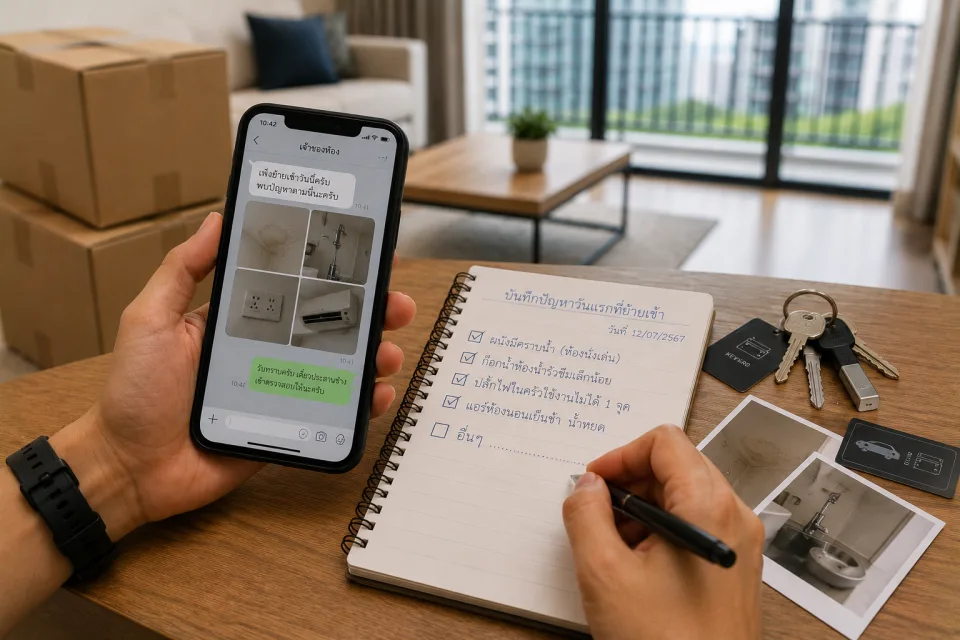
The most important first-day task is to record problems and notify the relevant parties quickly. If you find any issue, take photos and videos, note the date, time, and symptoms, and send the evidence to the owner or landlord in chat immediately.
- Take clear photos and videos of the problem
- State the date and time when the problem was found
- Explain that you have just moved in and found the problem on the first day
- Ask how and when the owner will repair it
- Agree on who is responsible for the cost
- Retain all chats, receipts, slips, and photos
If a dispute arises involving a service or payment, consumers may consult the Office of the Consumer Protection Board for information. A specific dispute should be considered on the basis of the relevant contract, evidence, and facts.
13. First-Day Condo Move-In Checklist for Thailand
- Record a video of the room before placing belongings inside
- Inspect the floors, walls, ceiling, balcony, doors, and windows
- Turn on every water point and check for leaks
- Test the toilet, drains, and water heater
- Turn on every light and test outlets safely
- Run every air conditioner for 15-30 minutes
- Check furniture and appliances during actual use
- Check for musty odors, humidity, and ventilation
- Test Wi-Fi and the mobile signal
- Test keycards, elevators, parking, and the mailbox
- Ask about building rules and emergency contacts
- Check unpaid bills and initial expenses
- Report problems to the owner on the same day with evidence
Summary
Your first day moving into a condo in Thailand should be more than a day for transporting belongings and arranging the room. Use it to recheck every system under actual use, including water, electricity, air conditioners, furniture, appliances, internet, keycards, safety, and initial bills. A complete first-day inspection reduces the risk of later repair costs, security deposit deductions, and disputes.
If you find a problem, record the evidence and notify the unit owner, landlord, project, or juristic office immediately. When renting a unit directly from the owner in particular, use chat or documents that can be reviewed later rather than relying on a verbal agreement alone.
FAQ
1. What should you inspect first on the day you move into a condo?
Start by photographing and recording the room before placing belongings inside. Then thoroughly check the water, electricity, air conditioners, furniture, appliances, keycards, internet, and initial bills.
2. Who should you notify if you find a problem on the first day?
For a rental, notify the owner or landlord immediately in chat. If the problem involves a building system, such as water leaking into another unit, common-area electricity, the elevator, or a keycard, also notify the juristic office.
3. What evidence should you retain on your first day in the unit?
Keep photos, videos, chats with the owner, water and electricity meter readings, receipts, transfer slips, the inventory, and photos of every problem found. These can be reviewed if a dispute arises later.
Platform Use Disclaimer
This website is only a platform for real estate listings.
Users should verify all information, documents, and conditions themselves.
This website is only a real estate listing platform.
Users should verify information, documents, and conditions by themselves.
Baandeego is not a broker and is not a party to any rental, purchase, sale, booking, payment, contract, ownership transfer, room inspection, key handover, water or electrical system inspection, repair, or contact with authorities on a user's behalf. It is not responsible for disputes among users, buyers, tenants, owners, sellers, landlords, service providers, juristic persons, or other involved parties. Before making a decision, all parties should independently verify the information, documents, conditions, costs, and applicable laws.
References
- Metropolitan Electricity Authority — Electricity Saving Tips: https://www.mea.or.th/en/electricity/energy-saving-tips/
- Provincial Electricity Authority — Business & Service: https://www.pea.co.th/en/about-pea/pea-service
- Provincial Waterworks Authority: https://en.pwa.co.th/
- Office of the Consumer Protection Board, Thailand: https://www.ocpb.go.th/index_en.php