What Should You Recheck During the First 7 Days After Moving into a Condo?
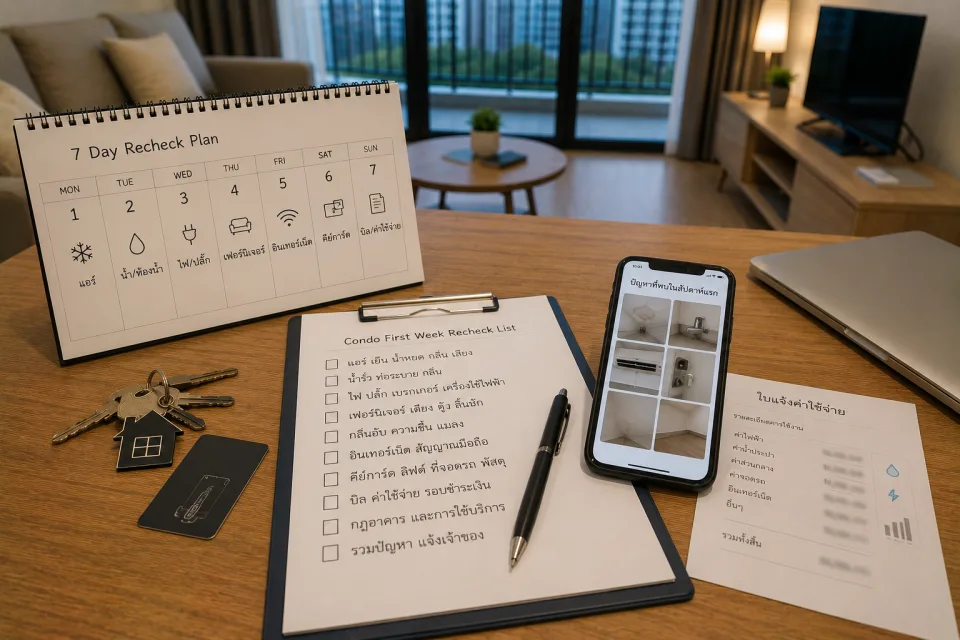
The first 7 days after moving into a condominium are the right time to inspect the unit carefully again. Some problems may not be visible when receiving the keys or on the first night, such as an air conditioner that starts dripping after several days, slow drainage, outlets that do not work, a refrigerator that is not cold enough, a musty wardrobe, frequent internet disconnections, or electricity use that begins to appear unusually high. Finding problems early and keeping clear evidence can reduce the risk of disputes over repair costs, the security deposit, and responsibility with the unit owner.
This article is suitable for tenants, buyers, or anyone who has just moved into a condominium in Thailand, whether in Bangkok, Pattaya, Chonburi, Phuket, Chiang Mai, or another province. It focuses on items to recheck during the first week of actual occupancy and explains how to record evidence and notify the unit owner safely.
1. Check for Problems That May Not Have Been Visible When You Received the Keys
The key handover often involves a quick inspection, but after 7 days of actual occupancy, residents begin to notice problems that arise through continued use. These may include an air conditioner that drips after running for a long time, a bathroom drain that becomes slow with daily use, or an appliance that does not operate normally.
- Does the problem recur, or did it happen only once?
- How long was the item in use before the problem occurred?
- Does it happen every day or only at certain times?
- Does it affect everyday living or safety?
- Do you have photographs, video, or a recorded date?
If you find a problem, record the date, time, and symptoms, and take photographs or video immediately. This makes it easier to report the issue systematically to the unit owner or juristic office.
2. Check the Air Conditioner After Using It for Several Nights
The air conditioner is one item to recheck after moving in because some problems may not appear during a short test. It may begin dripping after running all night, develop a musty smell after several days of use, or cool more slowly than normal during strong daytime heat.
- Does the air conditioner cool the whole room?
- Does it drip after running for a long time?
- Is there a musty or damp smell?
- Does it make any unusual noise?
- Do the remote control and all modes work?
- Does electricity usage rise unusually with air-conditioner use?
The MEA provides advice on efficient electricity use, including the use and care of air conditioners and home appliances. Users should also consider their own electricity usage and air-conditioner habits because actual charges depend on hours of use, room size, air-conditioner condition, and the electricity calculation method used by each building.
3. Check for Water Leaks, Drainage, and Bathroom Odours
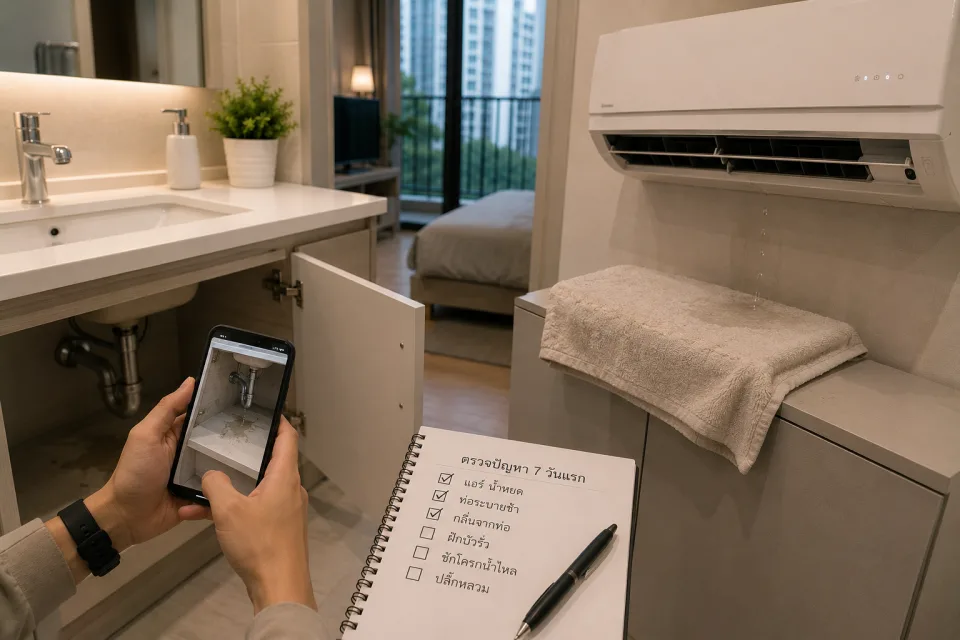
Some plumbing problems may appear only after repeated use, such as slow drainage, odours from drains, water seeping under the sink, or a toilet that runs continuously. If they are not reported promptly, the damage may worsen or affect neighbouring units.
- Are there drips or new water marks under the sink?
- Does the bathroom drain slowly?
- Is there an odour from the drain?
- Does water run continuously in the toilet?
- Do the shower, bidet spray, or taps leak?
- Does water remain on the bathroom floor for an unusually long time?
If there is no water or the pressure is low, first ask the juristic office whether the problem affects the unit, building, or surrounding area. The PWA provides channels for reporting no-water or low-pressure problems within its service areas, but some condominiums may first handle water charges and internal water systems through the juristic office.
4. Check Lights, Outlets, and Appliances After Actual Use
After 7 days of actual occupancy, check whether lights, outlets, and appliances operate reliably. Some problems may appear when several devices are used at the same time, such as a tripped circuit breaker, flickering lights, a hot outlet, or an appliance that does not operate at full performance.
- Do the lights flicker or turn off by themselves?
- Are any outlets loose, hot, or giving off a burning smell?
- Does the circuit breaker trip frequently?
- Does the refrigerator remain consistently cold?
- Do the washing machine, microwave, and television work normally?
- Does any appliance make unusual noise or vibrate?
If there is an electrical problem, do not attempt repairs without the necessary knowledge. Notify the unit owner and have a suitable technician inspect it, especially in a rented unit where repairs may involve the lease and responsibility for costs.
5. Check Furniture After Actual Use
Some furniture may appear normal when the unit is handed over but show problems during actual use, such as loose hinges, sticking drawers, a noisy bed, a sagging mattress, an odour from the sofa, or an unstable table. If a problem is found within the first week, photograph it and notify the owner immediately.
- Does the bed or bed frame make noise?
- Does the mattress have stains, odours, or unusual sagging?
- Do drawers and cabinets open and close properly?
- Are the sofa, table, chairs, and shelves stable?
- Do the curtains, curtain rods, and insect screens work?
- Is there any damage discovered only after arranging your belongings?
Compare the items against the property inventory in the lease. If anything is missing or damaged, report it in writing with photographs.
6. Check for Musty Odours, Moisture, and Insects
After several days of occupancy, musty odours, moisture, or insects that were not obvious on the first day may begin to appear, especially in wardrobes, under the sink, in the bathroom, kitchen, balcony, and air-conditioning vents.
- Is there a musty smell or moisture in the wardrobe?
- Are there damp marks or drain odours under the sink?
- Does the bathroom smell musty after the door is closed?
- Are there ants, cockroaches, mosquitoes, or small insects?
- Are there mould marks, black stains, or new water marks?
- Is the unit well ventilated?
If insects or a musty smell appear during the first week, take photographs or video and notify the owner. If additional pest-control or cleaning services are needed, agree on the cost before proceeding.
7. Check Internet and Mobile Signal at Different Times
Internet may work well during a brief test but disconnect frequently during actual use, slow down in the evening, or have a weak signal in the bedroom or at the desk. Test at different times and in several locations in the unit.
- Does the Wi-Fi disconnect frequently?
- Is the signal weak in the bedroom or at the desk?
- Are video calls interrupted?
- Are there problems streaming or uploading files?
- Is the mobile signal inside the unit good?
- Is the router in a suitable position?
If the internet is under the tenant's contract, contact the provider directly. If the problem involves building wiring or technician access to a service room, coordinate with the juristic office and unit owner as appropriate.
8. Check the Keycard, Lift, Parking, and Parcel Procedures
After several days of daily use, check that the keycard and all building-access permissions work, along with parcel collection and parking. Some problems may only appear after repeated use, such as a keycard that cannot select certain lift floors or a parking card that does not match the vehicle registration.
- Does the keycard open the building every time?
- Can you select your residential floor in the lift normally?
- Does the parking card or vehicle sticker work?
- Can parcels be collected according to the building's procedure?
- Can the mailbox be opened?
- Does the juristic office have the correct resident information?
Save the juristic office and security contact details on your phone so you can quickly contact them if there is an access or parcel problem.
9. Check Bills, Expenses, and Payment Cycles
Within the first 7 days, summarise all initial expenses, such as rent, the security deposit, water, electricity, internet, common-area fees, parking fees, and keycard fees. This helps prevent confusion when the first bills arrive.
- Have the rent and security deposit been paid in full?
- Do you have a receipt or payment slip for every amount?
- Were the first-day water and electricity meter readings recorded?
- Is electricity charged according to the actual bill or a rate set by the owner?
- Is water billed through the juristic office or water authority?
- When do the internet and other service billing cycles begin?
The PEA provides information and electricity-service channels for many provincial areas, while the MEA serves the metropolitan area. Users should check directly which electricity authority serves their area because billing cycles and payment channels may differ.
10. Review Building Rules After Actual Use
Even if you asked about building rules on the first day, actual occupancy may reveal more details, such as waste-disposal times, parcel collection, service-lift use, parking reservations, bringing technicians into the unit, or using the fitness centre and swimming pool.
- What are the waste-disposal hours, and where is the disposal point?
- How are parcels collected, and what documents are required?
- Must advance notice be given before a technician enters the unit?
- When may the service lift be used?
- What are the rules for the fitness centre, swimming pool, and common areas?
- At what times are noise or moving items prohibited?
Keep building-rule documents or photographs of notices on your phone for reference when using services or arranging technician access.
11. Combine Problems into One List Before Notifying the Owner
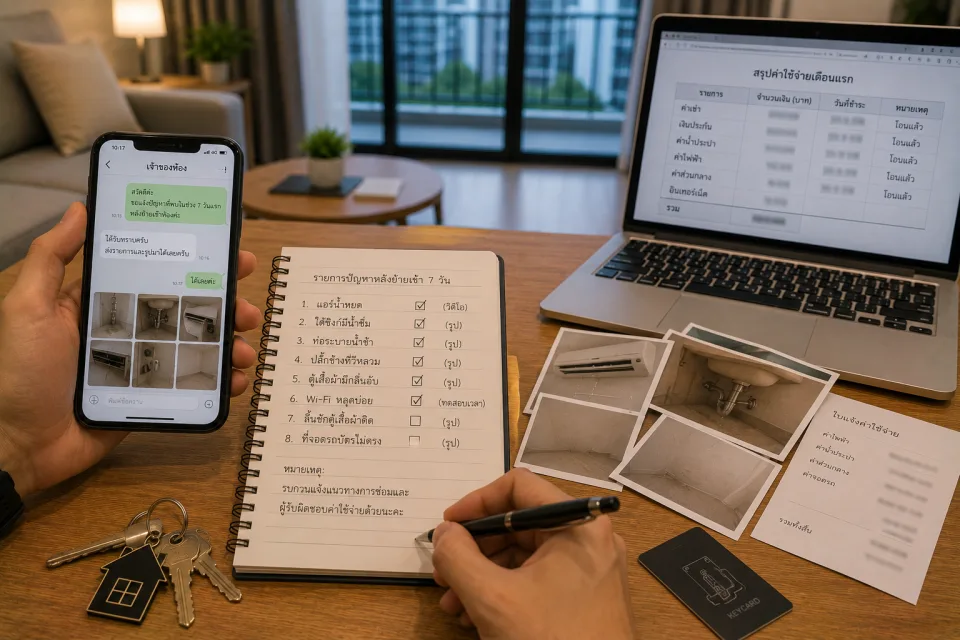
If you find several problems during the first 7 days, compile them into one clear list before notifying the owner. This makes it easier for the owner or landlord to review and respond systematically.
- List each problem separately.
- Attach photographs or video of each problem.
- State the date when each problem was found.
- State whether it recurs or happened only once.
- Ask how it will be repaired and who is responsible for the cost.
- Request a written response.
Avoid reporting problems only by telephone. If you discuss them by phone, summarise the outcome again in chat so there is evidence that can be checked later.
12. Do Not Make Changes or Repairs Before Agreeing on Responsibility
For a rented unit, do not immediately make repairs yourself or call a technician without notifying the owner. This is especially important for work involving electricity, water, air conditioning, the owner's furniture, or drilling into walls, as a later dispute may arise over costs or the security deposit.
- Notify the owner before repairs.
- Ask whether the owner's or juristic office's technician must be used.
- Obtain permission before drilling or altering the unit.
- Agree who will pay the repair cost before work begins.
- Keep quotations, receipts, and post-repair photographs.
- Notify the juristic office if an outside technician must enter the building.
If a dispute arises over a service, repair cost, or payment, users can review consumer-protection information from the OCPB. Any action in a particular case should be considered in light of the relevant contract, evidence, and facts.
13. Checklist for the First 7 Days After Moving into a Condo
- Check for problems that appear during actual use.
- Run the air conditioner at different times and check for drips, odours, and noise.
- Check for water leaks, slow drainage, and bathroom odours.
- Check lights, outlets, the circuit breaker, and appliances.
- Check furniture after actual use.
- Check for musty odours, moisture, and insects.
- Test internet and mobile signal in several locations.
- Test the keycard, lift, parking, and parcel procedures.
- Summarise bills, expenses, and payment cycles.
- Review building-rule details after actual use.
- Combine problems into one list with photographs and video.
- Notify the owner in writing before making repairs or calling a technician.
Conclusion
The first 7 days after moving into a condominium are the best time to recheck the unit under actual use. Many problems may not appear when the keys are received, such as a dripping air conditioner, slow drainage, musty odours, faulty outlets, damaged furniture, unstable internet, or unclear expenses. Inspecting the unit during the first week and keeping complete evidence can reduce future disputes.
If you find problems, compile a list with photographs, video, dates, and details, and notify the unit owner or landlord in writing. Always do this before making repairs or calling a technician, especially for work involving electricity, water, air conditioning, or the owner's property.
FAQ
1. Why Should the Unit Be Rechecked 7 Days After Moving In?
Some problems appear only after several days of actual use, such as a dripping air conditioner, slow drainage, musty odours, internet disconnections, or appliances that operate abnormally. An early check allows the owner to be notified promptly and provides clear evidence.
2. Who Should Be Notified If I Find a Problem After Moving In?
For a rented unit, notify the owner or landlord immediately in chat. If the problem involves a building system, such as water leaking into another unit, the keycard, lift, or common areas, also notify the juristic office.
3. Can I Make the Repair First and Notify the Owner Later?
This is not advisable for a rented unit, especially for the owner's electrical, water, air-conditioning, or furniture items. Notify the owner first, agree on the cost, and keep evidence before repairs begin to prevent disputes over repair costs or the security deposit.
Platform Use Disclaimer
This website is only a real estate listing platform.
Users should verify information, documents, and conditions by themselves.
This website is only a real estate listing platform.
Users should verify information, documents, and conditions by themselves.
Baandeego is not a broker and is not a party to any rental, purchase and sale, booking, payment, contract, ownership transfer, unit inspection, water or electrical-system inspection, repair, technician engagement, or coordination on behalf of users. It is not responsible for disputes between users, buyers, tenants, owners, sellers, landlords, service providers, juristic persons, or related persons. All parties should independently verify the information, documents, conditions, costs, and applicable laws before making a decision.
References / Sources
- Metropolitan Electricity Authority — Electricity Saving Tips: https://www.mea.or.th/en/electricity/energy-saving-tips/
- Provincial Electricity Authority: https://www.pea.co.th/en
- Provincial Waterworks Authority: https://en.pwa.co.th/
- Office of the Consumer Protection Board, Thailand: https://www.ocpb.go.th/index_en.php