Renting a Condo Near the BTS or MRT in Bangkok: What Should You Check Before Choosing?
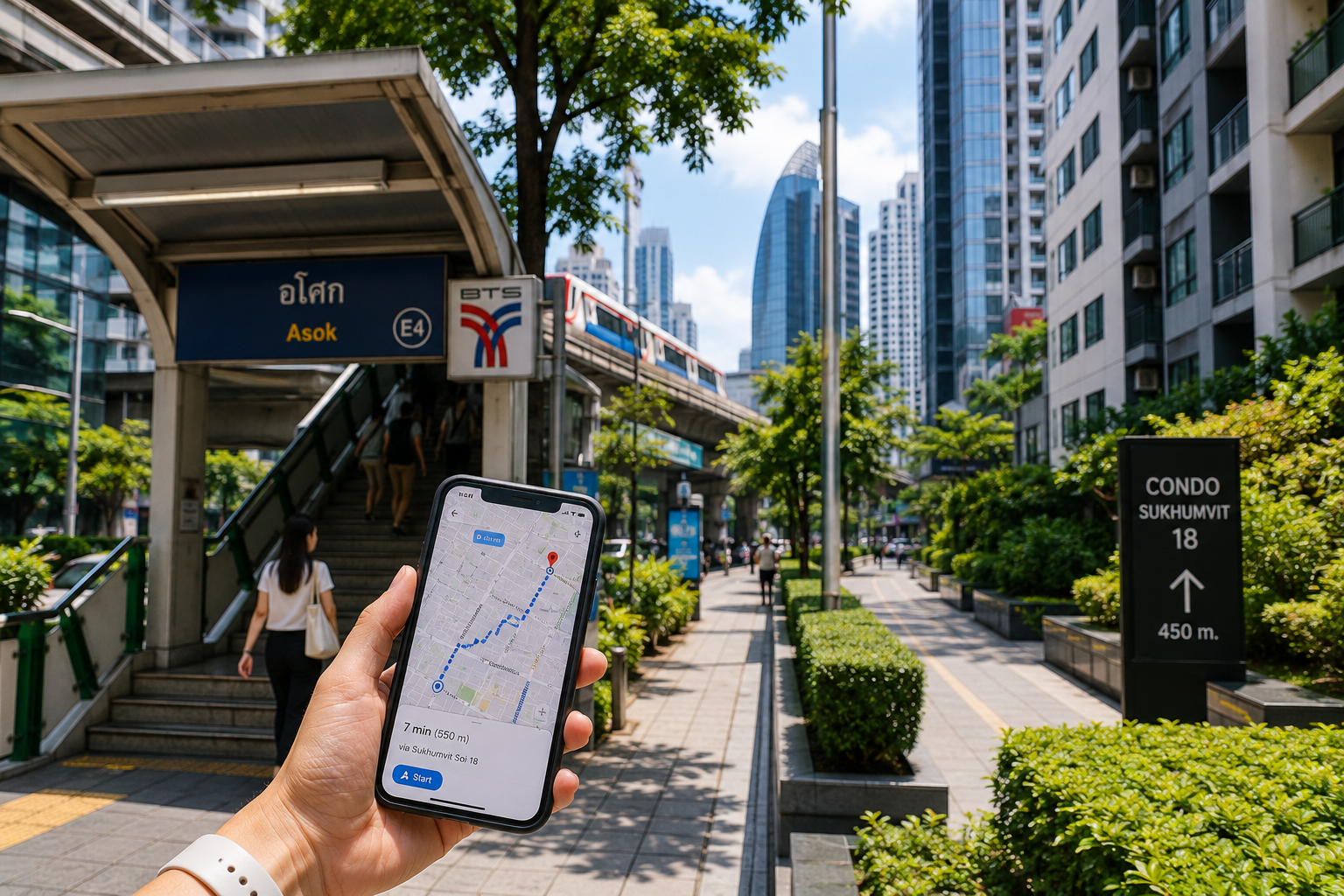
Renting a condo near the BTS or MRT in Bangkok is a popular choice for working professionals, school and university students, international residents, and people who want to reduce travel time in a large city. Living near urban rail can make it easier to reach business districts, shopping centers, hospitals, universities, and important destinations. However, the phrase \"near the train\" in a listing does not always mean the location is convenient. Before deciding, tenants should check the actual walking distance, nighttime route, noise, transport costs, safety, and total expenses.
This article is a guide for people looking for a condo to rent near the BTS, MRT, Sukhumvit, Silom, Sathorn, Asok, Rama 9, Ari, On Nut, Lat Phrao, Ratchada, or other areas in Bangkok. It focuses on choosing a location that suits real life rather than looking only at a station name or the distance stated in a listing. Rail routes, fares, and conditions around stations may change. Users should check the latest information from the operators and visit the actual area before deciding.
English summary: Renting near BTS or MRT in Bangkok can be convenient, but tenants should check real walking distance, nighttime route, noise, total commuting cost, safety, and building access before choosing.
1. For \"Near BTS/MRT,\" Check the Actual Walking Route, Not the Straight-Line Distance
Many condo listings may say they are near the BTS or MRT, but the distance shown on a map may be a straight line rather than the actual walking route. Tenants should check which soi they must use, where they must cross roads, whether there are sidewalks, and how many minutes the journey takes in real life.
- How many meters is it from the condo to the station entrance?
- Must you walk through an isolated soi or along a major road?
- Is there a continuous sidewalk, or are there gaps?
- Must you cross the road several times?
- Are there footbridges, pedestrian crossings, or pedestrian signals?
- How many minutes does the actual walk take in the morning and evening?
If possible, walk from the station to the condo yourself before renting, especially at the times you will actually use the route, such as the morning commute, the evening journey home, or at night after work.
English summary: Do not rely only on map distance. Walk the real route from the station to the condo before deciding.
2. Check the Route at Night and on Rainy Days
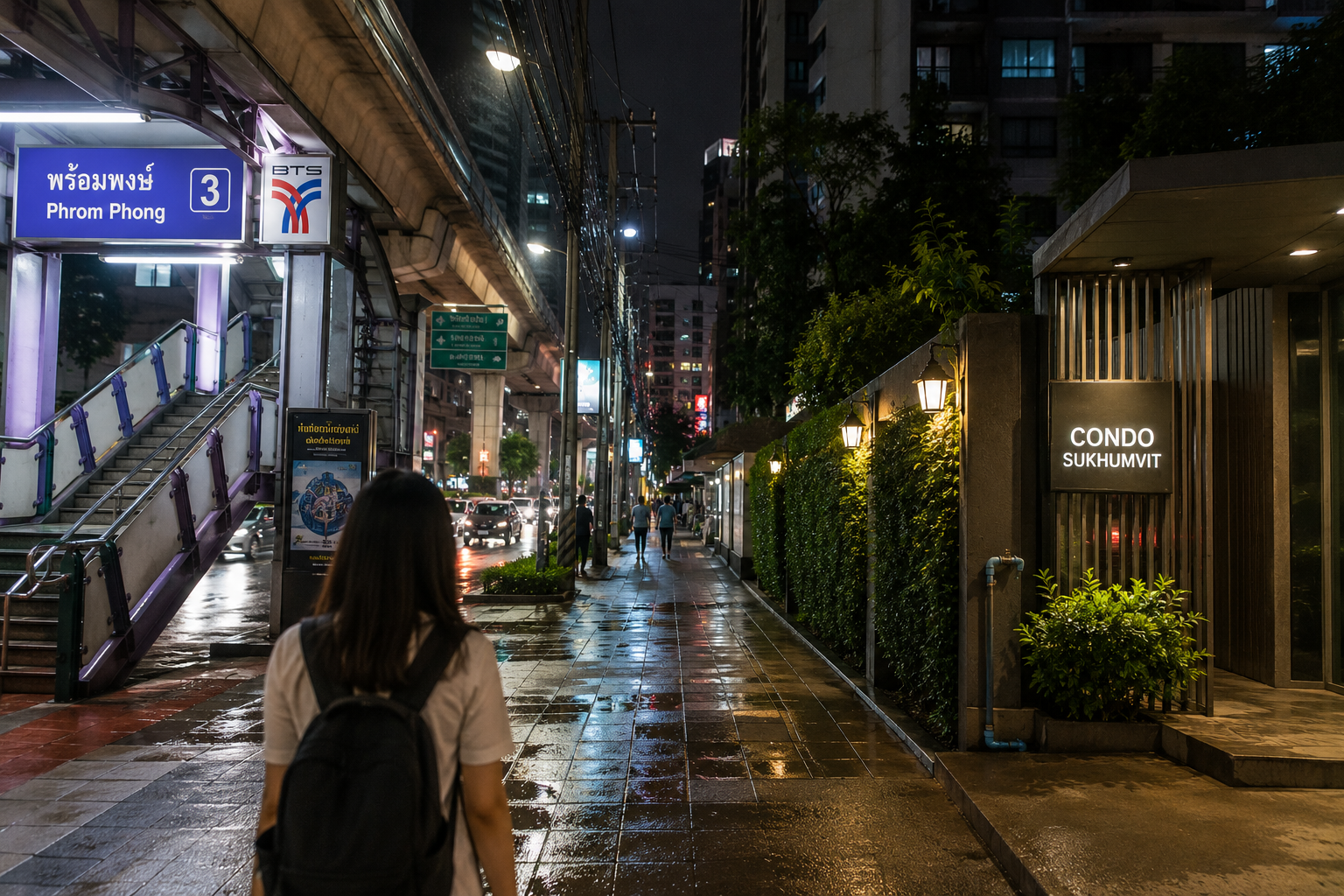
A condo that appears close to the train during the day may not be equally convenient at night or when it rains. Tenants should check whether the route is adequately lit, whether shops or other pedestrians are present, whether it is prone to flooding, and whether it is easy to call a vehicle if they do not want to walk.
- Is the route adequately lit at night?
- Do other people use the route, or is the soi very quiet?
- Is there a roof or somewhere to shelter from rain along the way?
- Is the road or soi prone to standing floodwater?
- Is it easy to call a car or find a motorcycle taxi?
- Is there a convenience store or another safe place along the route?
For people who return home late, work shifts, or regularly travel alone, the route from the station to the condo is as important as the unit itself. Inspect it personally rather than relying on advertising images.
3. Check Whether the Nearest Station Actually Provides a Convenient Journey to Work
Some condos are near a train station, but the journey to work may require several transfers or take a long time. Tenants should calculate the actual route from the condo to work, school, or another regular destination rather than looking only at whether the condo is next to a station.
- How many times must you change lines?
- Are the origin and destination stations very crowded?
- What is the total rush-hour travel time?
- What is the daily and monthly travel cost?
- Are there alternatives such as a bus, boat, or motorcycle taxi?
- If the train service is disrupted, is there a backup route?
BTS and MRTA provide route information on their official websites. Tenants should check route maps and interchange stations using the latest sources before deciding to rent.
English summary: A condo near a station is not always convenient. Check the full route to work, transfer points, travel time, and monthly commuting cost.
4. A Condo Next to a Station May Be Convenient, but Check Noise and Privacy
Condos very close to a station are often convenient, but some buildings may be affected by noise from trains, major roads, buses, shops, or pedestrians, especially units on lower floors or facing the tracks. Tenants should assess noise before signing a contract.
- Does the unit face the train tracks or a major road?
- Can train, braking, or station announcement noise be heard inside?
- Is there nighttime noise from restaurants, bars, or traffic?
- How effectively do the windows and balcony door reduce noise?
- Would a higher floor or different unit position reduce the noise?
- View the unit while trains are actually operating
If you work from home or are sensitive to noise, ask to view the unit in the evening or during rush hour so you can hear the real noise level before deciding.
5. Compare Rent with Total Transport Costs
Condos near the BTS or MRT often have higher rent than some locations farther from a station, but they may suit some people if they genuinely reduce travel costs and commuting time. Tenants should compare rent and transport costs together rather than looking only at rent.
- How much is the monthly rent?
- How much does a round trip cost each day?
- If the condo is far from the station, must you pay for a motorcycle taxi or other transport?
- What is the difference in total monthly travel costs?
- Is the travel time saved worth the higher rent?
- Are there other costs, such as parking, internet, or related common-area charges?
Sometimes a condo slightly farther from the station but with a shuttle or genuinely convenient access may be more suitable than one advertised as near the station but reached by an inconvenient walking route.
English summary: Compare total monthly cost, including rent, transport, motorcycle taxi, parking, and time saved.
6. Confirm That a Shuttle Service Actually Operates
Some Bangkok condos provide a shuttle to a BTS or MRT station, but check whether the service genuinely operates, whether it runs every day, whether its schedule fits your daily life, and whether it costs extra.
- Which station does the shuttle serve?
- On which days and at what times does it operate?
- Are there enough morning and evening trips?
- Must you book in advance, or is it first come, first served?
- Is there an additional charge?
- If the shuttle stops operating, is there another option?
Do not decide solely from the words \"shuttle available\" in a listing. Request the actual timetable from the juristic office or unit owner, and ask building residents if you have the opportunity.
7. Look at Amenities Around the Station
Living near the train is much more convenient when the station area has daily essentials such as convenience stores, restaurants, laundries, pharmacies, clinics, supermarkets, or cafes suitable for working. Tenants should inspect the actual area around both the station and the condo.
- Is there a convenience store near the condo or station?
- Are there restaurants open early and late?
- Is there a nearby laundry, pharmacy, or clinic?
- Is there a supermarket or shopping center near the station?
- Is there a workspace, cafe, or coworking space?
- Does the atmosphere around the station suit daily life?
A condo close to a station but without nearby shops may be less convenient than a condo slightly farther away with a more complete range of services.
English summary: Check daily amenities around both the station and the condo, not only the train distance.
8. Choose the Rail Line That Suits Your Daily Life
Each Bangkok rail line serves different needs. Some lines suit people working in Sukhumvit, Silom, Sathorn, or Asok, while others suit people studying or working around Ratchada, Lat Phrao, Bang Sue, or the Thonburi side of the city. Tenants should choose the line that best fits their real daily life.
- BTS may suit people traveling along Sukhumvit, Silom, or parts of the business districts
- MRT may suit people traveling around Ratchada, Rama 9, Lat Phrao, Bang Sue, or parts of Thonburi
- Interchange stations can have a major effect on travel time
- Look at the station you will use regularly, not only the rail line
- If you need to cross the city, test the actual route during rush hour
Rail route information should be checked on the operators' official websites, such as BTS and MRTA, because some online maps may not be equally up to date.
9. Check the Condo and Station Entrances
Some condos are very close to a station, but the actual route may require a detour because of project fencing, one-way roads, building entrances, or gates that open only at certain times. Tenants should inspect the entrances and exits they can actually use.
- Is the condo gate nearest the station open at all times?
- Is a key card required to use a rear gate?
- Do any gates close after a certain time?
- Does the route to the station detour around fencing or roads?
- Where is the shuttle or motorcycle taxi pick-up and drop-off point?
- Is it still convenient to enter the building when returning late?
A claim of \"5 minutes' walk to the BTS\" may be accurate only for a particular gate or at certain times. Ask the juristic office and test the walk from the gate residents actually use.
English summary: Check the real usable gate, access hours, shortcut routes, and late-night entry before trusting walking-time claims.
10. If You Have a Private Vehicle, You Still Need to Check Parking
Even when renting a condo near the train, tenants with a car or motorcycle should ask clearly about parking. Some condos near stations may have limited spaces or parking conditions that vary by unit and contract.
- Does this unit include parking rights?
- How many vehicles may be parked?
- Is parking assigned or shared?
- Is there a monthly parking or parking-card fee?
- Can guests park?
- Is access to the parking area convenient during rush hour?
Tenants should inspect the actual parking area, especially if they return home late or use a vehicle every day, because being near the train does not always mean driving will be convenient.
11. Be Careful with Units Very Close to a Station but Unsuitable for Daily Living
Some units may be very close to a station but have drawbacks that need consideration, such as noise, road dust, views directly into nearby buildings, strong sun, busy walkways, or surroundings that are unsuitable for long-term living. Tenants should assess both advantages and disadvantages before deciding.
- Noise from the road or train tracks
- Dust and exhaust from a major road
- Privacy at the balcony and windows
- Afternoon sunlight and heat
- Elevator crowding in the morning
- Quality of building and common-area maintenance
A good unit is not simply close to the station. It must suit the tenant's real life, including sleeping, working, traveling, and their monthly budget.
English summary: A very close station location may still have drawbacks like noise, dust, privacy issues, heat, and crowded elevators.
12. What Else Should You Check Before Transferring a Deposit?
After choosing a condo near the BTS or MRT, tenants still need to complete basic checks before transferring a deposit, such as viewing the actual unit, verifying the owner or person entitled to rent it out, reading the contract, checking the receiving account, and keeping proof of every payment.
- View the actual unit or have a live video call
- Check the landlord's name and receiving account
- Read the lease and deposit terms
- Check the rent, water, electricity, internet, and parking costs
- Ask about building rules for pets, smoking, and occupants
- Request a receipt or written confirmation after payment
The Office of the Consumer Protection Board is Thailand's consumer protection agency. Users can check information or contact channels on its official website if they have questions about services or payments.
13. Checklist for Choosing a Condo Near the BTS or MRT in Bangkok

- How many minutes does the actual walk from the station to the condo take?
- Is the walking route safe and adequately lit?
- How many line changes are required to reach work?
- Does the combined monthly cost of rent and transport offer good value?
- Is there noise from the train or a major road?
- Are shops, restaurants, and essential services nearby?
- Is the condo gate nearest the station actually open for use?
- Is there a shuttle or another option if you do not walk?
- Is there enough parking if you have a private vehicle?
- Are the contract, rent, and deposit clear?
Conclusion
When renting a condo near the BTS or MRT in Bangkok, look beyond the distance shown on a map. Tenants should test the actual walk, inspect the route at night, check the journey to work, compare rent with transport costs, assess noise, inspect amenities around the station, and read the contract carefully before transferring a deposit.
When renting directly from an owner, keep chats, transfer slips, receipts, unit photos, and the contract as evidence. Baandeego is only a real estate listing platform. It is not involved in bookings, payments, contracts, unit inspections, or verifying location information on behalf of users.
English summary: When renting near BTS or MRT, check real walking routes, commute time, nighttime safety, noise, total cost, building access, and payment proof before committing.
FAQ
1. How Many Minutes Should a Condo Be from the BTS or MRT?
There is no single number that suits everyone. Test the actual walk at the times you will use it, such as morning and evening. Even a short distance may be unsuitable for daily living if you must cross a major road, walk through a dark soi, or use an inconvenient sidewalk.
English: There is no perfect number. Walk the real route and check comfort, safety, and convenience.
2. Is Living Next to a Train Station Always Better?
Not always. A condo next to a station is convenient, but check noise, dust, privacy, crowding, and total rent. Sometimes a condo slightly farther away that is easy to reach and quieter may be more suitable.
English: Not always. Very close station condos may have noise, dust, privacy, or cost issues.
3. What Should You Check Before Transferring a Deposit for a Condo Near the Train?
View the actual unit, verify the owner or landlord, check the receiving account, read the contract, review every cost, and always keep transfer slips, receipts, or confirmation chats.
English: Check the room, landlord, payment account, contract, total costs, and proof before paying.
Platform Use Disclaimer
This website is only a platform for real estate listings.
Users should verify all information, documents, and conditions themselves.
This website is only a real estate listing platform.
Users should verify information, documents, and conditions by themselves.
Baandeego is not a broker and is not a party to any rental, purchase, sale, booking, payment, contract, or ownership transfer. It does not inspect units, inspect documents, inspect locations, or confirm distances from urban rail on behalf of users. It is not responsible for disputes among users, buyers, tenants, owners, sellers, landlords, juristic persons, or relevant authorities. All parties should independently verify the information, documents, conditions, costs, location, and applicable laws before deciding.
References
- BTS Skytrain — Route and Fare: https://www.bts.co.th/eng/routemap.html
- Mass Rapid Transit Authority of Thailand — MRT Route: https://www.mrta.co.th/en/mrt-route
- Bangkok Metropolitan Administration — Visit Bangkok: https://visit.bangkok.go.th/
- Office of the Consumer Protection Board, Thailand: https://www.ocpb.go.th/index_en.php