Moving Items Out of a Condo in Thailand: What to Tell the Juristic Office and Prepare

Moving items out of a condo in Thailand should be planned in advance. It involves more than calling a moving truck and carrying boxes out of the room. Many condos have rules on moving items, using the service elevator, moving-truck access times, worker ID exchange, use of common areas, and the return of keys or keycards. If the juristic office is not notified in advance, the moving truck may be unable to enter, the elevator may be unavailable, or extra charges may arise under the building's rules.
This article is a checklist for tenants, unit owners, or anyone moving out of a condo in Bangkok, Pattaya, Chonburi, Phuket, Chiang Mai, Hua Hin, or other provinces. It focuses on notifying the juristic office, booking the freight elevator, preparing documents, scheduling the moving truck, preventing damage to common areas, and keeping evidence before handing back the room.
English summary: Moving items out of a condo in Thailand usually requires checking juristic office rules, service elevator booking, moving truck access, worker registration, keycard return, room photos, and written confirmations.
1. Ask the Juristic Office How Many Days' Advance Notice Is Required
Rules differ from one condo to another. Some buildings may require 1 day's notice, while others may require several days, particularly when a service elevator, moving truck, or outside workers are involved. Residents should therefore ask the condominium juristic office before setting the actual move-out date.
- How many days in advance must you give notice?
- What form or documents must be submitted?
- If the unit is rented, must the unit owner confirm the move?
- On which days and at what times may items be moved?
- Are there days or times when moving is prohibited?
- Is there a deposit, security payment, or elevator service charge?
If the unit is rented, the tenant should notify the unit owner as well as the juristic office so all parties agree on the move-out date. This can help reduce later issues with the room handover or security deposit refund.
English summary: Ask the juristic office how many days in advance you must notify them before moving out, especially if a service elevator or moving truck is involved.
2. Check the Permitted Moving Times
Many condos do not allow items to be moved throughout the day because this may affect other residents, create noise, occupy elevators, and disrupt traffic within the building. Confirm the permitted moving times before hiring a moving truck.
- During which hours may items be moved?
- Is moving permitted on Saturdays, Sundays, or public holidays?
- Must a time slot be booked in advance?
- Is there a lunch break during which work is prohibited?
- Is moving prohibited at night or early in the morning?
- Is there a fine for moving beyond the permitted time?
Tell the moving company or driver the time approved by the juristic office in advance. Do not book the truck before learning the building rules, as the job may need to be postponed and extra costs may result.
3. Book the Service Elevator or Give Notice That It Will Be Used
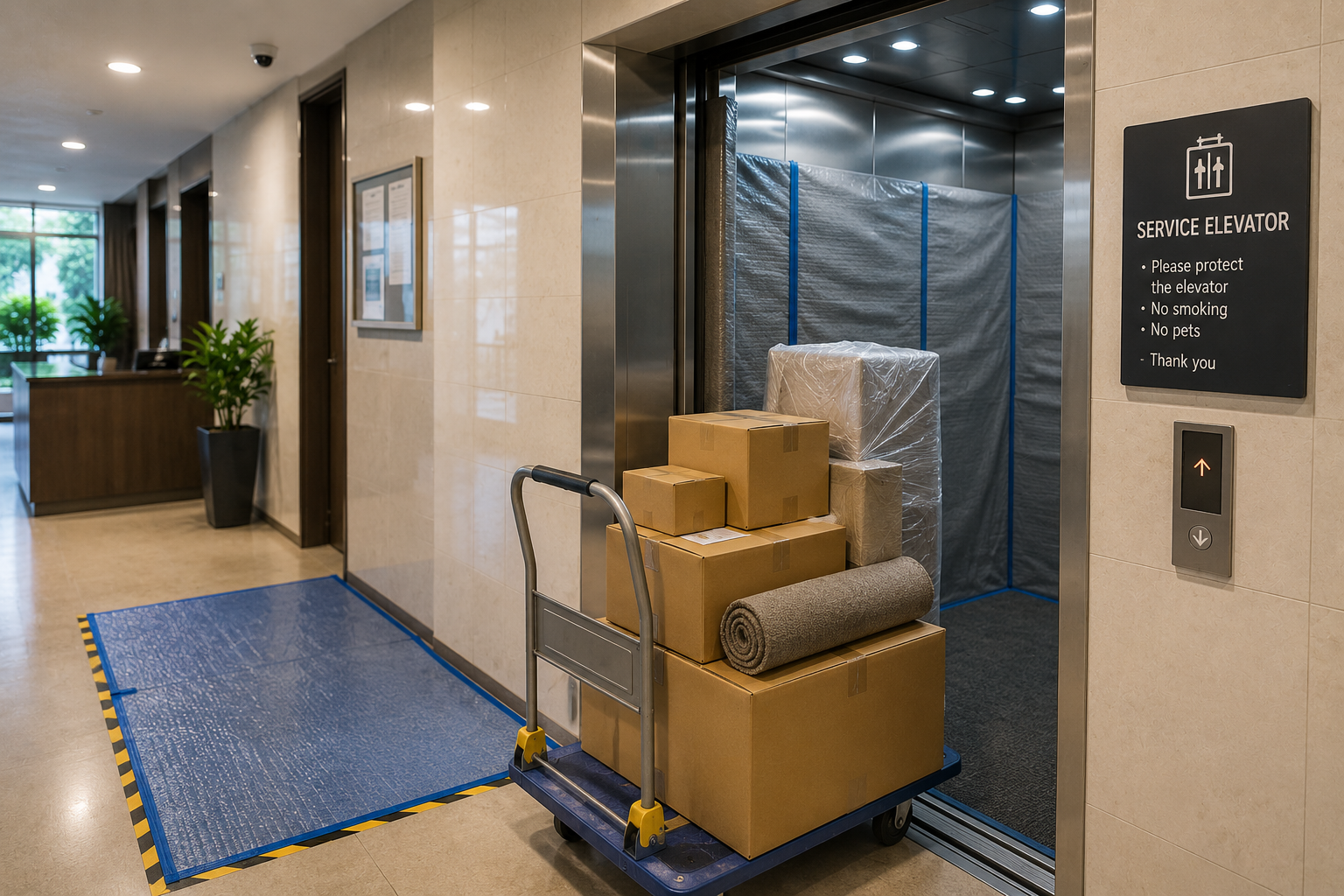
Moving items out of a condo often requires a service elevator. Some buildings do not permit large items to be moved in regular passenger elevators, including cabinets, beds, tables, washing machines, numerous boxes, or appliances.
- Must the service elevator be used?
- How many days in advance must it be booked?
- How many hours may it be used?
- Must protective padding be installed in the elevator?
- Is there a deposit against elevator damage?
- Who is responsible if the elevator is damaged during the move?
Photograph the condition of the elevator and common areas before moving begins. If juristic office staff inspect the area before and after use, keep the document or chat as evidence.
English summary: Many condos require booking a service elevator for moving. Confirm the schedule, deposit, protection rules, and damage responsibility.
4. Provide Moving Truck and Worker Details in Advance
Outside moving trucks and workers generally undergo checks by security staff or the juristic office. For security and internal traffic management, some condos require the vehicle registration, driver's name, phone number, and number of workers before entry.
- Must the moving truck's registration be provided?
- Where may the truck park?
- Is the truck too tall for the building entrance or parking area?
- Must workers exchange an ID card or show documents?
- Must the resident meet the workers downstairs?
- Are there restrictions on trolleys or moving equipment?
Before choosing a moving company, ask for the truck's dimensions and height because some condos restrict entrance clearance, parking areas, or moving-truck bays.
5. Prepare Documents the Juristic Office May Require
Document requirements depend on the development. Some buildings may request only a name and unit number, while others may require a copy of an ID card or passport, a move-out form, permission from the unit owner, or proof that no bills are outstanding with the juristic office.
- Unit number, building, and resident's name
- ID card or passport, as required by the building
- Move-out notification form
- A letter or chat confirmation from the unit owner if the unit is rented
- Proof of payment for water or building charges, if applicable
- Contact number for the moving company or driver
Do not send personal documents to unrelated people. If documents must be submitted to the juristic office, use the building's prescribed channel and keep a copy or screenshot.
English summary: Prepare any forms, ID, owner approval, room details, and moving truck information required by the juristic office.
6. Check Building Charges Before Moving Day
Some condos may require an elevator deposit, common-area damage deposit, elevator booking fee, after-hours moving charge, or another move-out service fee. Check these charges directly with the juristic office because every building is different.
- Is there an elevator booking fee?
- Is there a common-area damage deposit?
- When and how will the deposit be refunded?
- Who inspects any marks in the elevator or corridor?
- Is there a fine for moving at the wrong time?
- Must payment be made in cash, by transfer, or through the juristic office?
Whenever money is paid to the juristic office, request a receipt or proof of payment and keep a photo of the slip in the move-out folder.
7. Pack in a Way That Complies with Condo Rules
Poor packing may make the move take longer or cause marks in the elevator, on walls and floors, or in common areas. Finish packing before the reserved elevator slot so the move does not exceed the time permitted by the building.
- Separate fragile items and label them clearly
- Use sturdy boxes and seal them securely
- Wrap furniture with sharp corners
- If necessary, dismantle large items before moving day
- Do not place boxes where they block corridors or elevators
- Do not leave rubbish or unwanted items in common areas
If you have large items such as a refrigerator, washing machine, bed, or sofa, tell the moving company in advance so it can provide suitable equipment and workers.
English summary: Pack before the moving slot starts. Protect sharp edges, avoid blocking common areas, and prepare large furniture in advance.
8. Photograph Common Areas Before and After the Move
For a clear record, photograph the areas involved in the move, including the corridor outside the room, walkways, service elevator, lobby, moving-truck parking area, and entrances, both before and after moving. If questions arise about marks or damage, the photos can help with verification.
- Photograph the corridor outside the room before moving begins
- Photograph the elevator before and after use
- Photograph the route used to move the items
- Photograph the moving-truck parking area
- Photograph the area after the move to show that nothing was left behind
- Keep the photos until any elevator or common-area deposit has been refunded in full
Taking photos is not only for disputes. It makes verification easier for everyone and helps keep the move-out process organized.
9. Dispose of Rubbish, Boxes, and Unwanted Items According to Building Rules
Move-out day often produces a large amount of rubbish, such as cardboard boxes, plastic, tape, foam, old furniture, or unwanted belongings. Ask the juristic office where they must be discarded and what restrictions apply, as some condos do not allow large items in the regular rubbish room.
- Where should cardboard boxes be discarded?
- Must the juristic office be notified about large items?
- Is there a fee for removing bulky rubbish?
- What may not be placed in the building's rubbish room?
- Must recyclable waste be separated?
- Do not leave discarded items outside the room or in the corridor
If you plan to donate or resell items or have someone collect them, arrange this before the actual move-out day. This reduces the volume to be moved and the risk of exceeding the elevator booking.
English summary: Ask the juristic office about disposal rules for boxes, large items, and unwanted furniture before moving day.
10. Return All Keys, Keycards, and Access Devices
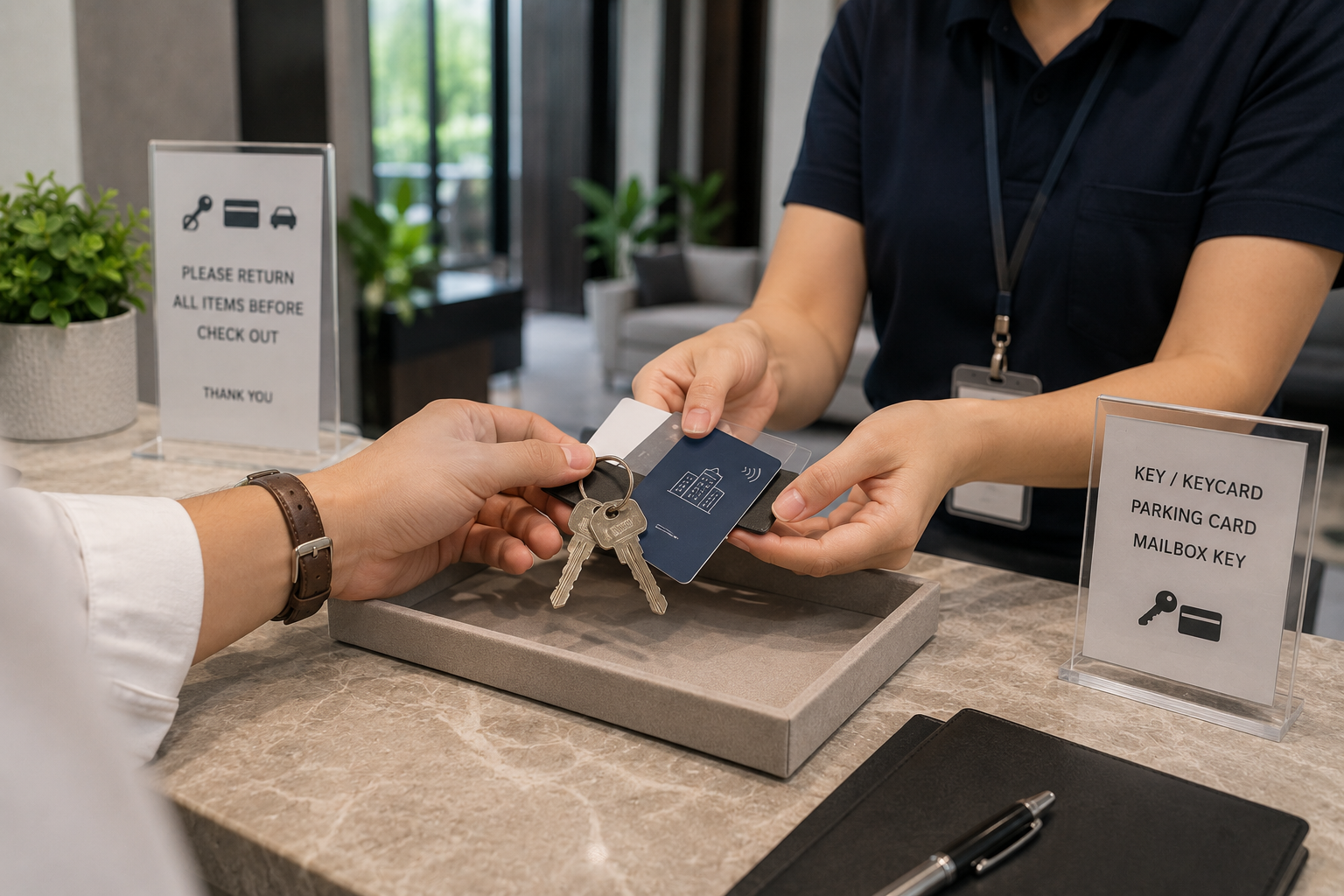
After moving your belongings out, prepare a list of items to return to the unit owner or juristic office, such as room keys, keycards, parking cards, vehicle stickers, gate remotes, and the mailbox key. Missing items may incur charges under the lease or building rules.
- Are all room keys present?
- Are all keycards present?
- Have parking cards or vehicle stickers been returned or cancelled?
- Has the mailbox key been returned?
- Are all gate remotes or other access devices present?
- Is there evidence confirming the return?
Photograph all devices before returning them and ask the recipient to confirm in a chat message or document that everything was received.
11. Inspect the Room One Last Time Before Leaving the Condo
Before leaving for the last time, walk through the room again after everything has been moved out. Check for forgotten belongings, new damage, rubbish, floor marks, or devices that have not yet been returned. This final inspection helps make the room handover more orderly.
- Check every room and cabinet
- Check the balcony, bathroom, kitchen, and area under the sink
- Turn off the water, lights, and air conditioner
- Unplug personal devices
- Remove rubbish from the room
- Photograph the room after the move is complete
If the unit owner or agent attends the inspection, summarize the findings in a chat message or document afterward so both parties have the same information.
English summary: Do a final room walkthrough after moving everything out. Check cabinets, balcony, bathroom, kitchen, lights, water, trash, and final room photos.
12. Keep Complete Evidence from Move-Out Day
Keep the evidence from move-out day in one folder, including messages notifying the juristic office, proof of the elevator booking, room-condition photos, common-area photos, photos of returned keys, expense slips, and confirmation messages from the unit owner or juristic office staff.
- Chat messages confirming the move-out date with the unit owner
- Chat messages or documents notifying the juristic office
- Proof of the elevator booking or elevator deposit payment
- Photos of the room after the belongings were removed
- Photos of common areas before and after the move
- Photos of returned keys, keycards, and cards
- Receipts or slips for related charges
If there is a problem with a service or payment, users can check information from the Office of the Consumer Protection Board. Any action in a specific case should nevertheless be based on the relevant contract, evidence, and facts.
13. Checklist for Moving Items Out of a Condo in Thailand
- Notify the unit owner and juristic office in advance
- Check the days and times when the building permits moving
- Book the service elevator or give notice that the freight elevator will be used
- Provide the moving truck registration and worker details
- Prepare the documents required by the juristic office
- Check elevator charges or deposits
- Finish packing before the moving slot
- Photograph common areas before and after the move
- Dispose of rubbish and large items according to building rules
- Return every key, keycard, and parking card
- Inspect the room one last time before leaving
- Keep all evidence until the account is fully settled
Summary
Moving items out of a condo in Thailand should begin with advance notice to the juristic office and unit owner. Check the permitted times, book the service elevator, provide moving-truck information, prepare documents, finish packing, and retain complete before-and-after evidence. Following these steps helps keep move-out day orderly and reduces misunderstandings with the unit owner or juristic office.
For a rented unit, communicate every step through chats or documents that can be reviewed later, including the move-out date and the return of keys and keycards and related charges. Baandeego is only a real estate listing platform and is not involved in moving services, elevator bookings, deposit refunds, or disputes between users.
English summary: A smooth condo move-out requires juristic office notice, service elevator booking, moving truck coordination, keycard return, common-area care, final room check, and organized proof.
FAQ
1. Must I Notify the Juristic Office When Moving Items Out of a Condo?
You should always notify it because many condos have rules on service elevator hours, moving trucks, outside workers, and use of common areas. The actual requirements depend on the building, so ask the juristic office directly before move-out day.
English: Yes, you should notify the juristic office because moving rules vary by building.
2. Must the Freight Elevator Be Booked in Advance?
Many condos require the service elevator to be booked in advance, particularly for large items or numerous boxes. Ask about permitted hours, the elevator deposit, and damage-prevention rules before booking the moving truck.
English: Many condos require advance booking for the service elevator.
3. What Evidence Should I Keep on Move-Out Day?
Keep messages notifying the juristic office, photos of the room after moving, before-and-after photos of common areas, photos of returned keys and keycards, expense slips, and confirmation messages from the unit owner or juristic office.
English: Keep juristic office messages, room photos, common-area photos, key return proof, receipts, and written confirmations.
Platform Use Disclaimer
This website is only a real estate listing platform.
Users should verify information, documents, and conditions by themselves.
This website is only a real estate listing platform.
Users should verify information, documents, and conditions by themselves.
Baandeego is not a broker and is not a party to any rental, purchase and sale, reservation, payment, contract, ownership transfer, elevator booking, moving service, room inspection, deposit refund, or coordination with the juristic office on behalf of users. It is not responsible for disputes between users, buyers, tenants, owners, sellers, landlords, moving service providers, juristic persons, or relevant authorities. All parties should independently verify the information, documents, conditions, costs, and applicable laws before making a decision.
References / Sources
- Office of the Consumer Protection Board, Thailand: https://www.ocpb.go.th/index_en.php
- Department of Lands, Thailand Condominium Documents: https://www.dol.go.th/en/dol-services/public-service-manual/land-registration/condominium-documents/
- Metropolitan Electricity Authority MEA eBill: https://www.mea.or.th/en/our-services/mea-service/e-service/mea-eBill
- Provincial Waterworks Authority e-Service: https://en.pwa.co.th/contents/eservice