First-Day Condo Move-In Checklist for Thailand: What to Check Before Unpacking
A first-day condo move-in checklist is very important for tenants, buyers, or anyone moving into a new unit in Thailand. The first day is the time to inspect the room condition, water, electricity, aircon, furniture, keycards, meters, and documents before unpacking or arranging the room. If the inspection is delayed, it may be difficult to determine whether a problem existed before or arose after move-in.
Whether moving into a condo in Bangkok, Pattaya, Chonburi, Phuket, or another province, users should spend time on the first day taking photographs, recording video, checking the inventory, and clearly confirming expenses with the unit owner, landlord, project, or condominium juristic office. Especially when renting directly from an owner, keep all evidence in chat or documents.
English summary: On the first condo move-in day, inspect the room, air conditioner, water, electricity, furniture, keycard, meters, internet, and payment records before unpacking.
1. Photograph and Record the Room Before Placing Belongings
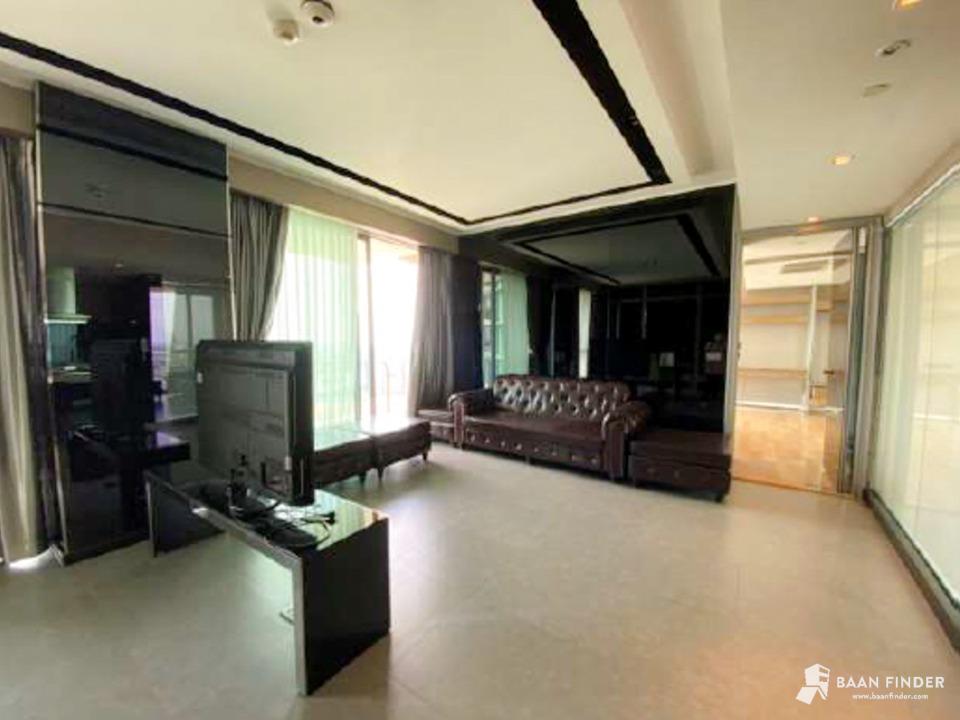
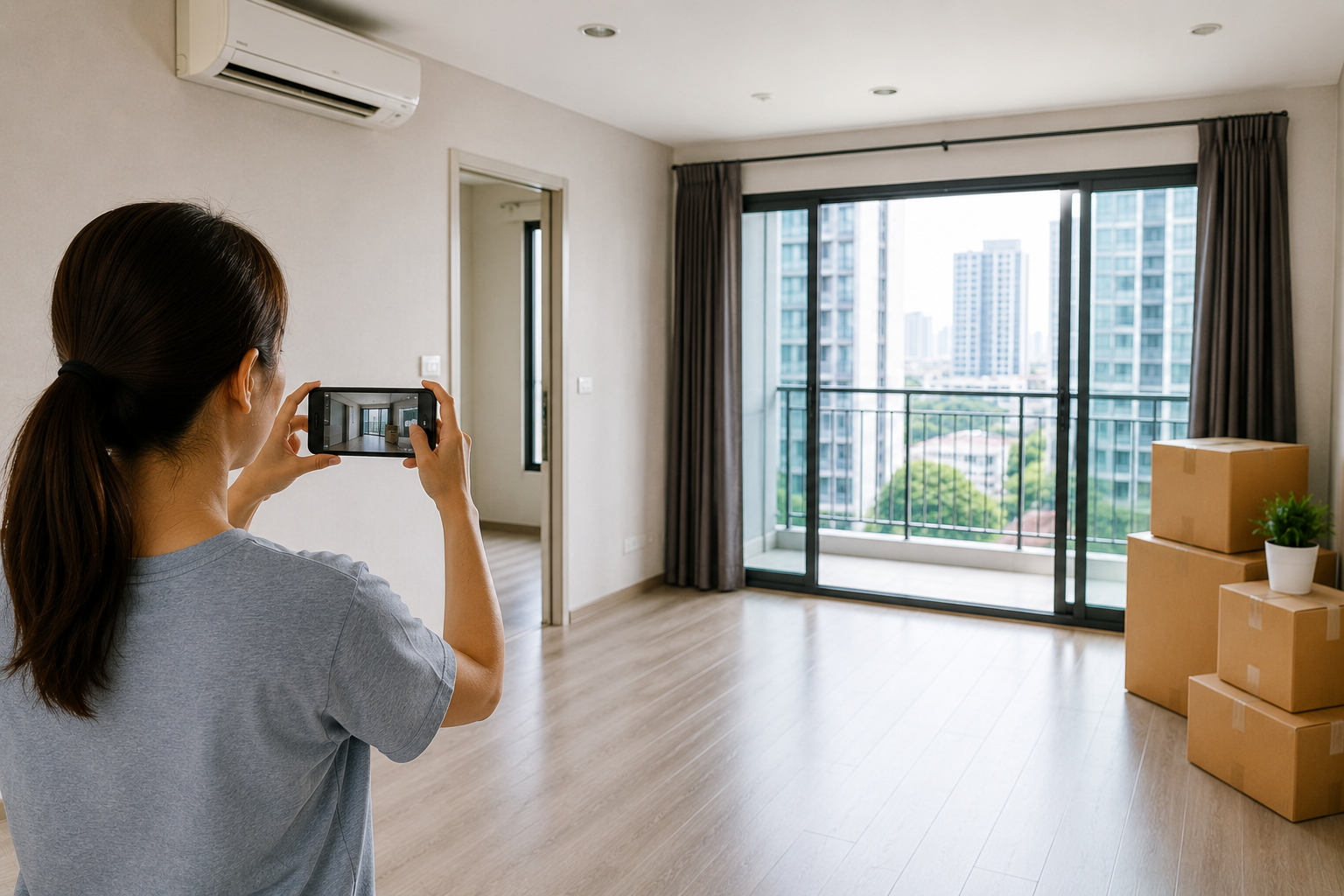
Before unpacking boxes or positioning furniture, always photograph and record the overall condition of the room, especially in a rental unit. Images from the first day can serve as evidence if there is a later dispute over damage or the security deposit on move-out day.
- Take wide-angle photographs of the living room, bedroom, kitchen, and bathroom
- Photograph the floor, walls, ceiling panels, ceiling, doors, and windows
- Photograph existing scratches, cracks, water marks, or damage
- Photograph every item of furniture and every appliance
- Record one continuous walk-through video of the room
- Send any problems found to the owner or landlord immediately on the first day
Keep the photographs and video in a safe place, such as email, cloud storage, or a dedicated folder, so they are easy to find in the future.
English summary: Take photos and videos before unpacking to document the original room condition clearly.
2. Check the Aircon on the First Day
The aircon is very important in a Thai condo, especially in hot cities such as Pattaya, Bangkok, and Chonburi. New occupants should test it on the first day rather than waiting until bedtime to discover that it does not cool, drips water, or smells musty.
- Run the aircon for at least 15-30 minutes to test cooling
- Check whether water drips from the unit
- Listen for unusually loud operating noise
- Check for a musty or moldy smell
- Ask when the aircon was last cleaned if it is a rental unit
- Take photographs or video if you find a problem
If the aircon has a problem, notify the unit owner or landlord immediately and clearly ask who is responsible for repair or aircon cleaning costs under the contract.
3. Check the Water, Bathroom, and Plumbing
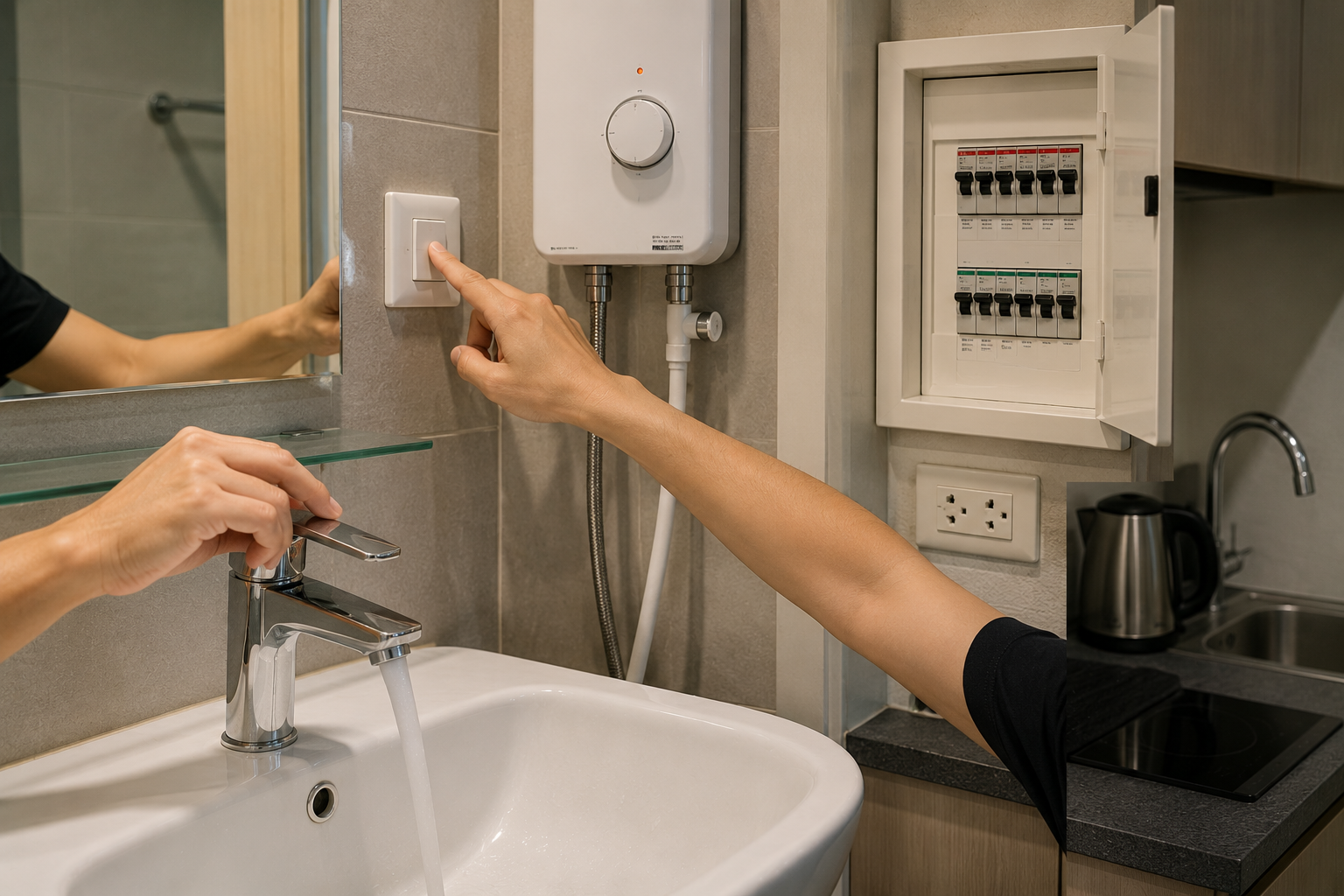
The water system is another area to inspect immediately on the first day. A leak, blocked pipe, or abnormal water pressure may cause a major problem after move-in, especially in the bathroom and kitchen, which are used daily.
- Open every tap to check the water pressure
- Flush the toilet and check for leaks
- Check the washbasin, kitchen sink, and drainpipes
- Check the water heater, if present
- Check whether water pools on the bathroom floor or drains slowly
- Check for odors from the drains
- Photograph leaks or damaged areas as evidence
If you find a plumbing problem, report it promptly, because a water leak may affect both your own unit and an adjacent unit or the unit below.
English summary: Check all taps, toilet, drains, water heater, and bathroom floor drainage on the first day.
4. Check Lights, Outlets, and the Circuit Breaker
The electrical system is a safety matter. New occupants should check every light, outlet, and circuit breaker in the unit. If you find a burning smell, loose outlet, flickering light, or a breaker that trips frequently, stop using that point and notify the unit owner or juristic office immediately.
- Turn on every light in the unit
- Test outlets with a small device
- Check whether each circuit-breaker switch works
- Check outlets in the kitchen and those used for appliances
- Inspect visible electrical wires for damage
- Avoid connecting multiple power strips in layers
For electricity charges, users should check whether billing follows the MEA or PEA bill or a rate set by the owner or building. MEA and PEA are electricity authorities that offer bill checking and payment through their channels. Users should check current information from the authority serving their area.
5. Photograph the Water and Electricity Meters
Photograph the water and electricity meters on the first day of occupancy as evidence of the starting readings. For a rental unit, meter readings help prevent disputes over retroactive water or electricity bills or costs incurred before move-in.
- Photograph the electricity meter
- Photograph the water meter
- Include the date shown on the phone or retain the image metadata
- Send the meter readings to the owner or landlord in chat
- Clearly ask how water and electricity charges are calculated
- Keep the first post-move-in bill for comparison
If a meter is in a common area, ask the condominium juristic office whom to contact to view the reading or whether the building staff can provide a photograph.
English summary: Photograph water and electricity meters on move-in day and confirm billing rules in writing.
6. Check Furniture and Appliances
If the unit includes furniture or appliances, check that the inventory matches the contract or its attached list, especially in a fully furnished rental unit with items such as a bed, wardrobe, table, sofa, refrigerator, microwave, washing machine, or television.
- Check whether every listed item of furniture is present
- Check the condition of the bed, mattress, wardrobe, table, and sofa
- Turn on the refrigerator and check that it cools
- Test the washing machine, microwave, television, and other equipment
- Check the aircon remote, television remote, and accessories
- Photograph damaged items or existing marks
Notify the unit owner immediately if an item is missing or does not work. Do not wait several days, because a dispute may arise later.
7. Check Keycards, Keys, and Parking
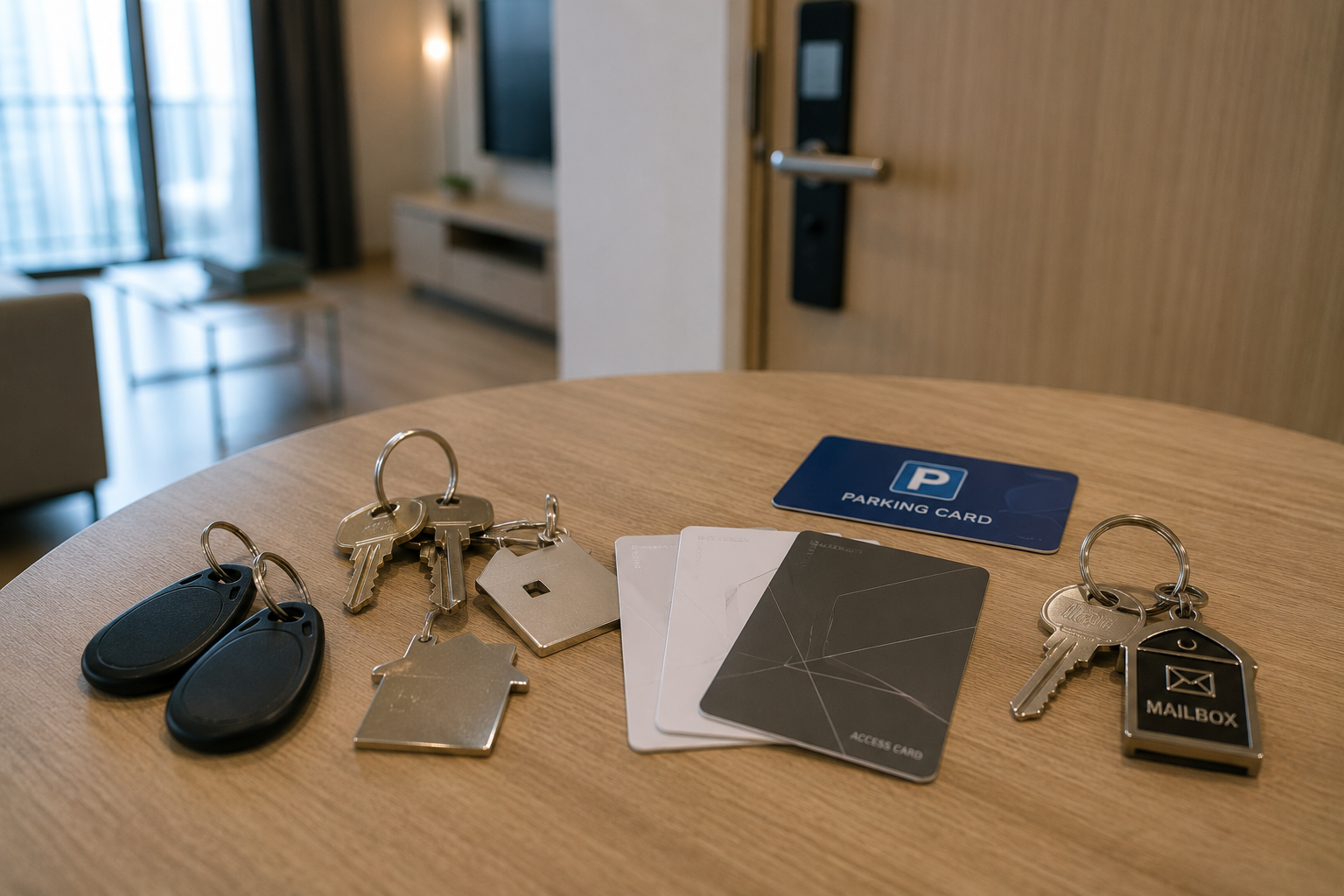
Keycards, keys, and parking cards should be checked on the first day. If they do not work, normal access to the building, lift, residential floor, or parking area may not be possible. Test every card and clearly confirm how many were received.
- Test the keycard at the building entrance
- Test the keycard for lift or residential-floor access
- Count the unit keys
- Check the mailbox, if any
- Check the parking card or vehicle sticker
- Ask about the penalty for a lost keycard or key
- Keep evidence of the number of keycards and keys received
English summary: Test all keycards, keys, elevator access, mailbox access, and parking cards immediately.
8. Check Internet and Mobile Signal
Many people move in and discover that the internet is not ready for use or that the mobile signal in the room is weaker than expected. Check both on the first day, especially if you work from home or regularly make video calls.
- Ask whether internet service has already been installed
- Check the Wi-Fi name and password
- Perform a basic internet speed test
- Test the mobile signal in the bedroom, workspace, and balcony
- Ask who pays for internet service
- Ask whether new internet service can be installed if necessary
If new internet service must be installed, ask the juristic office which providers the building supports and whether the installation date must be reported in advance.
9. Check Building Rules and Resident Registration
On the first day of occupancy, contact the juristic office or building office to learn important condo rules, such as use of common facilities, parking, waste disposal, parcel receipt, repair reports, and resident registration.
- Register as a resident if required by the building
- Ask the operating hours of common facilities such as the swimming pool, fitness center, or workspace
- Ask where to dispose of waste and about recycling rules
- Ask about the process for receiving parcels or food deliveries
- Ask how to report repairs or an emergency
- Ask about rules for pets, guests, and noise
Each condo has different building rules. Residents should check directly with their own building's juristic office rather than relying on rules from another condo.
English summary: Register with the juristic office and learn building rules for facilities, parking, trash, parcels, repairs, and emergency contact.
10. Check Cleanliness and Pests
Before unpacking everything, check the room's cleanliness and look for insects, ants, cockroaches, or signs of termites. If you find a problem, notify the owner or landlord as soon as possible. Cleaning or pest control may be needed before belongings are put in place.
- Check kitchen cabinets, below the sink, and behind the refrigerator
- Check the bathroom and drains
- Check room corners and window edges
- Look for signs of ants, cockroaches, or termites
- Clean floors and surfaces before placing belongings
- Take photographs if you find a pre-existing cleanliness problem
11. Unpack Essentials First; You Do Not Need to Unpack Everything on Day One
After inspecting the room, begin by unpacking only essential items, such as bedding, clothes, toiletries, medicine, phone chargers, important documents, and work equipment. There is no need to unpack every box on the first day, because this may clutter the room and make problems more difficult to inspect.
- Bedding and pillows
- Towels and toiletries
- Medicine and personal items
- Phone chargers and work equipment
- Clothing for the first 1-2 days
- Important documents and a small amount of cash
- Basic cleaning supplies
Unpacking one section at a time makes the room easier to arrange and leaves space for inspections, repairs, or cleaning if a problem is found on the first day.
12. Report Problems in Writing on the First Day
If you find any problem on the first day, such as an aircon that does not cool, leaking water, a broken outlet, damaged furniture, or a missing item, immediately notify the unit owner, landlord, project, or juristic office in writing. Do not report it verbally alone.
- Send supporting photographs or video
- State the date and time when the problem was found
- Describe the problem clearly
- Ask who is responsible and when it will be corrected
- Keep all chats and evidence
If the problem involves a service or receipt of money, keep complete evidence, such as the contract, receipts, and transfer slips. If a consumer dispute arises, information is available from the Office of the Consumer Protection Board.
English summary: Report defects in writing on the first day with photos, videos, dates, and clear repair responsibility.
13. First-Day Condo Move-In Checklist
- Photograph and record the room before placing belongings
- Check every aircon
- Check water, the bathroom, pipes, and water heater
- Check lights, outlets, and the circuit breaker
- Photograph the water and electricity meters
- Check furniture and appliances
- Test keycards, keys, and parking access
- Check internet and mobile signal
- Register with the juristic office if necessary
- Check cleanliness and pests
- Unpack essentials first
- Report problems in writing immediately
Summary
On the first day after moving into a condo in Thailand, take time to inspect the unit thoroughly before unpacking everything. Important points include the room condition, aircon, water, electricity, meters, furniture, keycards, internet, cleanliness, and building rules. Taking photographs and reporting problems in writing from the first day helps reduce the risk of future disputes.
When renting or buying directly from an owner, users should always keep all evidence, such as the contract, room photographs, transfer slips, receipts, and chat history. Baandeego is only a real estate listing platform and is not a contracting party or responsible for inspecting the unit, making payments, or resolving problems among users.
English summary: On the first day, inspect everything before unpacking, record evidence, report defects in writing, and keep all documents and payment records.
FAQ
1. What Should You Check First on Condo Move-In Day?
First check the overall room condition, including the floor, walls, aircon, water, electricity, meters, furniture, keycards, internet, and cleanliness. Take photographs and video before unpacking or placing furniture.
English: Check the room condition, utilities, furniture, keycards, internet, and cleanliness before unpacking.
2. Should You Photograph the Water and Electricity Meters on the First Day?
Always photograph them, especially in a rental unit, to confirm the starting readings for water and electricity charges. Send the images to the owner or landlord in chat to prevent disputes over earlier bills.
English: Yes, meter photos help confirm the starting point for utility billing.
3. What Should You Do If You Find a Problem on the First Day After Moving In?
Immediately notify the owner, landlord, project, or juristic office in writing with photographs or video. State the date and problem details, and keep the chat as evidence.
English: Report defects in writing immediately with photos or videos.
Platform Use Disclaimer
This website is only a platform for real estate listings.
Users should verify all information, documents, and terms themselves.
This website is only a real estate listing platform.
Users should verify information, documents, and conditions by themselves.
Baandeego is not a broker and is not a party to any rental, sale, purchase, reservation, payment, contract, ownership transfer, unit inspection, unit repair, or arrangement of moving services, and is not responsible for any service. It is also not responsible for disputes among users, buyers, tenants, owners, sellers, landlords, service providers, or related persons. All parties should independently verify the information, documents, terms, expenses, and applicable laws before making a decision.
References
- Office of the Consumer Protection Board, Thailand: https://www.ocpb.go.th/index_en.php
- Metropolitan Electricity Authority, Thailand: https://www.mea.or.th/en
- Provincial Electricity Authority, Thailand: https://www.pea.co.th/en
- Department of Lands, Thailand: https://www.dol.go.th/en