Condo Cleaning Services in Thailand: What to Ask Before Hiring
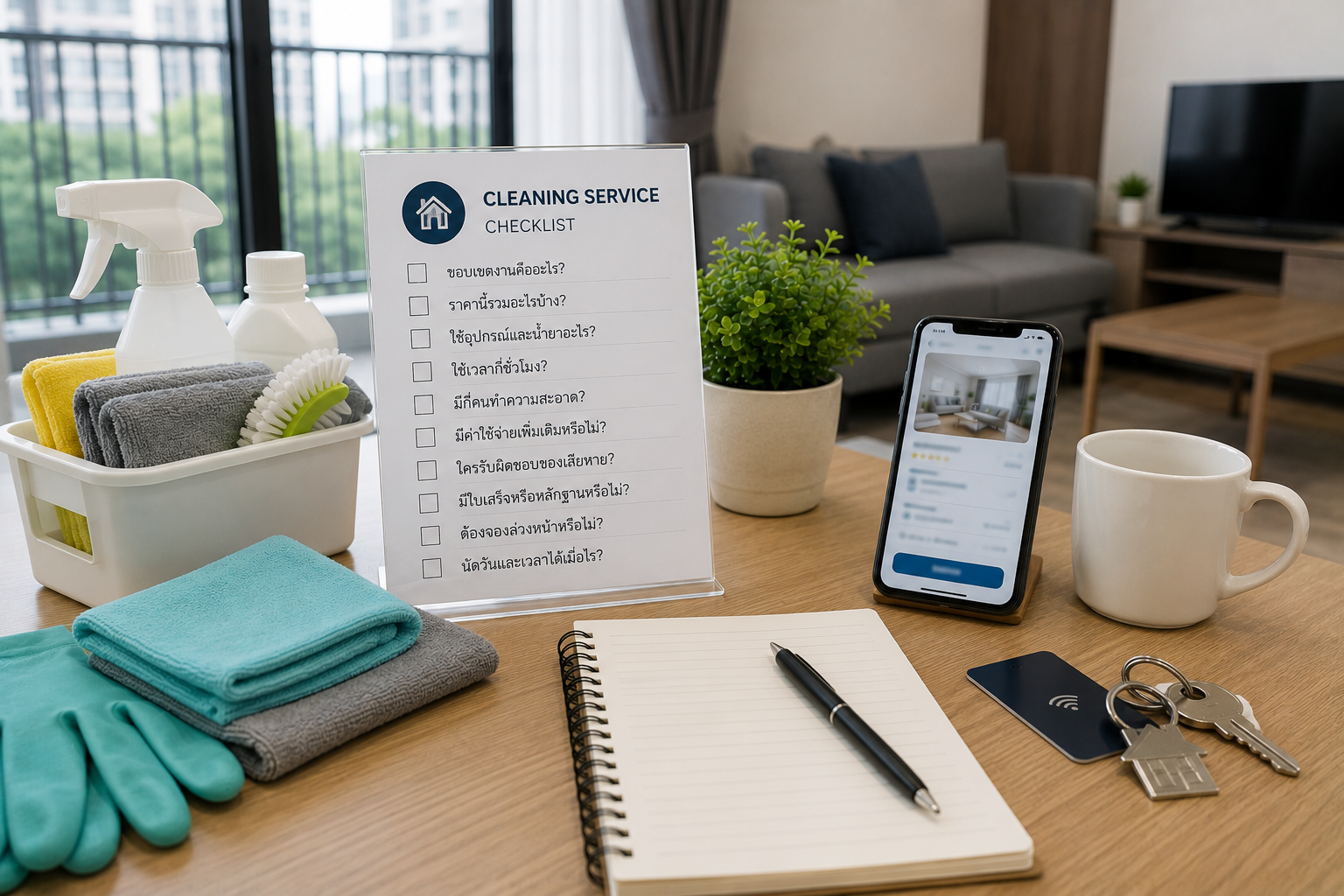
Condo cleaning is a service that tenants, buyers, and unit owners in Thailand often need before moving in, after moving out, or before offering a unit for rent again. Although a unit may look clean in listing photographs or during a viewing, living there may reveal dust inside cabinets, stains in the bathroom, musty odors in the kitchen, water marks on glass, or dirt in corners that are difficult to see.
Before hiring a cleaner or condo cleaning service, users should clarify the details, including what the price covers, how many hours the work will take, whether equipment and cleaning products are provided, whether air conditioners or high windows are cleaned, who is responsible if property is damaged, and how proof of payment will be retained. For a rental unit, discuss the matter with the owner first if the cost relates to the security deposit or a contract condition.
English summary: Before hiring a condo cleaning service in Thailand, confirm the cleaning scope, price, equipment, chemical use, time, access, damage responsibility, and payment proof.
1. Why Plan Condo Cleaning Before Move-In?
Cleaning before moving in makes it easier to inspect the unit's condition and reduces problems after belongings have been moved inside. Once there are many pieces of furniture, boxes, and personal items in the unit, areas such as under the bed, behind cabinets, under the sink, or in balcony corners become harder to clean.
- Helps identify dust, stains, and musty odors before belongings are placed
- Makes existing marks on floors, walls, glass, and furniture easier to see
- Helps reduce the risk from insects or dirt in the kitchen and bathroom
- Prepares the unit for actual occupancy
- Makes it easier to photograph the unit's condition before move-in
For a rental unit, the tenant should always photograph the condition before and after cleaning. The photographs can serve as evidence if a future dispute arises over damage or the security deposit.
English summary: Cleaning before move-in helps reveal existing stains, damage, pests, and hidden dust before furniture is placed.
2. Ask Exactly What the Price Includes
Condo cleaning charges may vary with the unit size, number of bathrooms, level of dirt, existing furniture, and scope of work. The customer should clarify whether the quoted price covers general cleaning or detailed work as well.
- Are floors cleaned and vacuumed?
- Are furniture, cabinets, tables, and shelves wiped?
- Are the kitchen, sink, stove, and extractor hood cleaned?
- Are the bathroom, sanitary fixtures, and bathroom mirrors cleaned?
- Are windows and balcony doors wiped?
- Is the balcony cleaned?
- Is rubbish collected or are old items removed?
Do not use a broad phrase such as "clean the entire unit" without specifying details, because providers may interpret it differently. Request a written task list or document before hiring the service.
3. How Do General Cleaning and Deep Cleaning Differ?
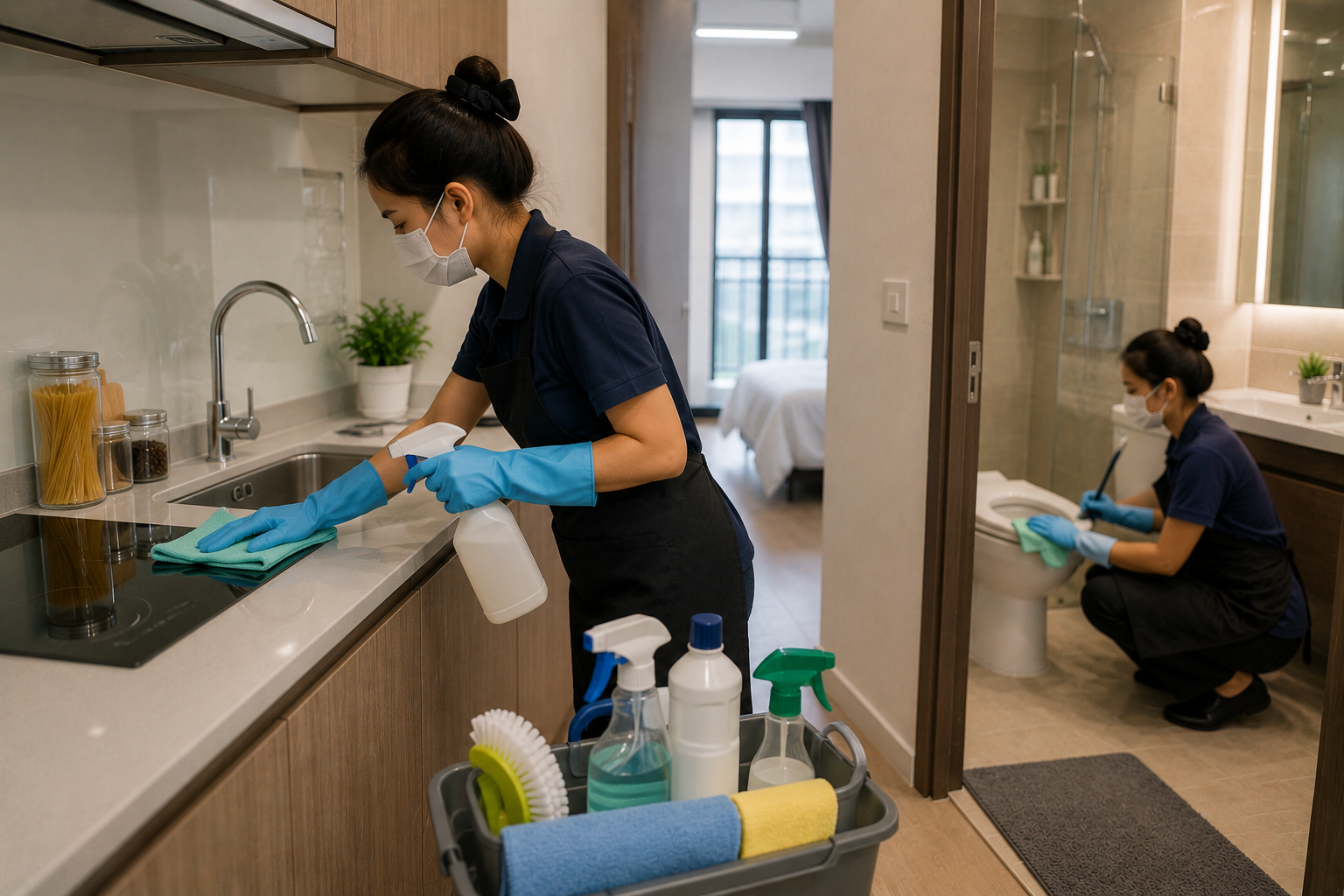
General cleaning is usually suitable for a unit in relatively good condition that needs basic wiping and mopping. Deep Cleaning is more appropriate for a unit that has been unoccupied for a long time, a unit after move-out, a unit with heavy stains, or one being prepared for a new tenant.
- General cleaning: sweeping, mopping, vacuuming, wiping surfaces, and basic bathroom cleaning
- Deep Cleaning: focuses on ingrained stains, corners, cabinets, the kitchen, bathroom, balcony, and commonly neglected areas
- Move-in Cleaning: prepares the unit before occupancy
- Move-out Cleaning: cleans the unit before it or the keys are returned
- Post-renovation Cleaning: removes dust after repairs or decoration work
Before selecting a package, send photographs of the actual unit to the provider for an assessment. A price should not be set without information, as additional on-site charges may apply if the unit is dirtier than described.
English summary: General cleaning is basic, while deep cleaning covers heavier stains, corners, kitchen, bathroom, balcony, and move-in or move-out conditions.
4. Must You Provide the Equipment and Cleaning Products?
Some services provide all equipment and cleaning products, while others may ask the customer to supply items such as a mop, cleaning cloths, bathroom cleaner, glass cleaner, or rubbish bags. Clarify this in advance to avoid delays on the appointment day.
- Does the provider bring its own equipment?
- Is a vacuum cleaner provided?
- Are glass, bathroom, and kitchen cleaning products provided?
- Are the products suitable for wood, laminate, stone, or glass surfaces?
- Can you request mild products or products without a strong odor?
- Must you provide rubbish bags or any additional equipment?
If the unit contains materials requiring special care, such as wood floors, leather furniture, natural stone, or coated glass, notify the provider in advance to prevent damage from unsuitable cleaning products.
5. What Precautions Apply to Cleaning Products and Chemicals?
Some cleaning products and chemicals may irritate skin, have strong odors, or damage surfaces if used incorrectly. Customers should ask what products the provider uses and whether windows should be opened or the unit ventilated after cleaning.
- Ask to see the types of products used if you are concerned about odors or chemical allergies
- Do not mix several cleaning products yourself without knowing the correct method
- Read product labels and warnings before use
- Be careful with products that may damage wood floors or natural stone
- Notify the provider in advance if children, pets, or people with sensitivities will use the unit
Certain household chemical products may be subject to rules on hazardous substances or registration according to product type. Users should select products with clear labels and use them only as directed on the label. Thailand.go.th states that some types of hazardous substances may have to be registered before they are manufactured or imported. Consumers should therefore use caution with products from unknown sources.
English summary: Ask what chemicals are used, avoid unknown products, follow labels, and inform the cleaner if you have children, pets, allergies, or sensitive surfaces.
6. How Many Hours and How Many People?
Cleaning time depends on the size and actual condition of the unit. A studio may take less time than a 2-bedroom unit or one with heavy stains. Ask how many people will attend and how long the work is expected to take so that building access and key handover can be planned.
- How many cleaners or team members will attend?
- Approximately how many hours will the work take?
- Is there an additional charge if the work exceeds that time?
- Must the customer remain in the unit throughout the work?
- If the Juristic Person limits working hours, can the work be completed on time?
For move-in cleaning, schedule the work to finish before the moving truck arrives. This prevents the cleaning team and movers from working in the same areas and causing delays or damage.
7. Must the Juristic Person Be Notified Before Cleaners Enter?
Some condos have security systems and rules for admitting external visitors. Identification may have to be exchanged, or a name, telephone number, or working time submitted. Without advance notice, the service provider may be unable to enter the building.
- Must the service provider register with the Juristic Person?
- Must the team's names and telephone numbers be submitted in advance?
- Must the service elevator be used?
- Are there permitted working hours?
- Are there restrictions on noise, odors, or rubbish removal?
For a rental unit, the tenant should ask the owner how a cleaner or external service may enter the unit and whether documents or authorization from the owner are required.
English summary: Ask the juristic office about visitor registration, working hours, service elevator, and trash disposal rules before the cleaner arrives.
8. Who Is Responsible if Property Is Damaged or Missing?
Before hiring a cleaning service, clarify responsibility because damage may occur during the work, such as broken glass, scratched flooring, wet furniture, surfaces corroded by cleaning products, or missing personal belongings.
- How does the provider accept responsibility for damage?
- Within how many hours or days must damage be reported?
- Is there a work receipt or other proof of engagement?
- Should valuables be photographed before work begins?
- Who will hold the key or keycard during the work?
Before the cleaning day, secure valuables, important documents, cash, passports, jewelry, and electronic devices. Do not leave valuables unattended in an open area.
9. Should You Remain During the Cleaning?
For a first engagement or a rental unit, the customer or a representative should be present at least when work begins and during the final inspection. This allows the customer to explain the required areas, identify property requiring care, and inspect the work before full payment.
- Be present at the start to explain the scope of work
- Identify areas requiring care, such as wood floors, glass, or furniture
- Remove valuables from the work area
- Inspect the work before the team leaves
- Take photographs before and after cleaning
If you cannot remain at the unit, avoid giving a key or keycard to an unknown provider without clear evidence or an agreement.
English summary: For first-time service, it is safer to be present at the start and final inspection, especially in rental units.
10. Is a Deposit Required, and When Is Full Payment Due?
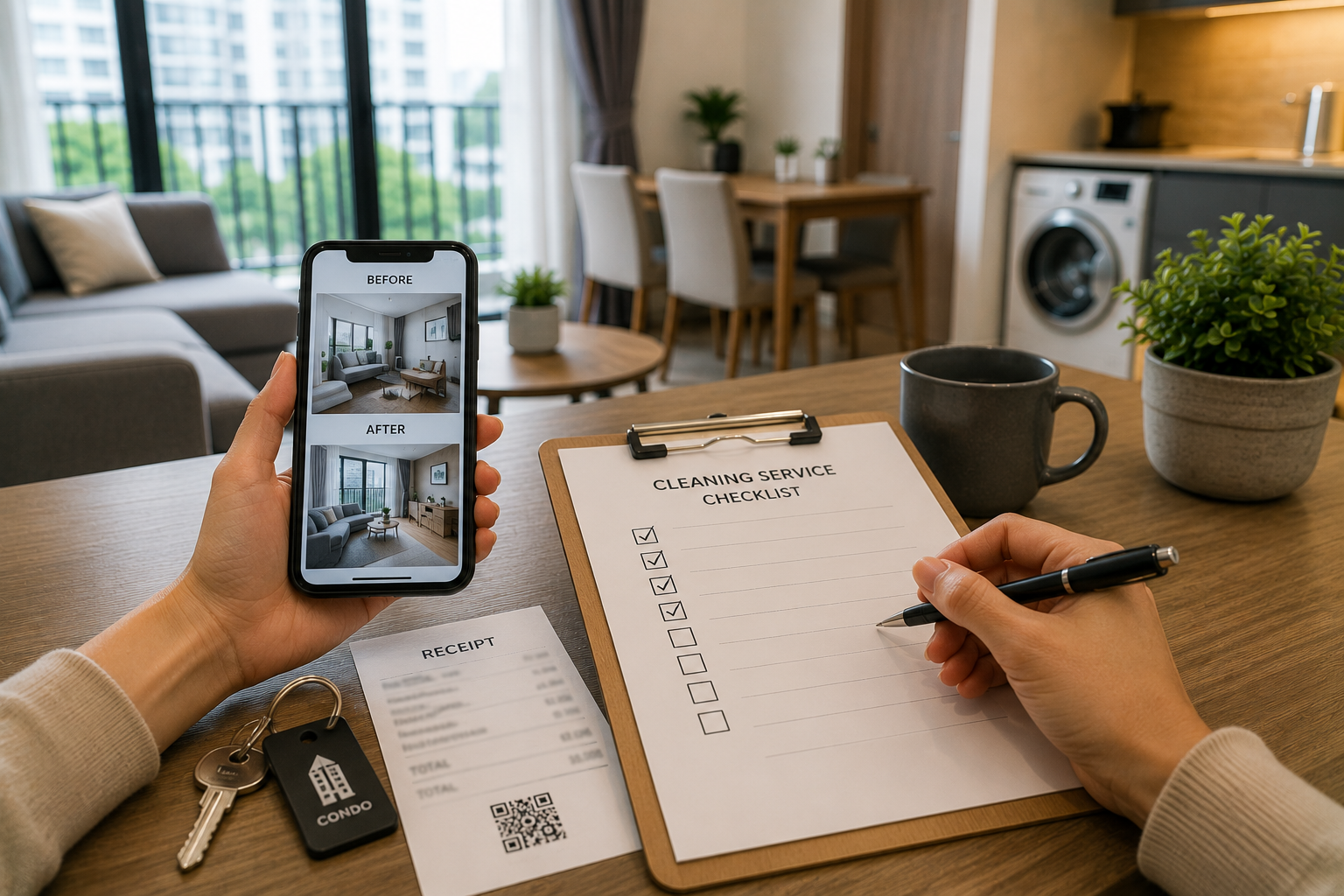
Some providers may request a deposit to confirm the booking, but customers should be cautious about paying the full amount in advance without a receipt or clear evidence. Agree on payment terms before the appointment day.
- Is a deposit required?
- Is the deposit refundable if the appointment is postponed or cancelled?
- Can the balance be paid after the work is inspected?
- Will a receipt or other proof of payment be provided?
- In whose name is the receiving account?
- Always keep transfer slips and chat messages
If a dispute arises over the service or payment, information about consumer protection can be obtained from the OCPB. Evidence such as chat messages, receipts, photographs, and transfer slips should be retained in full.
11. What Precautions Apply to Cleaning Before Returning a Rental Unit?
When cleaning before returning a rental unit, read the rental contract carefully to determine the required return condition, whether a cleaning receipt is required, and how the owner may make deductions from the security deposit.
- Review the return conditions in the rental contract
- Photograph the unit before and after cleaning
- Inspect stains in the bathroom, kitchen, balcony, and on floors
- Return all keys, keycards, and remotes
- Keep the cleaning receipt until the security deposit has been returned
- Request a confirmation message from the owner after the unit is returned
Do not discard evidence immediately after returning the unit. Refund of the security deposit may take the time specified in the contract, and photographs or receipts may later be needed to confirm the unit's condition.
English summary: For move-out cleaning, keep photos, receipts, key return proof, and landlord confirmation until the deposit is settled.
12. Questions to Ask Before Hiring a Condo Cleaning Service
- What work does this price include?
- Is this general cleaning or Deep Cleaning?
- Are equipment and cleaning products provided?
- Are the products suitable for the floors and furniture?
- Approximately how many hours and how many people?
- Must the Juristic Person be notified first?
- Who is responsible if property is damaged?
- Must someone remain during the work?
- Is a deposit required, and when is full payment due?
- Will a receipt or other proof of payment be provided?
- If the work is unsatisfactory, will it be corrected?
- Should before-and-after photographs and chat messages be retained?
Conclusion
Condo cleaning services in Thailand can make moving in or returning a unit more convenient. Before hiring one, ask about the complete scope, price, equipment, products, timing, number of people, Juristic Person rules, responsibility for damage, and proof of payment. This helps prevent additional charges or later misunderstandings.
For a rental unit, the tenant should review the contract and notify the owner if the cost relates to return of the security deposit or unit handover conditions. Take photographs before and after cleaning and retain receipts, chat messages, and transfer slips until everything is complete.
English summary: A good condo cleaning service should have clear scope, price, timing, equipment, chemical use, damage responsibility, and payment proof.
FAQ
1. What Should You Ask Before Hiring a Condo Cleaner?
Ask what work the price includes, whether it is general cleaning or Deep Cleaning, whether equipment and products are provided, how many hours it will take, who is responsible for damage, and whether a receipt or proof of payment will be provided.
English: Ask about scope, price, equipment, time, damage responsibility, and payment proof.
2. Is Cleaning Before Move-In Necessary?
It is not always mandatory, but it helps prepare the unit for occupancy and makes its existing condition easier to inspect. For a rental unit, take photographs before and after cleaning as evidence.
English: It is not always mandatory, but it helps prepare the room and document its condition.
3. What Should You Do if Property Is Damaged During Cleaning?
Immediately take photographs or video, notify the provider in writing, and retain chat messages, the receipt, and payment evidence. If it is a rental unit and the owner's property is involved, also notify the unit owner.
English: Record the damage, notify the provider in writing, and keep receipts, chat records, and photos.
Platform Use Disclaimer
This website serves only as a platform for real estate listings.
Users should independently verify all information, documents, and conditions.
This website is only a real estate listing platform.
Users should verify information, documents, and conditions by themselves.
Baandeego is not a broker and is not a party to any rental, sale and purchase, reservation, payment, contract, ownership transfer, cleaning service arrangement, or cleaner arrangement, and it is not responsible for any service. It is also not responsible for disputes among users, buyers, tenants, owners, sellers, landlords, service providers, or related persons. All parties should independently verify the information, documents, terms, costs, and applicable laws before making a decision.
References / Sources
- Office of the Consumer Protection Board, Thailand: https://www.ocpb.go.th/index_en.php
- Thailand.go.th — Guidelines and Accompanying Documents for Hazardous Substance Registration: https://thailand.go.th/public/issue-focus-detail/001_03_311