Renting a Pet-Friendly Condo in Thailand: What to Check Before Moving In

Renting a pet-friendly condo in Thailand has become increasingly important to many people, especially those with cats, dogs, or small pets who want to live in Bangkok, Pattaya, Chonburi, Phuket, Chiang Mai, Hua Hin, or another major city with many condo rentals. However, the words "pets allowed" in a listing do not necessarily mean that every pet, size, and behavior will always be permitted. Tenants should clearly confirm the conditions with both the unit owner and the condominium juristic office before transferring a deposit.
This article is a guide for tenants with pets. It focuses on what to check, including building rules, pet size and type, number of pets, additional deposits, responsibility for damage, noise, odors, cleaning, common areas, lifts, corridors, and relevant documents. Actual rules may differ by building, juristic person, owner, and local area. Tenants should always verify the latest information directly.
1. Do Not Rely on the Words "Pets Allowed" Without Asking for Details
Some listings may say that pets are allowed, but the actual conditions may be more limited. For example, only cats or small dogs may be allowed; there may be weight or number limits; certain breeds may be prohibited; or pets may be permitted only when the unit owner gives written consent. Ask for clear details before arranging a viewing or transferring money.
- Are pets genuinely allowed?
- Are only cats, dogs, or small pets permitted?
- Is there a pet weight or size limit?
- Is the number of pets limited?
- Is written permission from both the owner and juristic office required?
- Is there a pet deposit or another additional expense?
Ask the owner to confirm the conditions in the chat or lease. Do not rely only on a verbal agreement because it may be difficult to verify if a problem arises later.
2. Check with Both the Unit Owner and the Building's Juristic Office
An owner's permission to keep a pet does not necessarily mean the building's juristic office permits it. Conversely, a building that appears pet-friendly may still include owners who do not want pets in their units. Tenants must clearly check with both parties.
- Has the unit owner given written permission?
- Does the building's juristic office allow that type of pet?
- Must the pet be registered with the building?
- Must you use a service lift or designated lift?
- Are pets prohibited from areas such as the gym, swimming pool, or common garden?
- Are there fines for violating building rules?
Request the building rules or pet notices directly from the juristic office. If possible, save a photo or file as evidence supporting your decision.
3. Check the Permitted Size, Weight, and Breed
Some condos may allow only small pets and may impose conditions on weight, height, or breed, especially for dogs. Give the owner accurate information about your pet from the beginning. Do not provide false information because this may later cause problems with the juristic office or neighbors.
- Is the pet a cat, dog, or another animal?
- What is its current weight and approximate adult size?
- Is the breed among those permitted by the building?
- Does the pet often bark, scratch furniture, or chew belongings?
- Do you have vaccination records or health documents?
- Is sterilization or a microchip required under local rules?
In Bangkok, pet owners should check the latest information directly through the Bangkok Metropolitan Administration's pet registration system because local rules may affect the registration of dogs and cats in Bangkok.
4. Ask About Pet Deposits and Cleaning Fees
Some units may require an additional pet deposit or a special move-out cleaning fee, such as deodorizing, sofa cleaning, curtain cleaning, or scratch repairs. Ask clearly whether this money is refundable and how deductions will be calculated.
- Is there an additional pet deposit?
- Is the pet deposit refundable?
- Is there a special cleaning fee when moving out?
- Who is responsible if a pet damages the furniture?
- How are scratches, odors, or stains on the floor and sofa charged?
- These conditions should be stated in the lease
Do not transfer any additional payment without written confirmation of what it is for, whether it is refundable, and how it relates to the main security deposit.
5. Inspect the Flooring, Curtains, Sofa, and Room Materials
Pets may put certain materials at risk of damage, including laminate flooring, curtains, fabric sofas, wallpaper, and wooden furniture. Check whether the room is suitable for your pet and photograph its original condition before moving in.
- Is the floor tile, vinyl, laminate, or wood?
- Is the sofa made from leather, fabric, or another material that is easily scratched?
- Do the curtains have existing tears or stains?
- Are there existing marks around door corners or wall edges?
- Does the furniture have existing bite or scratch marks?
- Can you use protective mats, a crate, or a pet pen?
Photograph and record video of the original condition from every angle, especially areas where deductions from the security deposit are possible, such as the sofa, curtains, floor, doors, and wooden cabinets.
6. Check Noise and Your Pet's Behavior
A condo is shared housing. Barking, crying, or running inside the room may disturb neighbors. Honestly assess your pet's behavior, especially if it becomes stressed when left alone or often barks when it hears sounds in the corridor.
- Does the pet bark or cry when left alone?
- How well is the room soundproofed?
- Is the unit entrance near a lift or a busy corridor?
- Is the pet easily startled by lift or door sounds?
- Do you have enough time to exercise your dog?
- What must you do if a neighbor complains?
Choosing a room suitable for a pet involves more than permission under the rules. You must also consider the pet's behavior and whether the actual room is appropriate.
7. Check Walking and Toilet Areas
If you have a dog, check whether there is a walking area near the condo and which building areas pets may use. Some buildings have a dedicated pet area, while others allow pets only inside the unit and prohibit them from most common areas.
- Is there a walking area near the building?
- May dogs walk in the garden or common areas?
- Must they remain on a leash at all times?
- Must pets be carried or placed in a carrier inside the lift?
- Is there a pet-waste disposal point or suitable bin?
- Will it still be convenient to take your pet out when it rains or you return late?
For cats, inspect balconies, windows, and screens for safety because a cat may climb or escape. Take particular care if the room is on a high floor.
8. Check the Rules for Lifts, Corridors, and Common Areas
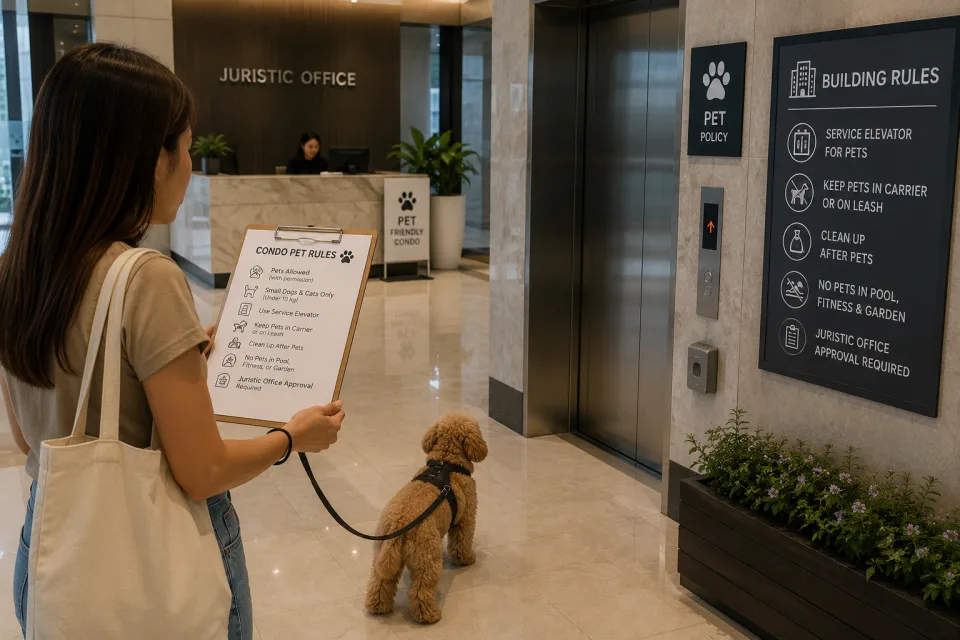
Some condos have rules for pets in lifts and corridors. You may need to use a service lift, carry your pet, use a leash, place it in a carrier, or keep it out of certain common areas. Ask for clear details before moving in.
- Which lifts may be used?
- Must pets be carried or placed in a carrier?
- Must they remain on a leash or harness at all times?
- Which areas are off-limits to pets?
- If a pet makes a mess in the corridor, must you clean it immediately or notify someone?
- What are the fines or complaint procedures?
Following building rules helps reduce problems with neighbors and the juristic office and makes living with a pet smoother.
9. Ask About Cleaning and Odor Removal
Odor and cleanliness are important in a condo, particularly in a room with limited space. Plan appropriate ways to manage litter trays, pet bedding, food, hair, and room odors to prevent problems with the owner and neighbors.
- Where will the litter box or toilet pad be placed?
- Is the ventilation adequate?
- How often will the floor and sofa need cleaning?
- Will pet hair cling to the curtains, carpet, or sofa?
- Is there an air purifier or odor-reduction device?
- Will special cleaning be required when moving out?
If there is a special cleaning fee, the lease should clearly state the type of expense, the amount, and whether it will be deducted from the security deposit or paid separately.
10. Foreign Nationals Bringing Pets into Thailand Must Check Additional Documents
Foreign nationals and other people moving to Thailand with a pet should check the official pet import documentation before traveling. Thai Customs states that live animals are restricted goods and that importing a pet requires an import permit from the Department of Livestock Development in advance. Thailand.go.th also provides a guide to bringing pets into Thailand that should be reviewed before travel.
- Check the conditions for bringing a pet into Thailand before booking a ticket
- Check the import permit and animal health documents
- Check the vaccinations applicable to your pet
- Check airline and airport conditions
- Confirm the address in Thailand and whether the intended condo genuinely permits pets
- Prepare documents in advance because the process may take time
Pet documentation requirements may change with the policies of the relevant authorities, so always check the latest information from official sources before traveling.
11. Make Sure the Lease Clearly States the Pet Conditions
The lease should clearly state pet-related conditions, including the permitted species, number of pets, additional deposit, responsibility for damage, and the process if neighbors complain.
- State that pets are permitted
- State the type, number, and size of pets
- State the pet deposit or cleaning fee
- State responsibility for damage
- State the conditions relating to noise or complaints
- State that the building juristic person's rules must be followed
Do not rely on a verbal statement that "pets are allowed" without a record in the lease or chat. When returning the room or resolving a problem, a lack of evidence may place the tenant at a disadvantage.
12. Additional Checks Before Transferring a Deposit
Before transferring a deposit for a pet-friendly condo, complete all the basic checks required for any condo rental and add the pet conditions to your checklist.
- View the room in person or by live video call before transferring money
- Verify that both the owner and juristic office genuinely allow pets
- Verify the landlord's name and payment account
- Read the lease and pet conditions before paying
- Check the pet deposit and cleaning fees
- Check the rent, water, electricity, internet, and parking charges
- Always request a receipt or written confirmation
The Office of the Consumer Protection Board is Thailand's official consumer protection authority. Users with questions about services or payments can consult information and contact channels on its official website.
13. Pet-Friendly Condo Rental Checklist

- Ask whether the unit owner genuinely permits pets
- Check whether the building's juristic office permits pets
- Ask about the permitted type, size, weight, and number of pets
- Check the pet deposit and cleaning fees
- Inspect the floor, sofa, curtains, doors, and furniture at risk of damage
- Photograph the room's condition before moving in
- Check the rules for lifts, corridors, and common areas
- Look at walking areas and pet-waste disposal points
- Check noise and whether the room suits the pet's behavior
- Clearly state pet conditions in the lease or chat
Summary
Renting a pet-friendly condo in Thailand requires checking more than the words pet-friendly in a listing. Tenants must ask both the unit owner and the juristic office, check the permitted type and size of pet, additional deposit, cleaning fees, responsibility for damage, lift and common-area rules, and the management of noise, odors, and cleanliness inside the room.
Before transferring money or signing a lease, view the actual room, request written conditions, verify the payment account, and keep evidence at every step. Baandeego is only a real estate listing platform. It is not involved in bookings, payments, contracts, room inspections, or confirming on behalf of users whether a building permits pets.
FAQ
1. If a Condo Says Pets Are Allowed, Does That Mean Every Type Is Permitted?
Not necessarily. Some buildings allow only cats or small dogs and may limit weight, number, or breed. Ask both the unit owner and juristic office clearly before transferring money.
2. Must I Pay an Additional Pet Deposit?
It depends on the owner and lease. Some units may require a pet deposit or special cleaning fee. Ask clearly whether this money is refundable and under what circumstances it may be deducted.
3. Who Is Responsible if a Pet Damages the Furniture?
This should generally be determined from the lease and evidence of the room's condition before move-in. Photograph the original condition and clearly state responsibility for pet damage in the lease.
Platform Use Disclaimer
This website is only a real estate listing platform.
Users should verify information, documents, and conditions by themselves.
This website is only a real estate listing platform.
Users should verify information, documents, and conditions by themselves.
Baandeego is not a broker and is not a party to any rental, sale, booking, payment, contract, ownership transfer, room inspection, document check, owner verification, pet inspection, deposit receipt, refund, or coordination with juristic persons on behalf of users. It is not responsible for disputes among users, buyers, tenants, owners, sellers, landlords, agents, juristic persons, neighbors, service providers, or relevant authorities. All parties should independently verify the information, documents, conditions, expenses, and applicable laws before making a decision.
References / Sources
- Office of the Consumer Protection Board, Thailand: https://www.ocpb.go.th/index_en.php
- Bangkok Pet Registration: https://petregis.bangkok.go.th/frontend/web/index.php
- Thai Customs — Passengers bringing pets into and out of Thailand with themselves: https://www.customs.go.th/list_strc_simple_neted.php?ini_content=individual_F01_160913_01&lang=en
- Thailand.go.th — How to Legally Bring Pets into Thailand: https://thailand.go.th/public/guide-book-detail/how-to-legally-bring-pets-into-thailand