Renting a Condo Directly from the Owner: Is It a Good Idea, and What Should You Watch Out For?

Renting a condo directly from the owner is an option that interests many people because you can discuss the terms with the unit owner yourself, avoid several intermediate steps, and potentially obtain information directly from the person who actually looks after the unit. However, an owner-listed rental also requires greater caution, especially regarding the landlord's identity, their right to rent out the unit, the lease, the deposit, the receiving account, and proof of payment.
This article is a guide for people looking for owner-listed condos for rent in Bangkok, Pattaya, Chonburi, Phuket, Chiang Mai, Hua Hin, or elsewhere in Thailand. It focuses on how to check information before arranging a viewing, transferring money, and signing a contract so that tenants can make a careful decision. Baandeego is only a real estate listing platform; users must verify the information, documents, and terms themselves.
1. What Does Renting a Condo Directly from the Owner Mean?
Renting a condo directly from the owner means that the tenant contacts the unit owner, or a person appointed by the owner, directly rather than dealing through a broker or real estate agency. This arrangement is common in online listings, community groups, listing platforms, and real estate websites where owners can post their own properties.
- The tenant speaks directly with the unit owner or a person entitled to rent it out
- Some terms may be agreed more quickly
- The tenant needs to check more documents and information independently
- There is no intermediary automatically verifying every step
- Complete records of conversations, money transfers, and the contract must be kept
Renting directly from an owner is not inherently a bad option, but it requires more care than simply looking at photos and the rental price.
2. Advantages of Renting a Condo Directly from the Owner
The main advantage is that tenants can ask the unit owner directly about matters such as the unit's condition, costs, furniture, appliances, occupancy rules, and deposit terms. If the owner responds clearly and provides complete evidence, communication may be faster and more direct.
- Ask the owner directly about the unit
- Negotiate the move-in date, certain terms, or minor details more easily
- Learn about the unit's maintenance history from the person who actually manages it
- Reduce repetition when communicating through multiple parties
- Suitable for tenants who want to make their own decision and verify information themselves
However, these advantages apply only when the landlord is the real owner or is genuinely entitled to rent out the unit and provides enough documents or evidence for verification.
3. Risks to Watch Out For
The risks of renting directly from an owner often arise from rushing a decision, such as transferring money before viewing the actual unit, failing to check the owner's name, not reading the contract, or agreeing to terms verbally without evidence. If the parties later disagree, tracing or proving what happened may be difficult.
- The person posting the listing may not be the owner or entitled to rent out the unit
- The photos may not match the actual unit or may be outdated
- The receiving account may not match the landlord
- The deposit terms may be unclear
- The contract may not match what was discussed in chat
- There may be additional costs that were not disclosed at the outset
Tenants should therefore check the information step by step. Do not transfer money in a rush or because someone pressures you by saying you \"must book immediately\" when there is not yet enough evidence.
4. Check the Listing Before Making Contact
Before messaging the owner, read the listing carefully to see whether the information is complete. A good listing should clearly state the condo name, location, unit size, rent, deposit, advance rent, furniture, appliances, lease terms, and monthly costs.
- Are the condo name and location clearly stated?
- Are there photos showing the unit from several angles?
- Are the rent, deposit, and advance rent stated?
- Is the minimum lease term stated?
- Are water, electricity, internet, and parking costs stated?
- Is there credible contact information?
If a listing provides very little information, has unclear photos, or shows a price that is unusually low compared with nearby units, ask for more information and investigate carefully before arranging a viewing or transferring money.
5. Questions to Ask the Owner Before Arranging a Viewing
Before traveling to view the unit, ask basic screening questions to determine whether it genuinely meets your needs. Asking everything clearly can save time and reduce the risk of terms changing later.
- When will the unit be vacant, and on what date can you move in?
- How much are the rent, deposit, and advance rent?
- What is the minimum lease term in months?
- How are water, electricity, and internet charged?
- Is parking available, and does it cost extra?
- Are pets or smoking allowed, and how many people may occupy the unit?
- Is the owner renting out the unit personally, or is there an authorized representative?
Keep these answers in the chat. If the contract later differs from what was discussed, it will be easier to review the earlier conversation.
6. View the Actual Unit Before Transferring Money
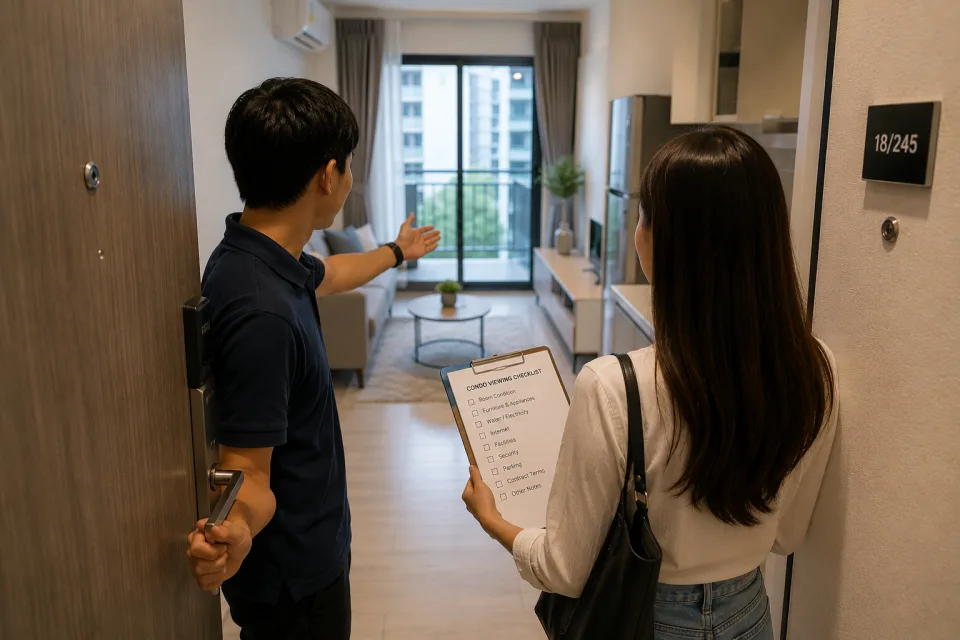
Viewing the actual unit is a very important step, especially when renting directly from an owner, because it lets you see the real condition of the unit, its actual location, real noise levels, and the condition of the building. Do not decide solely from photos or a video that was sent to you.
- Check whether the actual unit matches the listing photos
- Inspect the floors, walls, doors, windows, and balcony
- Turn on the lights, water, air conditioner, and appliances
- Inspect the kitchen, bathroom, area under the sink, and drain odors
- Look at the corridors, elevators, lobby, parking, and common areas
- Ask the juristic office about building rules if necessary
If the tenant lives in another province or country, ask someone they trust to inspect the unit on their behalf, or request a live video call from the front of the condo, lobby, corridor, and inside the unit. Do not rely on a video sent without context.
7. Verify That the Owner Is Entitled to Rent Out the Unit
Before paying, check whether the landlord is the real owner or a person authorized by the owner to rent out the unit. If the landlord's name, the name on the documents, and the name on the receiving account do not match, ask why and request additional evidence before transferring money.
- Does the landlord's name match the relevant documents?
- If the person is an agent or relative, is there evidence from the owner?
- Does the receiving account name match the landlord or responsible person?
- Can the juristic office confirm or indicate that the unit may be rented out?
- If the information does not match, investigate further before deciding
For ownership information and real estate documents, users should rely on the actual documents and relevant authorities, such as the Department of Lands, while carrying out suitable checks and respecting the unit owner's personal information. The Department of Lands is Thailand's official authority for land and real estate registration and information.
8. Check the Receiving Account and Deposit Terms
Before transferring a deposit, inspect the receiving account carefully. The deposit should be transferred to an account connected with the landlord or a person entitled to receive the money. There should also be written confirmation explaining what the payment is for, whether it is refundable, and how it will be recorded in the contract.
- Does the receiving account name match the landlord?
- Is the transferred amount a booking payment, deposit, or advance rent?
- If the tenant changes their mind, is the money refundable?
- If the owner cannot deliver the unit, how will the money be refunded?
- Will this amount be recorded in the contract or receipt?
- Always keep the transfer slip and confirmation messages
Do not transfer money without evidence. Do not transfer to an unrelated account without a clear reason, and do not transfer because you are being pressured to book immediately.
9. Read the Lease Before Paying a Large Amount
The lease should include all important details, such as the names of the landlord and tenant, unit details, rent, deposit, advance rent, contract start and end dates, monthly costs, repairs, occupancy rules, and terms for moving out before the contract ends.
- Are the parties' names correct?
- Do the unit number and condo name match the actual unit?
- Do the rent, deposit, and advance rent match what was discussed?
- Are water, electricity, internet, and parking clearly stated?
- Who is responsible for appliance repair costs?
- What are the security deposit refund terms?
- What happens if the tenant moves out before the contract ends?
If you have questions about the contract or financial obligations, consider asking a qualified professional to review it or contacting the relevant authority before signing and paying a large amount.
10. Request a Receipt or Written Confirmation Every Time
After transferring money, the tenant should always request a receipt or written confirmation from the owner. It should state the date, amount, purpose of the transfer, condo name, unit number, and relevant terms so the transaction can be reviewed later.
- Keep the transfer slip
- Request written confirmation that the money was received
- State what the money is for, such as a deposit or advance rent
- State the condo name and unit number
- Request a receipt if the owner is able to issue one
- Keep the evidence until you have moved out and all balances are settled
The Office of the Consumer Protection Board is Thailand's official consumer protection agency. Users can check information or contact channels on its official website if they have questions about services or payments.
11. Check All Monthly Costs
Monthly rent is not the only expense. Tenants should ask about every related cost before signing the contract so they can assess their real budget and avoid unexpected costs after moving in.
- Is water charged according to the actual bill or through the juristic office?
- Is electricity paid directly or through the owner?
- Is internet included in the rent, or must the tenant subscribe separately?
- Is there a parking fee?
- Are there extra fees for a key card or parking card?
- Must the air conditioner be cleaned or the unit cleaned before moving out?
- Are there other building charges that the tenant must pay?
Important costs should be stated in the contract or in a chat that can be reviewed later. Do not rely solely on verbal statements without evidence.
12. Watch for Warning Signs That Call for Further Checks
If you encounter certain behavior, pause and investigate further before paying. Examples include an owner refusing an in-person viewing, declining to provide clear information, changing the receiving account several times, or pressing you to transfer money before all documents have been checked.
- Refusing an in-person viewing or live video call
- Using unit photos that do not appear to match the condo
- A price that is unusually low compared with nearby units
- Pressuring you to transfer the deposit immediately
- The landlord's name, account name, and contract name do not match
- Refusing to issue a receipt or written confirmation
- The contract does not match what was discussed in chat
Investigating further does not always mean you must cancel, but it helps you decide using clearer information and reduces rental risk.
13. Who Is Direct-Owner Rental Suitable For?
Direct-owner rental suits tenants who are prepared to check information, read the contract, keep evidence, and communicate clearly with the unit owner themselves. If a tenant is unfamiliar with the documents or language, they may wish to ask someone they trust for help before paying.
- Suitable for people who want to discuss the terms with the owner themselves
- Suitable for people who have time to inspect the unit and documents
- Suitable for tenants who understand basic costs and contract terms
- Not suitable for people who rush to transfer money without checking information
- International tenants should check the contract language and seek professional help if unsure
International tenants renting a condo in Thailand should directly check any documents required by the juristic office or building, as well as the lease itself, and should always keep copies of the contract, receipts, and chats.
14. Direct-Owner Condo Rental Checklist
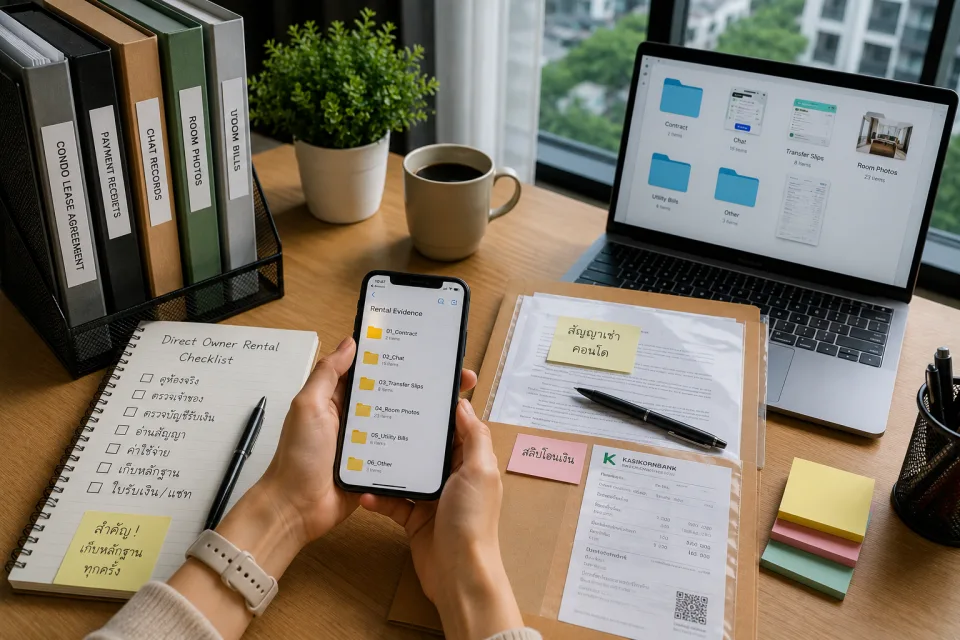
- Read the entire listing before making contact
- Ask about rent, deposit, advance rent, and the lease term
- View the actual unit or have a live video call before transferring money
- Verify that the landlord is the owner or genuinely entitled to rent out the unit
- Check the receiving account before transferring money
- Read the lease before paying a large amount
- Ask about all monthly costs
- Ask about building rules and occupancy restrictions
- Request a receipt or written confirmation every time
- Systematically keep unit photos, chats, transfer slips, the contract, and receipts
Conclusion
Renting a condo directly from the owner has the advantage of direct communication and may help tenants understand the unit's details more quickly. However, tenants must independently check more information, especially the landlord's identity, right to rent out the unit, actual unit condition, receiving account, contract, monthly costs, and proof of payment.
Before transferring money or signing a contract, view the actual unit, read the contract, request a receipt, and keep evidence at every stage. If a property sale or real estate ownership is involved, verify the information with an official authority such as the Department of Lands or with a qualified professional. Information about foreign ownership of condos should be checked with official sources such as Thailand.go.th, which provides general information on the proportion of foreign ownership in a condominium and documents related to ownership transfer.
FAQ
1. Is It Safe to Rent a Condo Directly from the Owner?
It can be done, but you must check all relevant information, including viewing the actual unit, verifying the landlord, reading the contract, checking the receiving account, and keeping evidence at every stage. Do not transfer money just because the unit looks good in photos or the price is low.
2. What Should You Check Before Transferring a Deposit to the Unit Owner?
Check that the landlord is genuinely entitled to rent out the unit, that the receiving account matches the landlord, what the transfer is for, whether it is refundable, and whether there is a clear contract or written confirmation.
3. What Should You Do If You Live Abroad and Want to Rent a Condo in Thailand?
Ask someone you trust to inspect the unit on your behalf, or request a live video call from the front of the condo, lobby, corridor, and inside the unit. Check the documents and receiving account before transferring money, and keep all evidence.
Platform Use Disclaimer
This website is only a platform for real estate listings.
Users should verify all information, documents, and conditions themselves.
This website is only a real estate listing platform.
Users should verify information, documents, and conditions by themselves.
Baandeego is not a broker and is not a party to any rental, purchase, sale, booking, payment, contract, or ownership transfer. It does not inspect units, inspect documents, verify owners, receive deposits, issue refunds, or coordinate on behalf of users. It is not responsible for disputes among users, buyers, tenants, owners, sellers, landlords, agents, juristic persons, or relevant authorities. All parties should independently verify the information, documents, conditions, costs, and applicable laws before deciding.
References
- Office of the Consumer Protection Board, Thailand: https://www.ocpb.go.th/index_en.php
- Department of Lands, Thailand: https://www.dol.go.th/
- Thailand.go.th — Ownership of real estate by foreigners in Thailand: Requesting ownership of a condominium unit: https://thailand.go.th/public/issue-focus-detail/010_013
- Thailand.go.th — Documents required for registration of property ownership by foreigners in Thailand: https://thailand.go.th/public/index.php/event-detail/010_011