Air Conditioner Move-In Checklist: Noise, Dripping Water, Musty Odors, and Remote Controls

Checking the air conditioners before moving into a condo should be done before unpacking and using the unit. Air conditioning affects comfort, electricity costs, and expenses after move-in. Without a detailed inspection on the first day, problems may emerge later, such as inadequate cooling, loud noise, dripping water, musty odors, a faulty remote, or uncertainty about who is responsible for repair costs.
Anyone renting a condo in Thailand, whether in Pattaya, Bangkok, Chonburi, Phuket, or another province, should inspect every air conditioner on the day the keys are received and take photographs or video as evidence. If a problem is found, immediately notify the owner or landlord in writing. Do not wait several days, because it may then be difficult to determine whether the problem arose before or after move-in.
1. Why Check the Air Conditioners on the First Day?
The first day in a condo is the best time to inspect its condition because belongings do not yet fill the space and existing marks are clearly visible. If an air conditioner has a problem, such as water dripping onto a wall or floor, unusual noise, or an unusable remote, the tenant should immediately record evidence to prevent later disputes over the security deposit or repair costs.
- Helps confirm the condition of each air conditioner before occupancy
- Helps distinguish existing problems from damage occurring after move-in
- Helps the owner or landlord learn about problems sooner
- Reduces the risk of disputes over later air conditioner repair costs
- Lets the tenant know whether every air conditioner works
MEA offers advice on reducing electricity use, such as setting an appropriate air conditioner temperature, using a fan, and cleaning the air conditioner regularly. This reflects the need for ongoing maintenance, not simply switching the unit on.
2. Test Every Air Conditioner for 15-30 Minutes
Before concluding that an air conditioner works, run each unit for at least 15-30 minutes. Some problems do not appear immediately, such as dripping water after the unit has been running, slow cooling, or intermittent compressor noise. If the condo has several air conditioners, test them one at a time and record any symptoms.
- Run the air conditioner in cooling mode
- Set the temperature to approximately 24-26 degrees for an initial test
- Check that it actually produces cool air
- Wait to see whether water drips
- Listen to the indoor unit and compressor
- Record video if you find an abnormal symptom
If the air conditioner does not cool or cools very slowly, ask the owner when it was last cleaned and whether it has previously been repaired or had refrigerant added.
3. Check Air Conditioner Noise in the Bedroom and Living Room

A noisy air conditioner can disturb sleep, work, or relaxation, especially in a studio or bedroom where the unit is close to the bed. Listen while the room is quiet and test several fan speeds.
- Is there vibration or a grinding sound?
- Is there a sound of metal striking metal?
- Is it noisy only at startup or throughout operation?
- Does it become louder when the fan speed is changed?
- Can the outdoor compressor be heard inside the unit?
- Is the noise loud enough to affect sleep or work?
If you hear an unusual sound, record a video with audio and send it to the unit owner immediately. Simply saying that it is "loud" may not be sufficient because people perceive noise differently.
4. Check for Dripping Water and Stains Below the Air Conditioner
Water dripping from an air conditioner is a common condo problem and may damage floors, walls, beds, tables, or electrical appliances. After the unit has been running for a while, inspect below the indoor unit, the nearby wall, and the drainpipe location.
- Does water drip from a corner of the unit or air outlet?
- Are there existing water stains on the wall?
- Is the flooring below the unit swollen, peeling, or watermarked?
- Are there stains on curtains, a bed, or furniture below the air conditioner?
- Does the water drip immediately or only after prolonged operation?
- Is the drainpipe in an appropriate position?
If you find an existing water stain, photograph it before placing belongings or moving furniture near the area. This helps prevent a dispute over whether the tenant caused the mark or it was already present.
5. Check for Musty, Damp, or Burning Odors
Odors from an air conditioner should be taken seriously. A musty or damp smell may relate to dust, moisture, or a long period without cleaning. If there is a burning smell or abnormal electrical odor, stop using the unit and notify the owner immediately.
- Is there a musty odor when the air conditioner starts?
- Does the odor disappear after a while or remain?
- Is there an odor of mold, dampness, or dust?
- Is there a burning or electrical odor?
- Is there dust or black residue on the air outlet?
- When was the air conditioner last cleaned?
Do not continue using an air conditioner with a burning smell or severe abnormal noise, as the issue may affect the safety of the electrical system or internal components.
6. Test Every Function on the Air Conditioner Remote
The air conditioner remote is a small item that is often overlooked during inspection, but a faulty remote or unusable buttons make everyday operation difficult. Test the remote for every air conditioner and confirm that it actually controls the corresponding unit.
- Can it turn the air conditioner on and off?
- Can it adjust the temperature?
- Can it change the operating mode?
- Can it adjust the fan speed?
- Can it adjust the airflow direction?
- Can it set an on or off timer, if that function is available?
- Is the remote display clear?
- Do the batteries work, or should they be replaced?
If a remote is missing or broken, clearly agree on who will provide a replacement. If there is a cost, record the agreement in writing before moving in.
7. Perform an Initial Check of the Filter and Dust
If the air conditioner cover can be opened safely, the tenant may perform an initial check for heavy dust on the filter. Do not remove internal components or clean the unit yourself without the necessary knowledge. In a rental unit, obtain the owner's permission before doing anything that could affect the condition of the equipment.
- Is dust clearly visible around the air outlet?
- Is there a heavy layer of dust on the filter?
- Does the air conditioner cover open and close normally?
- Are there black marks or musty odors around the air outlet?
- Is there a receipt from the most recent cleaning?
If the filter is very dirty, take a photograph and notify the owner. Ask whether the air conditioner will be cleaned before move-in and who is responsible for the cost.
8. Check the Compressor From a Safe Location
The compressor, or outdoor unit, is an important part of the air conditioning system. If the indoor unit operates but the compressor does not, the air conditioner may blow air without cooling it. Tenants should observe it only from a safe location and should not climb into a dangerous area to inspect it.
- Is the compressor on a balcony or in a safe location?
- If visible, can you hear it operating or see the fan turning?
- Are objects blocking its airflow?
- Are there water stains, rust, or unusual vibration sounds?
- Is the area around the compressor well ventilated?
If the compressor is difficult to access, have a suitable technician or member of staff inspect it. Do not take the risk of inspecting it yourself.
9. Check the Number and Location of Air Conditioners
Before moving in, check how many air conditioners the unit has and whether their locations suit actual use. Some units have an air conditioner only in the bedroom and none in the living room, or a unit may blow directly onto the bed and cause discomfort during sleep.
- Is there an air conditioner in the bedroom?
- Is there an air conditioner in the living room?
- Does an air conditioner blow directly at the bed, desk, or sofa?
- Does strong sunlight make the unit slow to cool?
- Does the air conditioner position distribute air throughout the room?
- Can the compressor be accessed for repair or cleaning?
Air conditioner location affects comfort and electricity costs. Stand or sit where you will actually spend time, such as at the bed, desk, and sofa, to determine whether the airflow is suitable for daily living.
10. Ask About Cleaning History and Receipts
Asking about air conditioner cleaning history helps tenants assess whether the unit is ready for occupancy. An air conditioner that has not been cleaned for a long time may contain dust, smell musty, or produce weak airflow. Ask the owner or landlord when it was last cleaned and whether there is a receipt or other evidence.
- When was the air conditioner last cleaned?
- Who cleaned it?
- Is there a receipt or other evidence of cleaning?
- Has it previously failed to cool, dripped water, or made loud noises?
- Will the owner have it cleaned before move-in?
- Must the tenant have it cleaned before returning the unit?
EGAT has published a campaign concerning air conditioner cleaning to promote energy conservation, and MEA also recommends regular cleaning in its electricity-saving guidance. However, the actual cleaning interval should also reflect usage, equipment condition, and rental contract terms.
11. Review the Contract for Air Conditioner Cleaning and Repair Costs
Before signing a rental contract or transferring a significant payment, carefully read the air conditioner terms. Cleaning and repair costs are a frequent source of disputes. There is no single answer that always makes either the tenant or owner responsible. Responsibility should be based on the contract and the cause of the problem.
- Will the owner clean the air conditioners before handing over the unit?
- Must the tenant have them cleaned at regular intervals?
- Must they be cleaned before the unit is returned?
- Who is responsible for repair costs if an air conditioner fails through normal use?
- Who is responsible if it fails because of misuse?
- Must the owner be notified before a technician is called?
- Must a technician designated by the owner or Juristic Person be used?
If the terms are unclear, ask the owner or landlord to summarize them in a chat message or add them to the contract to prevent later misunderstandings.
12. How to Record Evidence of Air Conditioner Problems
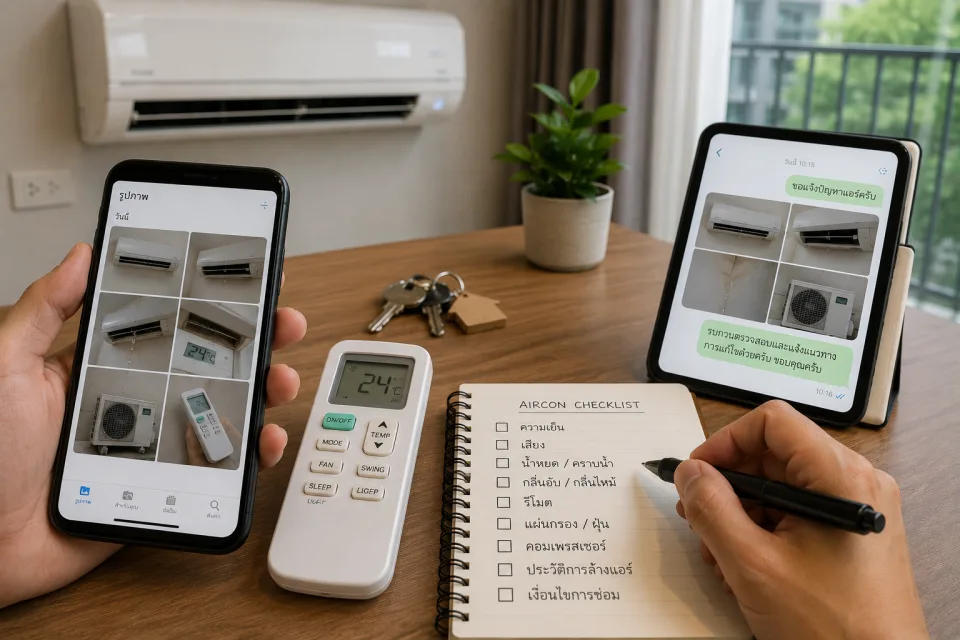
Evidence is very important for a direct condo rental. Tenants should take photographs and videos and retain chat messages whenever a problem is found. This makes later review easier if a dispute arises over repair costs or the security deposit.
- Record video while the air conditioner is being tested
- Photograph the remote and the set temperature
- Photograph water stains or dripping below the air conditioner
- Record video of unusual noise
- Photograph the filter or dust if it can be inspected safely
- Immediately send the problem to the owner in a chat message
- Keep every cleaning or repair receipt
If a dispute arises over a service, repair cost, or payment, information about consumer rights can be obtained from the Office of the Consumer Protection Board. A decision in a specific case should be based on the relevant documents, contract, and facts.
13. Air Conditioner Checklist Before Moving Into a Condo
- Run every air conditioner for 15-30 minutes
- Check whether each unit actually cools
- Listen to the air conditioner and compressor
- Check for dripping water and stains below the air conditioner
- Check for musty, damp, or burning odors
- Test every remote function
- Safely perform an initial check of filters and dust
- Observe the compressor from a safe location
- Check the number and location of air conditioners
- Ask about cleaning history and receipts
- Review the contract for cleaning and repair costs
- Keep photographs, videos, and chat messages as evidence
Conclusion
Checking the air conditioners before moving into a condo reduces risks involving comfort, electricity costs, repairs, and disputes with the unit owner. From the first day, tenants should fully inspect cooling, noise, dripping water, musty odors, remotes, filters, compressors, and cleaning history.
If a problem is found, take photographs or video and immediately notify the owner or landlord in writing. Do not call a technician or pay directly before reviewing the contract and clearly agreeing on responsibility. Baandeego is only a real estate listing platform and is not involved in air conditioner repairs, payments, or disputes among users.
FAQ
1. What Should You Check on an Air Conditioner Before Moving Into a Condo?
Check cooling, noise, dripping water, musty odors, the remote, filter, compressor, number of units, installation locations, and cleaning history. Take photographs or video as evidence.
2. What Should You Do if an Air Conditioner Drips Water on the First Day?
Immediately take photographs or video, avoid placing items below the air conditioner, notify the owner or landlord by chat, and check the contract to determine who is responsible for repair or cleaning costs before calling a technician.
3. Who Is Responsible if the Air Conditioner Remote Is Faulty Before Move-In?
It depends on the contract and the condition when the unit was handed over. If the remote is faulty on the day the keys are received, immediately notify the owner with photographs or video and request a written agreement on how it will be repaired or replaced.
Platform Use Disclaimer
This website serves only as a platform for real estate listings.
Users should independently verify all information, documents, and conditions.
This website is only a real estate listing platform.
Users should verify information, documents, and conditions by themselves.
Baandeego is not a broker and is not a party to any rental, sale and purchase, reservation, payment, contract, ownership transfer, unit inspection, air conditioner cleaning, air conditioner repair, or technician arrangement, and it is not responsible for any service. It is also not responsible for disputes among users, buyers, tenants, owners, sellers, landlords, service providers, or related persons. All parties should independently verify the information, documents, terms, costs, and applicable laws before making a decision.
References / Sources
- Metropolitan Electricity Authority — Electricity Saving Tips: https://www.mea.or.th/en/electricity/energy-saving-tips/
- Provincial Electricity Authority — Tariff: https://www.pea.co.th/en/our-services/tariff
- Electricity Generating Authority of Thailand — Air-conditioner cleaning energy-saving campaign: https://www.egat.co.th/home/en/20250306e/
- Office of the Consumer Protection Board, Thailand: https://www.ocpb.go.th/index_en.php