Buying a Resale Condo Directly from an Owner in Thailand: What Documents Should You Check?
A resale condo in Thailand is an option that interests many people because they can see the actual unit, building, location, and surroundings before deciding to buy, especially in Bangkok, Pattaya, Chonburi, Phuket, Chiang Mai, Hua Hin, and other tourism or employment centers. However, when buying directly from an owner, buyers should carefully check the documents and terms before placing a deposit or entering into a sale and purchase agreement.
This article is a general guide to checking documents before buying a resale condo directly from an owner, including the condominium unit title deed, ownership, encumbrances, unpaid common fees, juristic office documents, the sale and purchase agreement, transfer-day costs, and proof of payment. Real estate transactions have legal and financial consequences. Buyers should check with the Land Office, condominium juristic office, bank, lawyer, or other relevant professional before deciding.
English summary: Before buying a resale condo in Thailand directly from the owner, check the condominium title deed, real owner, encumbrances, juristic office documents, common fee status, sale agreement, transfer costs, and payment proof.
1. Confirm That the Property Is a Properly Registered Condominium
Before checking other details, the buyer should make sure the property is a unit in a properly registered condominium, not an apartment, rental room, or another form of occupancy right, because the documents, rights, and ownership transfer procedure may differ.
- Check the project name and actual location
- Check the unit number, building, floor, and unit area
- Check whether the document is a condominium unit title deed
- Check whether the building has a condominium juristic person
- Ask the juristic office whether the unit number matches the building's records
- If unsure, ask the Land Office or a qualified professional
Confirming the property type from the outset helps reduce confusion because the word \"condo\" may sometimes be used more broadly in listings than in its legal meaning.
English summary: Confirm that the unit is a registered condominium unit, not another type of residence or usage right.
2. Check the Condominium Unit Title Deed
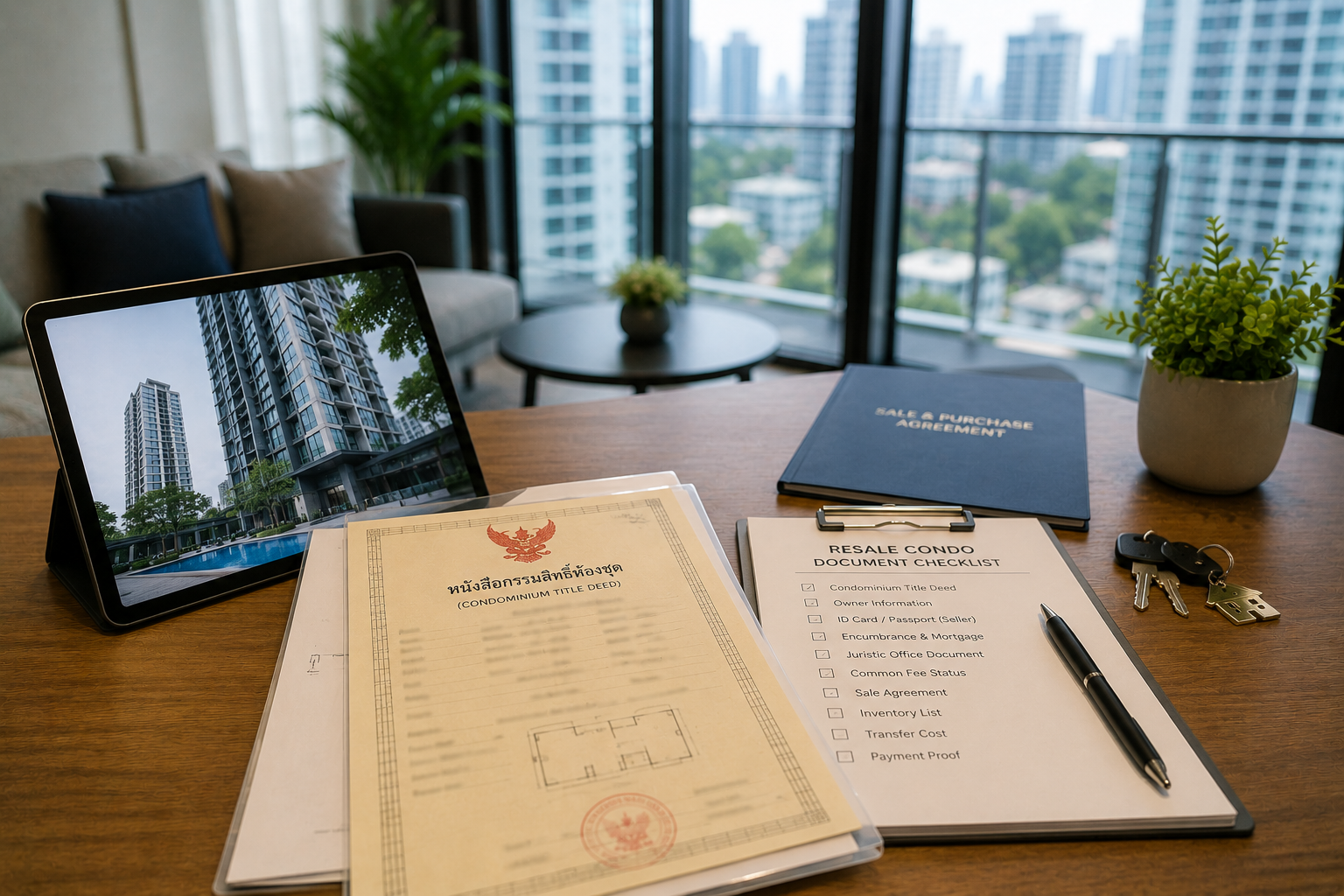
The condominium unit title deed is one of the most important documents in a condo purchase. Buyers should check that the details in the document match the actual unit and the owner's information, including the project name, unit number, area, document number, and registered owner's name.
- Does the project name match the unit you actually viewed?
- Do the unit number and floor match the actual unit?
- Does the unit area match the listing or contract?
- Does the owner's name in the document match the seller?
- Are there amendments or details that appear unusual?
- Check the original document rather than relying only on an unclear photograph
If the seller is uncomfortable showing parts of the document because it contains personal information, ask them to display the necessary details to an appropriate extent or arrange a review with a qualified professional while respecting the unit owner's privacy.
3. Verify the Real Owner
When buying directly from an owner, check that the seller is the registered owner or an authorized representative entitled to conduct the sale on the owner's behalf. If the seller's name, the name in the documents, and the receiving account name do not match, ask why and request further evidence before paying.
- Does the seller's name match the condominium unit title deed?
- Does the national ID card or passport match the owner's name?
- If there is an authorized representative, is there a valid power of attorney?
- Is the person receiving the deposit the owner or a person genuinely entitled to receive it?
- Avoid transferring money to an unrelated person
- Keep copies or evidence received, as appropriate
If the property is marital property or has several co-owners, additional documents and consent may be required depending on the circumstances. Buyers should check with the Land Office or a qualified professional before proceeding.
English summary: Make sure the seller is the real owner or legally authorized representative before paying any deposit.
4. Check for Encumbrances, Mortgages, or Restrictions in the Documents
Some resale condos may be subject to encumbrances, such as a bank mortgage, seizure, restrictions, or other conditions that must be resolved before ownership can be transferred. Buyers should not assume that the unit is free of encumbrances simply because the seller says so. Check the documents and ask the relevant authorities.
- Is the unit mortgaged to a bank?
- Is it subject to seizure or a restriction on transfer?
- If mortgaged, how will the mortgage be discharged before or on the transfer date?
- Must the mortgagee bank participate in the transfer-day process?
- Who is responsible for costs related to discharging the encumbrance?
- These details should be stated in the sale and purchase agreement
Encumbrances directly affect ownership transfer, so check with the Land Office, bank, or a qualified professional before paying a large amount.
5. Check Unpaid Common Fees and the Debt-Free Certificate
Before buying a resale condo, ask the condominium juristic office whether the unit has unpaid common fees, sinking fund contributions, parking fees, penalties, or other outstanding charges. These items may affect the ownership transfer and responsibility for costs before or after the transfer date.
- Are there unpaid common fees?
- Are there unpaid sinking fund contributions or special charges?
- Are there unpaid penalties, parking fees, or other juristic office charges?
- Is a debt-free certificate from the juristic office required on the transfer date?
- Who will pay any outstanding balance before the transfer date?
- These amounts should be stated in the sale and purchase agreement
Confirmation from the juristic office and the status of common fees should be checked directly with the juristic office. Do not rely only on the seller's statements without supporting evidence.
English summary: Check unpaid common fees and whether a debt-free certificate or juristic office confirmation is required before ownership transfer.
6. Check the Status of Existing Tenants or Occupants
If the resale condo has a tenant, the buyer should clearly check the existing lease, its end date, the tenant's security deposit, and the handover status. Buying an occupied unit differs from buying a vacant unit that is ready to move into.
- Is the unit vacant or occupied by a tenant?
- If it has a tenant, when does the lease end?
- Who holds the tenant's security deposit?
- Who is entitled to rent received after the transfer date?
- Must the tenant move out before transfer, or may they remain?
- This condition should be stated in the sale and purchase agreement
If the buyer intends to occupy the unit, confirm the handover date. If buying to continue renting it out, carefully review the existing lease and responsibilities toward the current tenant.
7. Inspect the Actual Unit, Not Only the Documents
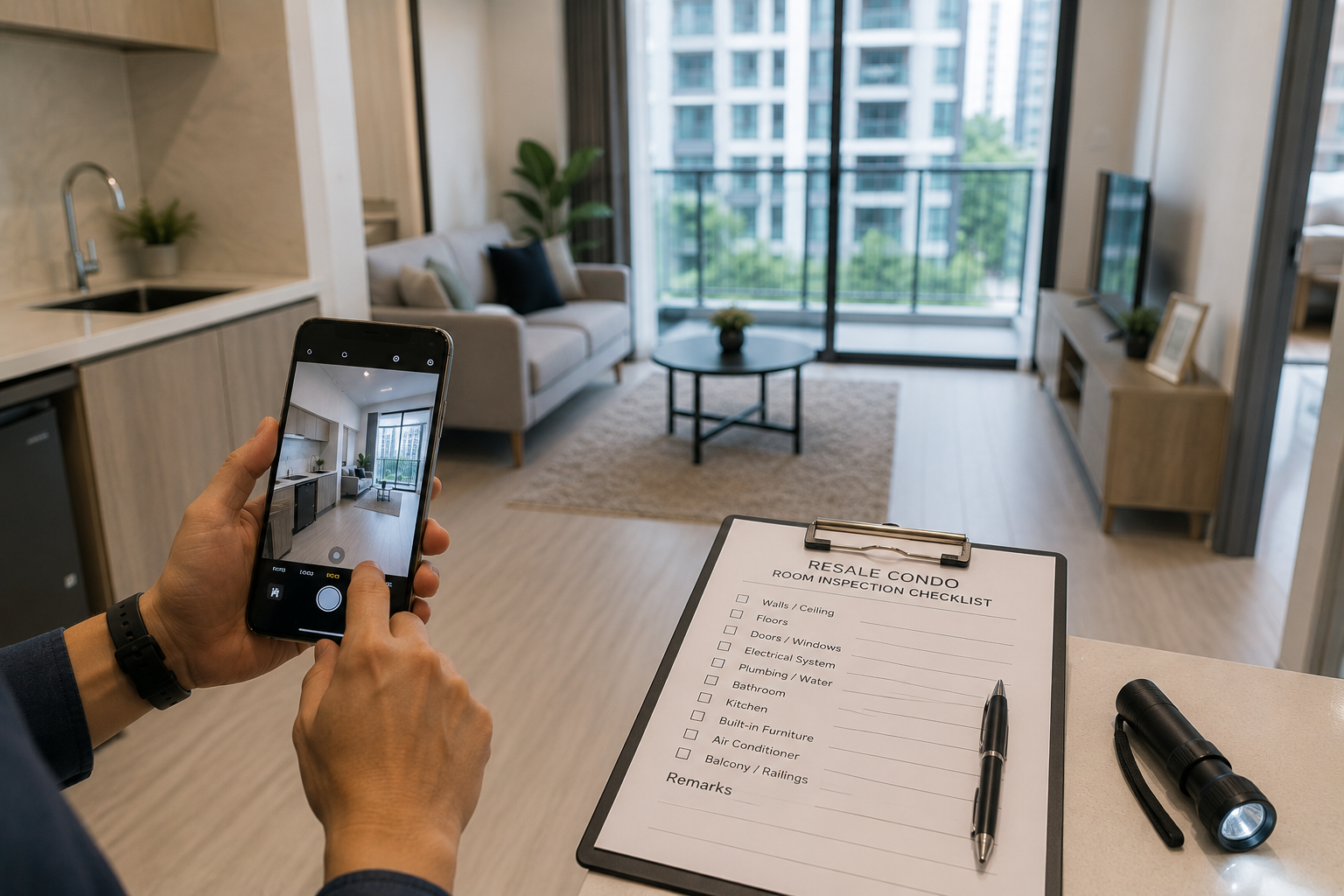
Documents are very important, but the actual condition of the unit matters just as much. Buyers should inspect the interior structure, water and electrical systems, air conditioners, bathroom, kitchen, floors, walls, furniture, and appliances included in the sale to estimate post-purchase costs.
- Check for water leaks, swollen walls, or damp stains
- Check the electrical system, outlets, breaker panel, and lights
- Turn on the air conditioners, refrigerator, washing machine, and appliances
- Check the bathroom, drains, odors, and water pressure
- Check the doors, windows, balcony, and cracks
- Photograph the unit's condition before signing a contract or paying a deposit
If you find a problem, clearly agree whether the owner will repair it before transfer, reduce the price, or sell the unit in its current condition, and state the details in the contract. Do not rely solely on a verbal agreement.
English summary: Inspect the physical room carefully. Documents are important, but repair costs and room condition also affect the purchase decision.
8. Check Which Furniture and Appliances Are Included in the Sale
Some resale condos are sold with furniture, some as empty units, and some with items the owner will remove before transfer. Buyers should prepare a clear list of assets included in the sale before placing a deposit.
- Are the bed, mattress, sofa, tables, cabinets, and shelves included?
- Are the TV, refrigerator, microwave, washing machine, and air conditioners included?
- Are curtains, light fixtures, or decorative items included?
- How many remote controls, keys, key cards, and parking cards are included?
- Which items will the seller remove before handing over the unit?
- Photograph the items and attach the asset list to the contract
A clear asset list helps reduce misunderstandings on the ownership transfer and unit handover dates, especially when buying a fully furnished unit.
9. Check Transfer-Day Costs and Related Taxes
A condo sale may involve several costs on the transfer date, such as the transfer fee, specific business tax, stamp duty, withholding income tax, or other costs depending on the circumstances. Rates and conditions may change. Buyers should confirm the latest information with the Land Office or a qualified professional before the transfer date.
- Who pays the transfer fee, and how is it divided?
- Who is responsible for taxes and other costs?
- How are transfer-day costs calculated?
- Must a cashier's check or another payment method be prepared?
- The allocation of costs should be stated in the sale and purchase agreement
- Check the latest rates with the Land Office before the transfer date
Do not treat figures from old articles or word of mouth as a final answer because costs and tax rules may change with the law and government policy.
English summary: Transfer fees and taxes can change. Confirm the latest costs with the Land Office or a qualified professional before transfer day.
10. Foreign Buyers Must Check Additional Conditions
Foreign nationals who want to buy a condo in Thailand should check additional specific conditions, such as the building's foreign ownership quota, documents from the condominium juristic person, evidence of bringing funds into the country, and documents required by the Land Office. Thailand.go.th provides general information on foreign ownership of condominium units and the 49% proportion in a condominium. Buyers should confirm the latest requirements with the Department of Lands, their bank, and a qualified professional before deciding.
- Does the building have remaining foreign ownership quota?
- Is a foreign ownership ratio certificate from the juristic person required?
- Is evidence of transferring funds from abroad required?
- Does the buyer's name match across the bank and transfer documents?
- Are the passport documents and buyer status correct?
- Check with the Land Office and bank before placing a deposit
Conditions for foreign nationals should be checked carefully and may change. Buyers should not rely solely on information in a sale listing.
11. Review the Sale and Purchase Agreement Before Paying a Deposit
Before paying a deposit, buyers should read the sale and purchase agreement carefully. It should clearly state the unit details, price, deposit, transfer date, transfer-day costs, conditions if the transfer cannot proceed, asset list, unit status, and any encumbrances.
- Are the buyer's and seller's names correct?
- Do the unit details match the title deed?
- Are the sale price and deposit correct?
- Is the ownership transfer date clearly specified?
- If the bank does not approve the loan, will the deposit be refunded?
- Who is responsible for transfer-day costs?
- Must the seller discharge the mortgage or pay common fees before transfer?
If there are questions about the agreement, consult a lawyer or qualified professional before signing because the sale and purchase agreement affects both parties' rights, obligations, and deposit.
English summary: Review the sale and purchase agreement carefully before paying a deposit. It should clearly state unit details, price, deposit, transfer date, costs, and conditions.
12. Check the Receiving Account and Proof of Payment
Deposits or purchase payments should be made through a traceable channel, and the receiving account name should match the seller or a person entitled to receive the money. If it is another person's account, there should be a clear reason and evidence before the transfer.
- Does the receiving account name match the seller?
- Is the transferred amount a deposit or another portion of the payment?
- Is there a receipt or confirmation message?
- Can the unit number and purpose of the transfer be stated in the message?
- Keep all transfer slips and confirmation chats
- Avoid paying cash without a receipt
If the amount is large, consult the bank, a lawyer, or a qualified professional about a payment method that is secure and appropriate for the transfer-day process.
13. Document Checklist Before Buying a Resale Condo in Thailand
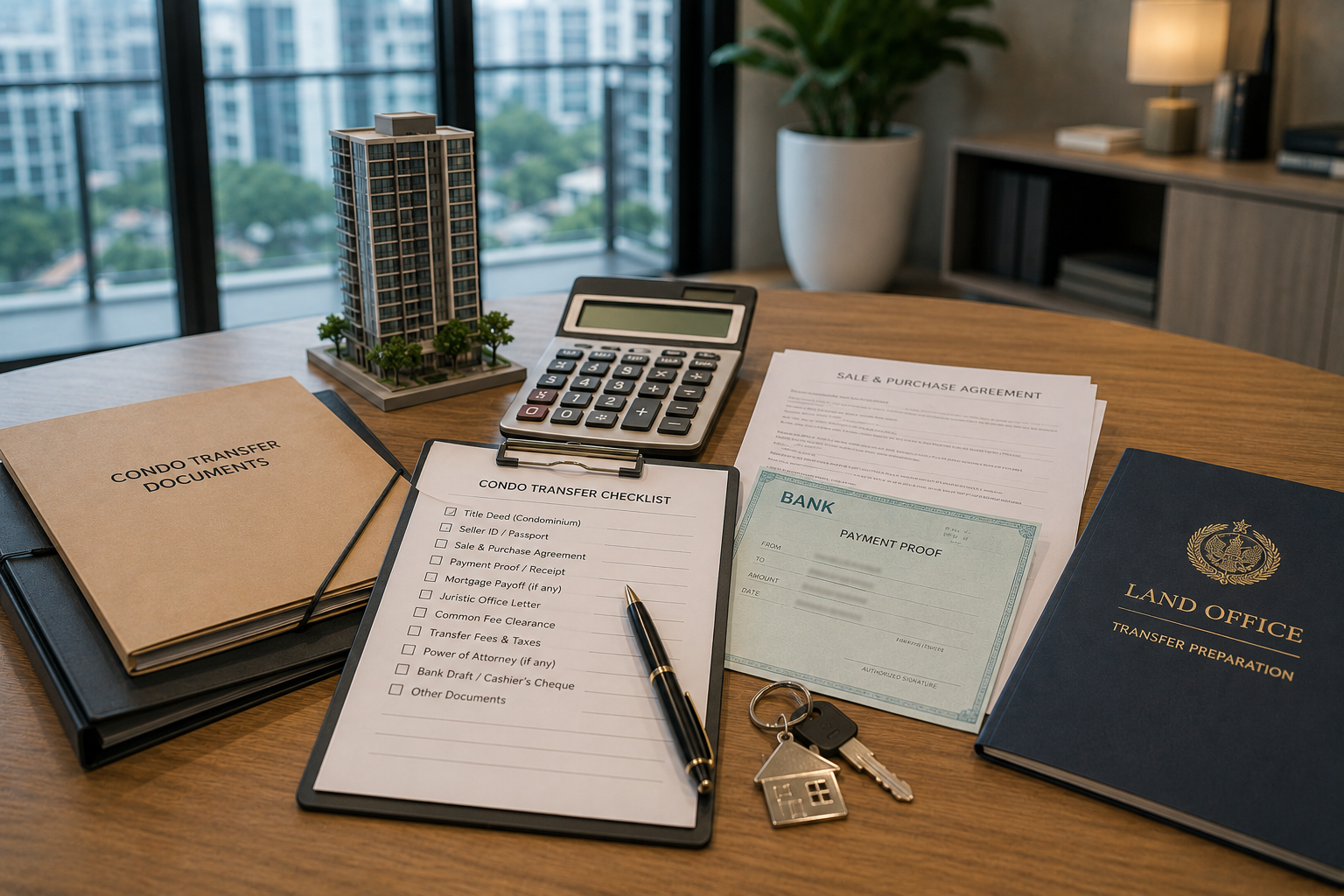
- Condominium unit title deed
- Seller's identity documents
- Power of attorney if the seller will not handle the process personally
- Encumbrance or mortgage documents, if any
- Letter or information from the juristic office concerning common fees
- Debt-free certificate or documents required for transfer, as applicable
- List of furniture and appliances included in the sale
- Sale and purchase agreement
- Proof of payment and receipts
- Additional documents for foreign nationals, if applicable
- Transfer-day cost information from the Land Office or a qualified professional
Conclusion
Before buying a resale condo directly from an owner in Thailand, check both the documents and the actual condition of the unit. Do not look only at the price, photos, or the seller's statements. Important documents and information to check include the condominium unit title deed, registered owner, encumbrances, unpaid common fees, letters from the juristic office, the sale and purchase agreement, asset list, transfer-day costs, and proof of payment.
Foreign nationals should directly check the foreign ownership quota, evidence of funds transfer, and documents required by the Land Office with the relevant authorities. Baandeego is only a real estate listing platform. It does not verify documents on behalf of users and is not involved in payments, contracts, or ownership transfers.
English summary: Buying a resale condo directly from the owner requires careful document checks, room inspection, juristic office confirmation, payment proof, and professional verification before transfer.
FAQ
1. Which Documents Should You Check First When Buying a Resale Condo Directly from the Owner?
Start with the condominium unit title deed and the seller's identity documents to see whether the unit, document number, area, and owner's name match. If the information does not match, investigate further before paying.
English: Start with the condominium title deed and seller identity documents.
2. Must You Check for Unpaid Common Fees Before Buying a Condo?
Yes. Common fees, sinking fund contributions, or other amounts owed to the juristic person may affect the ownership transfer and the buyer's or seller's responsibilities. Ask the juristic office directly.
English: Yes, unpaid common fees should be checked directly with the juristic office.
3. What Else Must Foreign Buyers Check When Buying a Resale Condo in Thailand?
Check the building's foreign ownership quota, documents from the juristic person, evidence of bringing funds into the country, and the documents required by the Land Office. Conditions may change, so check with the Department of Lands, a bank, or a qualified professional before deciding.
English: Foreign buyers should check the foreign quota, juristic confirmation, fund transfer evidence, and Land Office requirements.
Platform Use Disclaimer
This website is only a platform for real estate listings.
Users should verify all information, documents, and conditions themselves.
This website is only a real estate listing platform.
Users should verify information, documents, and conditions by themselves.
Baandeego is not a broker and is not a party to any rental, purchase, sale, booking, payment, contract, or ownership transfer. It does not inspect units, inspect documents, inspect encumbrances, inspect common fees, or coordinate with the Land Office, juristic person, bank, or qualified professionals on behalf of users. It is not responsible for disputes among users, buyers, sellers, owners, landlords, juristic persons, banks, or relevant authorities. All parties should independently verify the information, documents, conditions, costs, and applicable laws before deciding.
References
- Department of Lands, Thailand: https://www.dol.go.th/
- Thailand.go.th — Ownership of real estate by foreigners in Thailand: Requesting ownership of a condominium unit: https://thailand.go.th/public/issue-focus-detail/010_013
- Thailand.go.th — Documents required for registration of property ownership by foreigners in Thailand: https://thailand.go.th/public/issue-focus-detail/010_011
- Office of the Consumer Protection Board, Thailand: https://www.ocpb.go.th/index_en.php